Natural Disasters in California: Fire, Flood and Earthquake by the Numbers, 1954 to 2026
The fire season runs July through October, the floods come in January and February, and the earthquakes do not keep a calendar. Here is what 72 years of FEMA records show, and what to keep in the house.
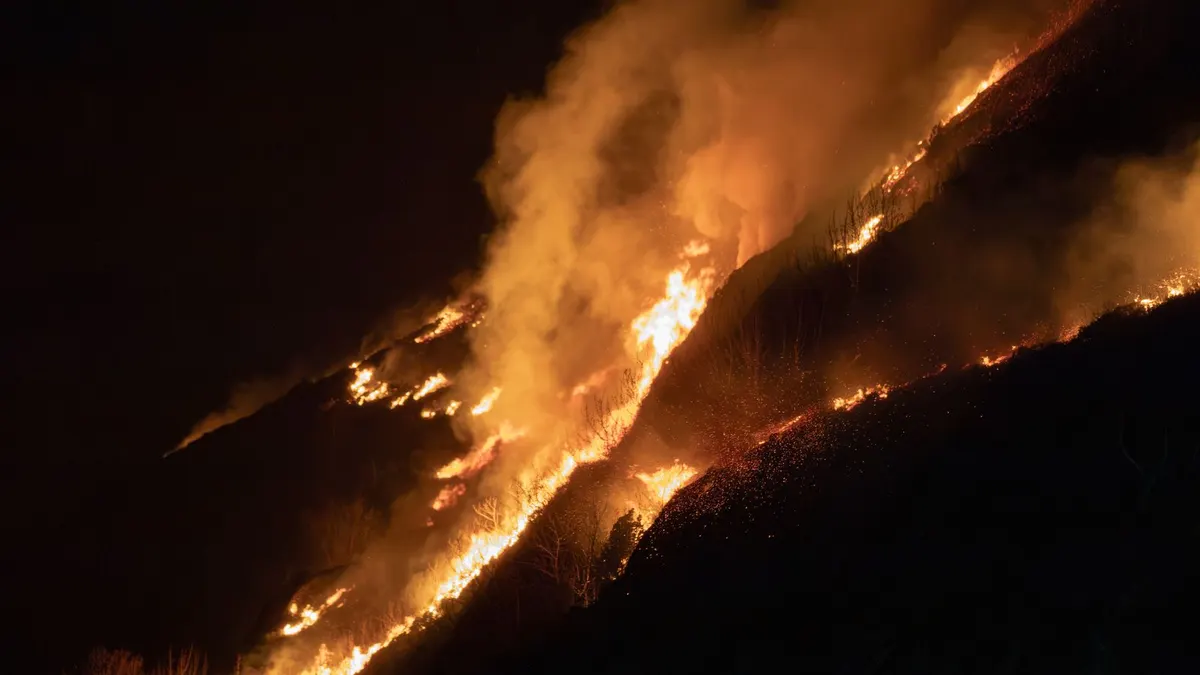
California has more federal disaster declarations than any state in this series, 398 of them by FEMA's count, and it leads on major disasters, on earthquakes and on major wildfire declarations too. The natural disasters in California that make the news are the fires, and three quarters of the file is fire related, but the major disaster list tells a different story. Flooding is the most common major disaster in the state, and the next most common category, severe storms, in California almost always means a winter storm that brought flooding, landslides and mud. Fire comes third. Earthquakes are fourth, with 13 major declarations, which is more than every other state in the series put together.
So the California kit is really three kits that overlap. There is a wildfire go bag that lives packed from July through October and goes in the car when the utility starts talking about shutting the power off for wind. There is the winter layer for the atmospheric rivers that have put most of the state under one declaration seven separate times since 1995. And there is the earthquake layer, which is mostly water, light and a way to reach people, because an earthquake is the one disaster on this page that gives you no warning at all. The other states are in our natural disasters by state index, and the base kit everything below builds on is the power outage kit checklist.
What a California declaration actually counts
FEMA keeps three kinds of records. A major disaster declaration is the one that moves real money: the governor requests it, the President signs it, and counties get repaid for repairs while households in some counties get individual assistance. An emergency declaration is quicker and smaller, often signed while the event is still going, which is why the Oroville Lake spillway got one in February 2017 before anyone knew whether it would fail. A fire management declaration is a cost-sharing agreement for one named fire that threatens homes. One fire, one record, and FEMA only started filing them for California in volume around 2002, a few years after Texas, where the big fire years of the 1990s are already in the file. That's why the 2000s and 2010s look like the sky fell compared with the 1990s. The fires were always there; what changed in 2002 was that FEMA started writing each one down.
Two more things to set aside. Every state has an emergency declaration for Hurricane Katrina evacuees and a pair for COVID, each covering all 58 California counties. They're in the totals, but they aren't weather, so the tables below leave them out. And a single declaration can cover one county or nearly all of them, so the county list further down is the better measure of who actually gets hit.
California disasters by type, 1954 to 2026
| Hazard | Major declarations | When it usually hits | Example from the record |
|---|---|---|---|
| Flooding | 39 | December through February | Winter storms of 2017, declared April 1, 44 counties |
| Winter storms with mud and landslides (filed as severe storm) | 23 | January and February | Winter storms of 1995, declared March 12, 57 counties |
| Wildfire | 27 major, plus 264 fire management | July through October | August 2020 wildfires, 20 counties |
| Earthquake | 13 | Any month | Loma Prieta, October 1989, 12 counties |
| Freeze | 3 | December and January | December 1990 freeze, 33 counties |
| Everything else (tsunami, dam and levee, tropical storm, fishing losses) | 10 | Scattered | Tropical Storm Hilary, August 2023, 5 counties |
Counted by major disaster declarations. Katrina evacuation and COVID left out.
Wildfire: July to October, and the whole southern half of the state
Nearly three quarters of California's fire declarations began in the four months from July through October, spread almost evenly across them. November adds a tail and the rest of the year is quiet by comparison, though the January 2025 Los Angeles fires (Palisades, Hurst and Eaton, which drew fire management declarations within a day of each other and a major declaration for wildfires and straight-line winds) are the reminder that a dry winter with wind can burn any month.
The major declarations track the fires that got into neighborhoods, and they're in the table below. The worst single years in the fire management file were 2017 and 2004, with more than twenty named fires each. The counties that show up over and over are the ones around Los Angeles, with the wine country and the Sierra foothills (Shasta, Napa, Butte, Sonoma) leading up north.
| Fire event with a major declaration | Counties covered |
|---|---|
| August 2020 wildfires | 20 |
| October 2020 wildfires | 12 |
| October 2017 fires | 9 |
| Southern California fires, October 2007 (emergency declared the day before) | 7 |
| Southern California fires, October 2003 | 5 |
| November 2018 fires | 3 |
| Valley and Butte fires, 2015 | 2 |
| Oakland Hills 1991, Rim Fire 2013, January 2025 Los Angeles fires | 1 each |
What to own: a go bag per person, packed by the Fourth of July and kept by the door, with a box of N95s (the smoke reaches you days before any fire does), the documents and medications, phone chargers, and a printed list of where the animals go. The bug out bag checklist is the full list. Add a solar power bank, because the other thing that happens in fire season is the utility cutting power for days during wind events, which can happen with no flame anywhere near the house.
Winter floods and mudslides: the other half of the record
Put floods and the severe winter storms together and you have more than half of California's major disasters. They cluster hard in December, January and February, and hardly any of either kind started between April and July. If you've lived through a wet California winter you already know the shape of it. A string of storms stacks up, the hills that burned two summers ago let go, and the valleys fill.
The widest weather declarations in the state's file are all winter storms, and the table has them. The 1995 winter is still the high mark, with one declaration that covered every county but one. The 2017 winter produced five separate major declarations between February and May plus the Oroville spillway emergency, and 2023 did it again with two emergencies and two major declarations between January and April.
| Winter storm season | Counties under the widest declaration |
|---|---|
| March 1995 | 57 |
| January 1997 | 48 |
| April 2023 (major declaration) | 46 |
| Winter 2017 | 44 |
| January 1995 | 42 |
| February 1998 | 41 |
| 1986 storms | 39 |
| 1969 storms | 37 |
| December 1964 flood | 31 |
The flood kit in California is about the morning after as much as the night of. A NOAA weather radio with the alert on, because flash flood and debris flow warnings below a burn scar come at night. Sandbags if you are downhill of anything. A get home bag in the car, since the commute is where most people get caught when a highway closes for a slide. And the lanterns and headlamps, because a week of storms takes the power down somewhere every time.
Earthquakes: thirteen major declarations, zero warning
The ones most people remember are all in the file: San Fernando in 1971, Coalinga in 1983, the 1987 quake and its aftershocks, Loma Prieta in 1989 (the widest earthquake declaration, at 12 counties), Northridge in 1994, the August 2014 quake, and the July 2019 quakes that drew an emergency declaration. Smaller ones got declarations through the 1990s, 2000s and 2010s, the latest in December 2022.
The month list for earthquakes is flat. One or two in most months, a few more in October, none at all in March or November. There is no season, so the earthquake kit has to already exist, and it is mostly water, because a quake breaks mains and the first thing to go is the tap. Keep a week of stored water at a gallon a person a day and read our guide on how to store water long term so it is still good when you need it. After water: sturdy shoes by the bed (glass), a wrench on the gas meter, headlamps, and a way to tell family you are alright when the cell network is jammed. A pair of GMRS radios covers the neighborhood, and a Meshtastic node passes short messages across a city after the towers quit.
The ones that do not fit a category
- Tsunami. A seismic sea wave declaration in 1964 and a tsunami declaration in 2011 for three coastal counties after the Japan earthquake. Low odds, but if you live on the coast the evacuation route uphill should be a walk you have already taken.
- Dams and levees. Two major declarations for levee breaks, decades apart, and the Oroville spillway emergency in 2017, which covered three counties. The Central Valley lives behind levees.
- Freezes. Three agricultural freezes earned major declarations, the widest in December 1990 across 33 counties, then the 1998 citrus freeze and a January 2007 freeze.
- Tropical weather. Tropical Storm Kathleen in 1976 and Tropical Storm Hilary in 2023, which produced three separate declarations that fall. Rare, but the desert does not drain.
- Chemical release. An emergency declaration in May 2026 for one county. Not weather, but worth knowing the file holds it.
The counties with the longest records
| County | Declarations since 1954 | Main hazards |
|---|---|---|
| Los Angeles | 88 | Wildfire, winter storms, earthquakes |
| Riverside | 66 | Wildfire, flash floods, desert storms |
| San Bernardino | 61 | Wildfire, mountain storms |
| Ventura | 53 | Wildfire, mudslides after fire |
| San Diego | 51 | Wildfire |
| Santa Barbara, Orange | 43 each | Wildfire, winter storms and debris flows |
| Shasta | 41 | Wildfire, winter flooding |
| Kern | 40 | Wildfire, floods, earthquakes |
| Napa, Butte | 39 each | Wildfire, winter storms, the August 2014 quake |
| Sonoma | 36 | Wildfire, river flooding |
Every one of the 58 counties has been named in at least one declaration. The ones at the top of the list are where the mountains meet the subdivisions, which is also where the power gets shut off for wind.
The California calendar
- December through February: flood and winter storm season, and two thirds of the state's flood declarations began in these three months. Weather radio on, car fueled, know which roads close.
- March and April: the quietest stretch in the file. Restock, rotate the water, repack the go bag.
- May and June: the fire season starts turning on, mostly in the foothills and the south.
- July through October: 222 fire declarations in four months. The go bag is by the door and the power shutoff plan is written down.
- November: the fire season winds down and the first storms arrive.
- Any month: earthquakes. Thirteen major declarations spread across the year with no pattern.
What to build, in the order that matches the odds
- Water, first and most. It is the earthquake kit, the post-fire boil-notice kit and the week-of-storms kit all at once. A week per person. The emergency water storage guide covers containers and treatment.
- The grid-down base. Lanterns, headlamps, a crank weather radio, phone power, shelf food, cash, documents. The power outage kit checklist is the list. Wind shutoffs make this the most used kit in the state.
- The wildfire go bag, if you are anywhere the brush meets the houses, which is most of Southern California and the entire foothill belt. Packed by July. Masks, meds, papers, pet plan.
- The winter layer, if you are near a river, below a burn scar or on a hill: sandbags, a tarp, and a get home bag in each car.
- Communications. Cell service dies with the power and gets jammed in a quake. GMRS radios for the household, a Meshtastic node for the neighborhood.
Questions Californians ask
What is the most common natural disaster in California?
By raw FEMA declarations, wildfire, with 300 fire-related records. By major disaster declarations, which are the ones that cover whole regions, flooding leads, followed by winter storms with mud and landslides. Add those two together and winter weather accounts for more than half of California's major disasters.
Does California have more disasters than Texas?
By FEMA's count, yes, but barely: 398 total declarations to Texas's 392, and a similar edge on major disasters, while Texas has one more fire management declaration. California leads every state on earthquakes and major wildfire declarations; Texas leads on floods and tornadoes.
When is wildfire season in California?
By the start dates in FEMA's file, July through October, with August and September the peak and October close behind. The January 2025 Los Angeles fires show that a windy dry winter can burn too, but about three quarters of the state's fire declarations began in those four months.
Which part of California has had the most disasters?
Los Angeles County, with 88 declarations, then Riverside and San Bernardino. The four counties around Los Angeles plus San Diego fill the top five. In the north, Shasta, Napa, Butte and Sonoma lead.
How often do earthquakes get a federal disaster declaration?
Thirteen times since 1954, about once every five or six years on average, though they come in bunches. Loma Prieta in 1989 covered 12 counties, the widest. Most cover one or two counties, which is why the earthquake kit has to be in your own house rather than counted on from outside.
Will FEMA pay me after a declaration?
Only if the declaration includes individual assistance for your county, and only some do. In California's file, the big wildfire declarations of the last two decades included it, as did the 2023 storms and the August 2014 quake. Most of the winter storm declarations before 2003 didn't. Check your county on FEMA's declaration page. Photos of the house, the foundation and the chimney from before the quake are what an adjuster asks for, so take them this week.
Where that leaves you
Build the water and the grid-down kit first, because they cover the earthquake, the wind shutoffs and the storm week at the same time. Pack the fire go bag by July if you live anywhere near brush, and add the winter layer if a river, a hill or a burn scar is part of your address. The numbers on this page are FEMA's public declaration file as of October 31, 2026; I'll update them when new declarations land. Neighbors in the series: Arizona and Washington. The rest of the gear guides are in the storm prep section.
Sources
Ready to buy?
See current models and availability on Amazon. Your clicks keep these guides free.
Shop Emergency Kits on Amazon →