Get Home Bag: What It Is and What Goes in a 20 Liter Pack
A small bag in the car or at the desk, built around your feet, for the day the drive home turns into a walk.
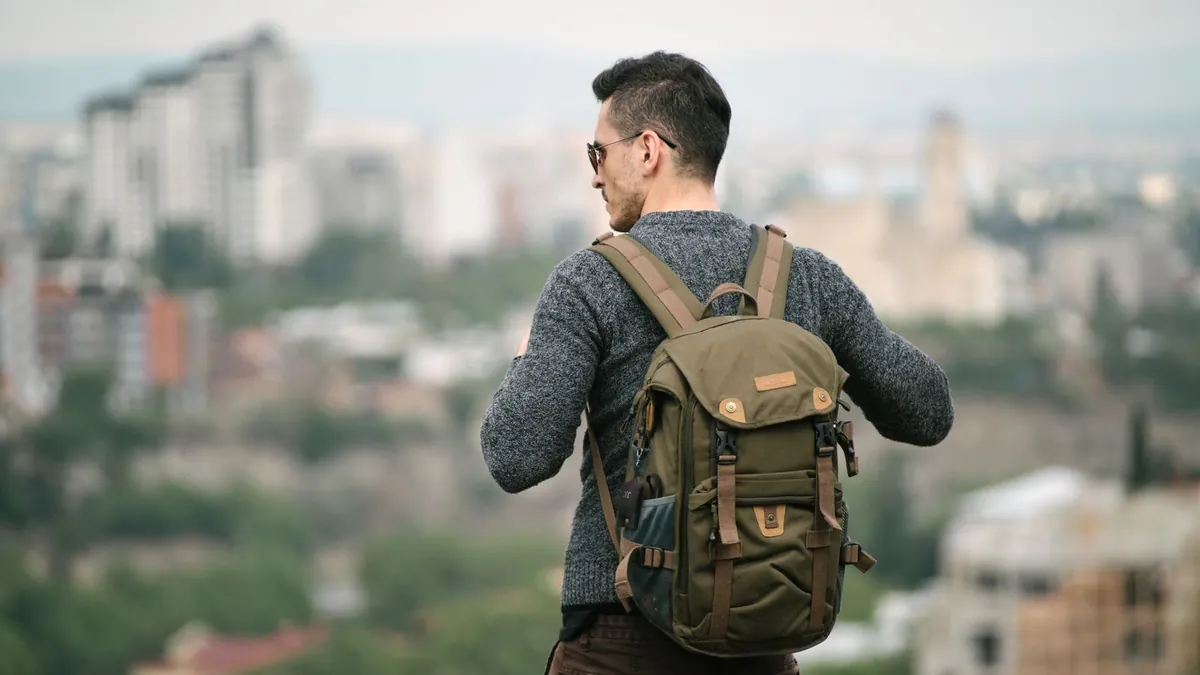
A get home bag is a 10 to 20 liter bag that lives in your car or under your desk and holds what you need to walk 10 to 30 miles home when the roads or the phones stop working. For most people that means walking shoes and wool socks, two liters of water with a small filter, a headlamp, a power bank, cash, a rain shell and a radio, all in a plain daypack that weighs under 10 pounds packed. The Osprey Daylite Plus is the bag we would pick for an office or a car, and the 5.11 Rush 12 2.0 is the tougher choice if the bag rides in a truck bed or a job site.
A get home bag is not a bug out bag. The bug out bag leaves the house with you for 72 hours. The get home bag gets you back to the house, where the bug out bag is. It is smaller, lighter, built around your feet, and sized for one long day rather than three. Tactical packs draw attention, so the tactical backpack guide explains when that matters.
Why 10 to 30 miles is the number
Most people in the Charlotte and Triangle areas commute 10 to 30 miles. A fit adult walks about 3 miles an hour on pavement with a light pack, so 20 miles is a long day on foot, and 30 miles is a day and a half for most of us. The bag is sized for that: one night out at most, no cooking, no sleeping bag. The situations that put you on foot here are specific: an ice storm that closes I-85 while you are at work, a hurricane that floods the crossings between you and home, a wreck that shuts the only bridge, or a regional outage that kills the gas pumps and the traffic lights at once. In every one of those the car gets you most of the way and then stops being useful.
How it differs from a bug out bag
| Get home bag | Bug out bag | |
|---|---|---|
| Goal | Get back to the house | Leave the house and live 72 hours |
| Size | 10 to 20 liters | 30 to 40 liters |
| Packed weight | Under 10 pounds | 18 to 25 pounds |
| Where it lives | Car trunk, desk, locker | By the front door |
| Shelter | A bivvy, just in case | Bivvy plus tarp |
| Food | One day of bars | Three days |
| Built around | Your feet | Water and shelter |
What goes in a 10 to 20 liter get home bag
Shoes and socks first
- Walking shoes or broken in trail runners in the car, not in the bag if they will not fit. Dress shoes and work boots both end a 20 mile walk early.
- Two pairs of wool socks. Change at the halfway point. Wet cotton socks are how blisters start.
- Blister care: a few hydrocolloid pads and a strip of athletic tape.
Water
- Two liters in bottles you already own. In summer you will drink all of it.
- A small squeeze filter so you can refill from a creek or a retention pond without getting sick two days later. NC has water everywhere; the problem is never finding it.
Light
- A small headlamp with fresh lithium AAA cells. If you leave work at five in January you will be walking in the dark within an hour.
- A reflective band or a blinking rear bike light so drivers see you on a road with no streetlights.
Power and comms
- A 10,000 mAh power bank and a short cable for your phone. The phone is your map and your way to tell someone you are walking.
- A GMRS or FRS handheld if your family runs them, so you can reach home from the last few miles when the cell network is overloaded. See the GMRS radio guide.
- A written card with phone numbers and your walking route.
Cash and papers
- Cash in small bills for a gas station bottle of water, a cab if one appears, or a motel room. Card readers go down with the power.
- A copy of your ID and a paper map of the county if you do not know the back roads between work and home.
Weather
- Rain shell, the real kind, not a dollar poncho. Tropical storm rain lasts hours.
- A brimmed hat for summer sun and a knit hat and light gloves for winter. Swap them with the seasons.
- An emergency bivvy in case the walk becomes a night out. Our emergency blanket guide covers the choices; the SOL Emergency Bivvy is the one in our bag.
Food and small tools
- Three or four bars and a bag of nuts. One day, no cooking.
- A small knife or multitool, a lighter, an N95 mask, a few feet of duct tape, a bandana.
- A small first aid kit; add blister care and any medication you take.
That whole list packs into a 20 liter daypack with room to spare and should weigh 7 to 10 pounds with the water. For the heavier, three day version of this list see the bug out bag checklist, and for the rest of the kits, the go bags and kits category. For food that needs no cooking, MREs work, but store them indoors, not in a hot car.
Osprey Daylite Plus

Our Pick
Osprey Daylite Plus
- 20 L (1,220 cu in)
- 1.3 lb
- 19 x 11 x 9 in
- Sleeve fits tablet, reservoir or laptop up to 14 in
- Two side mesh bottle pockets
A plain commuter pack that holds the whole list and looks like nothing worth stealing.
Check price on AmazonSold by Amazon.com
Our pick for an office, a car or a commute. Osprey lists the Daylite Plus at 20 liters (1,220 cubic inches), 1.3 pounds and 19 by 11 by 9 inches, with a padded interior sleeve that fits a hydration reservoir, a tablet or most laptops up to 14 inches, two side mesh bottle pockets, dual side compression straps and a front pocket with organization and a key clip. It is a panel loader that opens wide, so you can see everything without unpacking.
It suits anyone who wants a bag that looks like every other commuter bag, because that is what a get home bag should look like. What it does badly: it is a light commuter bag, not built to be dragged around a job site. Neither matters at 10 pounds. Sold by Amazon.com.
5.11 Rush 12 2.0
Tougher Option
5.11 Rush 12 2.0 Backpack 24L
- 24 L / 1,476 cu in
- 3.15 lb
- Water-repellent 1050D nylon
- Rear hydration compartment
- Web MOLLE front, sides and yoke straps
For a bag that rides in a truck bed or a job site and needs to survive it.
Check price on AmazonSold by Marketplace Valet (third party reseller)
The Rush 12 2.0 is the tactical daypack. 5.11 lists it at 24 liters (1,476 cubic inches) and 3.15 pounds, in high-strength water-repellent 1050D nylon, with an 18 by 11 by 6.5 inch main compartment, a rear hydration compartment, external web MOLLE on the front and sides and on the shoulder straps, and a fleece-lined eyewear pocket.
It suits someone whose bag rides in a work truck or a shop and gets thrown around, and anyone who wants to add a pouch or two. What it does badly: it is more than twice the empty weight of the Daylite Plus, it is slightly bigger than the 20 liter target, and in black with MOLLE it looks like exactly what it is. The Amazon listing is sold by Marketplace Valet, a third party reseller rather than 5.11 or Amazon.com. 5.11's warranty excludes products purchased other than from 5.11 or an authorized 5.11 dealer, so read it before you buy.
Sawyer Mini
Water
Sawyer Mini Water Filtration System (SP128)
- 0.1 micron absolute hollow fiber
- Rated up to 100,000 gallons
- Fits 28 mm bottle threads
- 16 oz pouch, straw and syringe included
The smallest filter worth carrying, so two liters of water becomes as much as you need.
Check price on AmazonSold by Amazon.com
The Mini is the Squeeze's little brother: the same 0.1 micron absolute hollow fiber membrane, which Sawyer says removes 99.99999 percent of bacteria and 99.9999 percent of protozoa and is rated to 100,000 gallons. The kit includes a 16 ounce pouch, a straw and a cleaning syringe, and the filter threads onto a standard 28 mm disposable bottle. Do not let it freeze: Sawyer advises replacing any filter that may have frozen and says there is no warranty for a frozen filter, so bring it inside in an ice storm. Sold by Amazon.com.
Petzl Tikkina
Light
Petzl Tikkina Headlamp
- 300 lumens (ANSI FL1), wide beam
- 92 g
- 3 AAA batteries included, or Petzl CORE rechargeable
- IPX4 weather resistant
A simple, light headlamp on AAA cells for the hours of the walk after dark.
Check price on AmazonSold by KS Rescue (third party seller)
Petzl rates the Tikkina at 300 lumens with a wide beam, 92 grams, and IPX4 weather resistance. It ships with three AAA batteries and also takes Petzl's CORE rechargeable pack; Petzl says it works on alkaline, lithium or NiMH cells and adjusts its output to whichever is fitted. That flexibility is the point for a bag that sits for months: if the CORE is flat, any AAA cells from a drugstore will run it. The tilt plate lets you aim the beam at your feet. The Amazon listing is sold by KS Rescue, a third party seller.
Anker PowerCore Slim 10000
Power
Anker PowerCore Slim 10000
- 10,000 mAh
- 8.6 oz
- USB-C in and out
- 5.99 x 2.81 x 0.61 in
- 18 month warranty
Keeps the phone alive for the map and the call home; recharge it every three months.
Check price on AmazonSold by AnkerDirect
Anker's page lists this 10,000 mAh bank (sold as the PowerCore 10K, with PowerCore Slim 10000 named in the box contents) at 5.99 by 2.81 by 0.61 inches and 8.6 ounces, with one USB-C port that charges in and out, a 3.2 foot drop test and an 18 month warranty. Anker says it gives 2 full charges to an iPhone 15. Recharge it every three months in the car charger or it will be half empty when you need it. Sold by AnkerDirect.
Darn Tough Hiker Micro Crew Midweight
Socks
Darn Tough Men's Hiker Micro Crew Midweight Socks
- 61% merino, 36% nylon, 3% Lycra
- Midweight cushion
- Micro crew, about 8.5 in
- Knit in Vermont
- Guaranteed for life
Two pairs of wool socks are the cheapest item in the bag and the one that decides if you finish the walk.
Check price on AmazonSold by Dearborn Supply (third party seller)
Darn Tough's product page lists the men's Hiker Micro Crew Midweight at 61 percent merino wool, 36 percent nylon and 3 percent Lycra spandex, knit at its mills in Vermont, with soft terry loops underfoot, targeted protection over the ankle and Achilles, and a micro crew height averaging 8.5 inches from heel to cuff. The socks are unconditionally guaranteed for life. Two pairs in the bag. They are a midweight sock, so they run warm for a July walk. The Amazon listing is sold by Dearborn Supply, a third party seller.
Where the bag lives, and what else is in the car
Trunk or under the back seat, not the front seat where it gets hot and visible. The car itself carries the heavy things: a case of water, a blanket, a jump pack, a real first aid kit. The get home bag only takes what you would carry if you had to leave the car on the shoulder. If you work at a desk, a second small bag in a drawer is cheap insurance for the day you took someone else's car. Our winter car kit guide covers the stay with the car side.
The car itself should carry the bulkier light. A headlamp is right for walking; for a night stuck in the vehicle or at home with the power out, a lantern wins, and we cover the ones that run for days in our power outage lantern guide and the rest of the Power and Light section.
Questions people ask about get home bags
What size should a get home bag be?
10 to 20 liters. If it is bigger you will fill it, and a heavier bag makes the walk longer.
Can my get home bag also be my bug out bag?
Not well. One is built around walking one day, the other around living three. If you can only keep one, keep the bug out bag at home and put shoes, socks, water and a power bank in the car.
Do I need a radio in a get home bag?
Only if someone at home has the other radio. A GMRS handheld reaches a few miles handheld to handheld, so it works for the last part of the walk. On its own it is just weight.
How often should I check it?
Every three months: charge the power bank, swap the bars, check the water, rotate the hat and gloves with the season.
One sentence to take with you
Put walking shoes, two pairs of wool socks, two liters of water with a Sawyer Mini, a headlamp, a power bank, cash and a rain shell in a plain 20 liter daypack, keep it in the trunk, and you can walk home from anywhere you drive.
Sources
Ready to buy?
See current models and availability on Amazon. Your clicks keep these guides free.
Shop Daypacks on Amazon →