Natural Disasters in Arizona: Two Seasons of Trouble in the FEMA Record
June is for fire, July through October is for flash floods, and the quiet months in between are when you restock. What 120 declarations since 1966 say about living here.
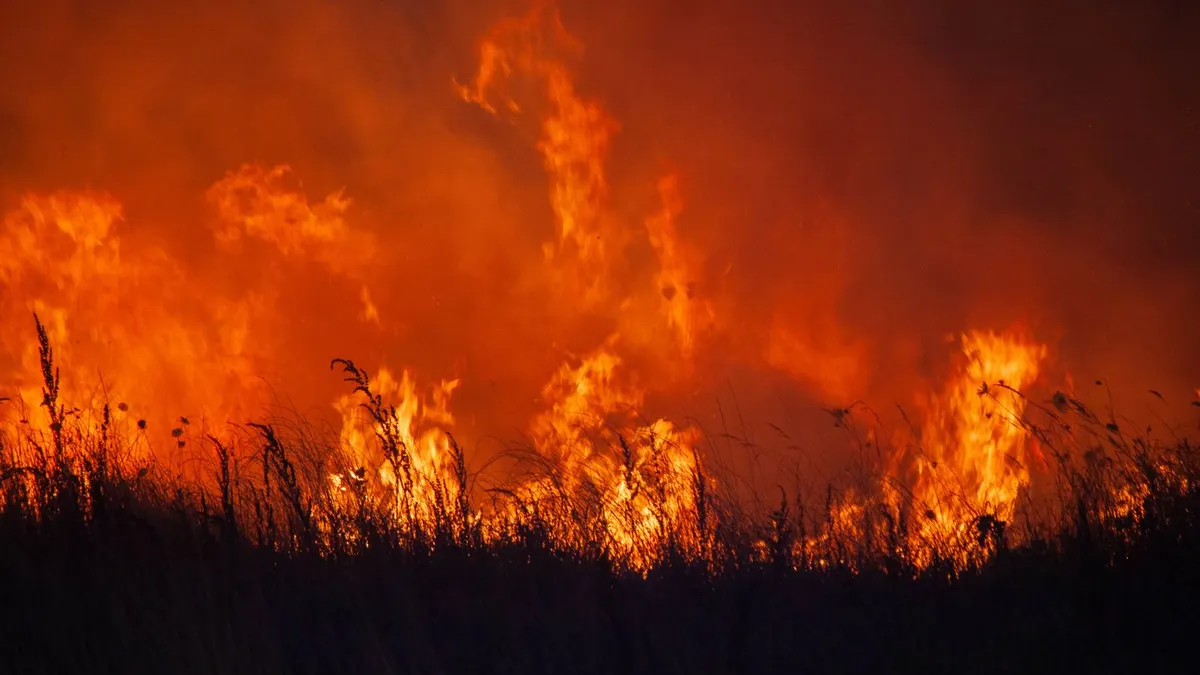
More than half of the wildfire declarations FEMA has ever issued for Arizona started in June. Nearly everything else in the file is water, and it splits into two seasons: the monsoon months from June to October, when dry washes turn into rivers, and the winter months, when Pacific storms stack snow on the Rim and rain on the desert. April and May are nearly empty, which makes them the months to get ready. Natural disasters in Arizona come in two seasons, and the gear for one isn't the gear for the other.
The file holds 120 Arizona declarations going back to 1966, and the fire management declarations are the bulk of them. Those are worth understanding before anything else, because they distort every raw count. A fire management declaration reimburses the state for fighting one fire that's threatening homes, and each fire gets its own, so a bad June can add half a dozen entries in a month. FEMA only started issuing them in any number in the 1990s, which is why the recent decades look like the worst in the state's history; part of that is just better paperwork. A major disaster is the full declaration, the governor asks and the President signs, and that's the count that matters: Arizona has 37 of them, and once you set aside the Katrina evacuation (Arizona took in evacuees) and the COVID entries, almost all of the rest are floods, either by label or filed as severe storms. Our natural disasters by state index has the other states.
Arizona disasters by type since 1966
| Disaster type | Major declarations | When it usually hits | Example from the record |
|---|---|---|---|
| Flooding | 17 | July through October, and again December through February | September 1983 storms and flooding, 11 counties |
| Severe storms (mostly flood and winter storm events) | 14 | January, and July through October | January 2010 winter storms and flooding, 14 counties |
| Wildfire | 3 major, plus 79 fire management | June, with May and July on either side | June 2002 wildfires, 5 counties; Watch Fire, 2024 |
| Freeze | 1 | December | December 2012 severe freeze, 1 county |
| Drought | 1 emergency | 1977 | April 1977, 8 counties |
Counted by major declarations. The severe storm category is FEMA's catch-all; in Arizona it holds a few winter storms and a run of monsoon flood events from the 1990s and 2000s.
June: the fire month
Forty-eight of Arizona's 82 fire declarations started in June, and May and July on either side account for most of the rest. That's the window between the end of the dry spring and the arrival of monsoon moisture, when the grass and brush cured over the winter and the lightning hasn't brought rain with it yet. The worst single year in the file was 2020, with seven fire declarations; 2005 was close behind.
Three fires were big enough for a full major disaster declaration: the June 2002 wildfires, the Aspen Fire the next year, and the Watch Fire on the San Carlos Apache reservation in the summer of 2024, which got a major declaration that fall with individual assistance for households. The recent fire management list reads like a map of the state's fire country: the Telegraph Fire in Gila and Pinal counties, the Tunnel 2 and Pipeline fires near Flagstaff, the Crooks Fire in Yavapai, the Diamond Fire in Maricopa, four more in Maricopa and Pinal in one summer, and the Greer Fire in Apache County in the spring of 2025.
If you live in the pines or the chaparral, from Prescott and Payson up through the Rim country to Flagstaff and the White Mountains, the kit for this season is a go bag that is packed by Memorial Day, not started when the smoke shows up. Documents, medications, a change of clothes, a box of N95s because the smoke arrives before the fire does, chargers, and a worked-out answer for where the dogs and the horses go. Our bug out bag checklist is the full list. The other half of fire readiness is not gear at all: clearing the brush back from the house in April, before the season starts.
Monsoon season: flash floods from July into October
Arizona's flood declarations don't pile up in one month the way its fires do. They spread from July through October, with July the busiest, and a few more are scattered through the winter. Add the severe storm declarations that were really flooding, and the monsoon window carries the majority of the weather declarations in the state's file.
The record going back to the 1970s is one monsoon flood after another, and the ones that reached the most counties are in the table. The pattern in the newest entries is the one to notice: four of the six most recent major disasters came with individual assistance for households, which tells you the damage is landing on homes, and not only on roads and culverts.
| Monsoon flood | Counties under the major declaration | Household assistance |
|---|---|---|
| September 1983 storms and flooding | 11 | No |
| July 2006 storms and flooding | 11 | No |
| July 2022 storms | 1 | Yes |
| August 2024 flooding (declared that October) | 1 | Yes |
| October 2025 storms and flooding (declared May 2026) | 1 | Yes |
The thing about a monsoon flood is that it can hit a wash that has been dry for eleven months, at night, miles from where the rain fell. The gear is about warning and about not being in the wrong place. A NOAA weather radio with the alert tone on, set to your county. A get home bag in every vehicle, because a flooded crossing can hold you on the wrong side of town for a night. And the rule every Arizona driver already knows and some still break: a wash with water in it is a wash you do not cross.
Winter: the other flood season, and snow on the Rim
Thirteen of Arizona's weather declarations began between November and March. Some are desert floods from Pacific storms, and the January 1993 floods were the widest of those, covering all but two counties. Some are snow: the January 2010 winter storms drew both an emergency declaration and a 14-county major declaration, the biggest weather event in Arizona's file by area, and the February 2019 and January 2023 storms followed the same track. One is a freeze, a one-county major declaration in December 2012.
For the high country (Flagstaff, Show Low, the White Mountains, the Kaibab) this means a real winter car kit from November through March and a plan for a multi-day power outage in the cold: emergency blankets, a safe way to heat one room, and stored water before the pipes are at risk. For the desert, the winter storms are flood events, and the monsoon rules apply.
What is not in FEMA's file
Two of the things most likely to hurt you in Arizona never show up as a federal declaration. FEMA's file has no heat declarations for Arizona, so the hottest summers in Phoenix and Yuma leave no mark in this data at all. Dust storms along I-10 and I-8 during monsoon season do not either. A page built only from declarations would tell you to worry about fire and floods and forget heat, and that would be a mistake. Treat the summer power outage as a heat emergency: the power outage kit for an Arizona house should include a way to run a fan or a small cooler off a solar power bank or battery, and more stored water than the standard gallon per person per day.
Which counties carry the most declarations
Arizona has only 15 counties, and the spread between the top of the list and the bottom is smaller than in most states, because a monsoon storm or a winter system tends to hit several counties at once. Still, the fire-prone middle of the state leads.
| County | Declarations | Mostly |
|---|---|---|
| Yavapai (Prescott) | 26 | Wildfire, winter storms, floods |
| Maricopa (Phoenix) | 26 | Floods, severe storms, recent wildfire |
| Coconino (Flagstaff) | 24 | Wildfire, snow, floods |
| Pinal | 23 | Wildfire and monsoon floods |
| Gila (Globe, Payson) | 23 | Wildfire, floods |
| Navajo | 21 | Wildfire, winter storms |
| Apache | 16 | Wildfire, floods |
| Pima (Tucson), Mohave | 15 each | Floods and storms |
| Cochise | 14 | Monsoon floods |
| Greenlee, Graham | 13 each | Floods and fire |
Yavapai and Maricopa tie at 26. Maricopa's count is heavy on floods and storms, and it has started picking up fire declarations in the last few years (the Diamond, Rose and Boulder View fires in 2023 and 2024) as the city pushes into the desert foothills. Coconino's 24 are the Flagstaff mix of forest fire and snow.
An Arizona disaster calendar
- January: the busiest winter month, with 8 declarations in the file. Pacific storms bring desert flooding and high-country snow.
- February and March: a few more winter floods and snow events, then it dries out. March has one declaration in 60 years.
- April and May: fire season warming up, but otherwise quiet. This is when the go bag gets packed and the brush gets cleared.
- June: 48 fire declarations. The single most dangerous month in the state's record.
- July: the switch. The last big fire month and the first wave of monsoon floods.
- August through October: monsoon floods and the tail of the fire season, with October the busier of the two ends.
- November and December: almost nothing. Restock, rotate water, and get the winter car kit back in the truck.
What to build for Arizona, in order
- Water first, and more of it than the national advice. A week per person at a gallon a day is the floor everywhere; in an Arizona summer outage it is not enough. The emergency water storage guide covers containers that hold up in a hot garage.
- The outage base. Headlamps, a lantern, a weather radio, phone power, cash, documents, shelf-stable food. The power outage kit checklist is the full list, and in this state the battery or solar bank that runs a fan is not optional.
- The fire layer, if you are in the pines or the brush. A go bag packed by the end of May, masks, and a route out that does not depend on one road.
- The flood layer, everywhere. Weather radio alerts on through October, a get home bag in the vehicle, and the no-crossing rule.
- Communications. Cell service in canyon country and on the reservations is thin on a good day. GMRS radios cover a household and the neighbors, and a solar Meshtastic node on a high point moves text across a valley with no towers at all.
Questions people ask about Arizona disasters
What is the most common natural disaster in Arizona?
Wildfire, by raw count: 82 of Arizona's 120 FEMA declarations are fires, and most of those started in June. By major disaster declarations, flooding leads, and most of the severe storm declarations were flood events too. The fires stay in the high country for the most part. The water comes down to Phoenix and Tucson.
When is monsoon season in Arizona?
The flood declarations in FEMA's file start in July and run into October, with July the single busiest month. The state's winter storms bring a second, smaller flood season from December through February.
Does Arizona get tornadoes or hurricanes?
Not in any way that shows up in the federal record. There is no tornado declaration in 60 years. The one hurricane entry is the 2005 Katrina evacuation, when Arizona sheltered people from the Gulf coast. What reaches Arizona from the tropics shows up in the file as fall flooding, not as a hurricane.
Does Arizona have earthquakes or droughts on the record?
No earthquake declarations. One drought emergency, in April 1977, covering 8 counties. Drought is a constant in Arizona, but it rarely produces a federal declaration because the damage is slow and spread out.
What was the biggest disaster in Arizona by counties covered?
Leaving out the pandemic and the Katrina evacuation, the January 2010 winter storms and flooding covered all but one of the state's 15 counties, and the January 1993 floods covered all but two. The September 1983 floods and the July 2006 storms are the widest of the monsoon events.
Does a FEMA declaration in my county mean I can get help?
Only if the declaration includes individual assistance, and most of Arizona's older ones didn't. Four of the six most recent major disasters did, including the Watch Fire and the last two flood declarations. Read the specific declaration on FEMA's site for your county. And take pictures of the house and the wash behind it now, while it's dry.
Last word
Arizona has two disaster seasons and a dangerous summer that FEMA doesn't count. Pack the go bag in May if you live in fire country, keep the weather radio on and stay out of the washes through October, and store more water than you think you need. Then look at how the same seasons play out next door in Utah and California, or go to the storm prep guides for the gear. The counts reflect FEMA's file as of October 31, 2026. New declarations get added to this page when FEMA posts them.
Sources
Ready to buy?
See current models and availability on Amazon. Your clicks keep these guides free.
Shop Emergency Kits on Amazon →