Power Outage Kit Checklist: What to Have for a Week Without Power
Light, phones, water, food, heat, comms, cash and the car, plus the five items to buy first.
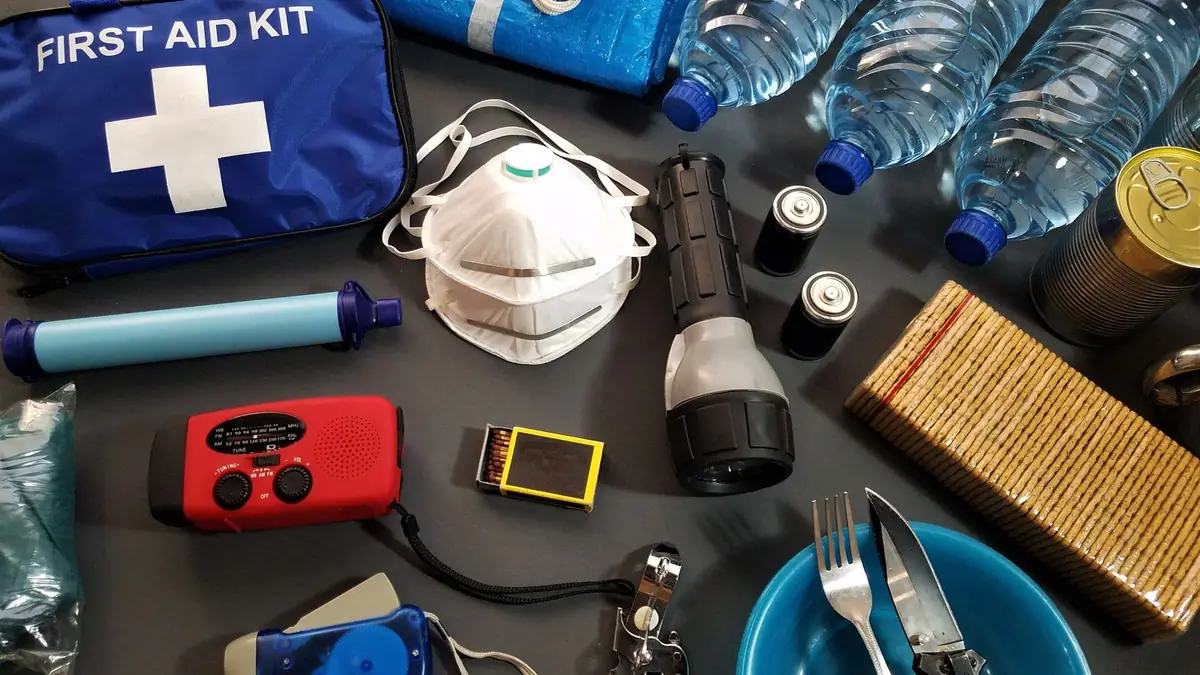
For a multi-day outage at home you need seven things sorted before the storm: light that does not depend on your phone, a way to charge that phone, stored water, food you can eat without a stove, a plan for heat or cooling, a way to get weather alerts, and a battery carbon monoxide alarm. The rest of this page is the full list, grouped by category, with the five items we would buy first. North Carolina plans around ice storms in January and hurricane remnants from August to October, and both can leave a neighborhood dark for a week. NC Emergency Management says to keep 3 to 7 days of water, food and supplies for each person and pet.
If you are leaving instead of staying, that is a different list: see the bug out bag checklist. For the coastal and evacuation version of this page, read the hurricane kit for North Carolina. Everything here sits in our storm prep category.
The five items to buy first
- A battery carbon monoxide alarm. Outages are when people run generators and gas heaters in the wrong place.
- A crank or battery weather radio so you hear warnings when cell service is gone.
- A power bank that holds several phone charges.
- A lantern that lights a whole room.
- A water container you filled before the storm.
Each has one specific pick below. Everything else here is ordinary household stuff.
Light
- One lantern per room you will use, plus a headlamp for each adult. A lantern lights the table, a headlamp lights your hands.
- Spare batteries in the size your lights take. Standardize on AA if you can.
- No candles as your main light. Open flames are a fire risk in a dark house, especially with kids and pets.
Our power outage lantern guide compares the options if you want more than one pick.
Streamlight Siege AA

Light
Streamlight Siege AA Lantern
- 200 lumens on white high
- 7 hr high, 37 hr low (white LED, per Streamlight)
- 3 AA, batteries not included
- IPX7, floats
- About 9 oz
A lantern that lights a room for days on cells you can buy anywhere.
Check price on AmazonSold by Amazon.com
Streamlight lists the Siege AA at 200 lumens on white high, with run times of 7 hours on high and 37 hours on low (white LED, cover removed), on three AA alkaline batteries that are not included. It has white and red modes and an SOS flash, an IPX7 rating, and it floats. Streamlight lists it at about 9 ounces. It runs on cells you can buy at any gas station, which matters on day five. It is not a rechargeable lantern, so keep spare AAs.
Power for phones and small devices
- A charged power bank, topped up when the forecast turns. Charge it every time a named storm shows up on the National Hurricane Center map.
- Cables for every device, including the older ones.
- Low power mode on every phone, and a rule that nobody scrolls. Save the battery for calls, maps and alerts.
- A car charger. Idling a car in an open driveway to charge phones works, but never in a garage.
- Optional: solar. Our solar power bank guide covers what a small panel can do.
For anything bigger than phones (a fridge, a CPAP, a window unit) you are in generator or power station territory, and our sister site covers it: best generator for home and battery backup versus a gas generator.
Anker Power Bank 20K 87W
Phone Power
Anker Power Bank 20K 87W with Built-In USB-C Cable
- 20,000 mAh
- 87 W total, 65 W to one device
- Built-in USB-C cable
- 15.5 oz
Several phone charges for a family, as long as you fill it before the storm.
Check price on AmazonSold by AnkerDirect
Anker lists this bank at 20,000 mAh with 87 W total output shared across three devices, up to 65 W to a single device, and a built-in USB-C cable. Anker lists the weight at 15.5 ounces. A 20,000 mAh bank is a good fit for a family because it can give several phones a full charge each, though the real number depends on the phone. Charge it before the storm.
Water
- One gallon per person per day for 3 to 7 days, per NC Emergency Management and ready.gov, for drinking and sanitation.
- Count pets. They drink too.
- Fill a bathtub when a hurricane watch is issued, for flushing and washing, not for drinking.
- A way to treat water if you run out. Filters and tablets are the specialty of our sister site, Pure Flow Lab.
- A manual can opener. People forget it every year.
For tanks, stackable jugs and how long stored water stays good, see emergency water storage.
Reliance Jumbo-Tainer 2.0
Water
Reliance Jumbo-Tainer 2.0, 7 Gallon
- 7 gal (26 L)
- Leak-proof hideaway spigot
- Dual handles for pouring and tie-down
- Food safe: FDA compliant, BPA-free
- 2.9 lb empty
The cheap way to cover the first week of water for one person.
Check price on AmazonSold by Amazon.com
Reliance lists this as a 7 gallon (26 L) container, 15.3 by 8.5 by 18.0 inches and 2.9 pounds empty, with dual handles for pouring and tie-down and a leak-proof hideaway spigot. It is food safe (LFGB certified and FDA compliant) and BPA-free. Seven gallons is roughly a week of the one-gallon-per-day figure for one person, and it is heavy when full, so fill it where it will sit. It is the cheap way to get the first few days covered. Wash it out before you fill it.
Food
- Three to seven days of food that needs no cooking, or that you can heat on a stove used outdoors only.
- Eat the fridge first, then the freezer. The FoodSafety.gov chart says a refrigerator keeps food safe for about 4 hours without power with the door closed, a full freezer about 48 hours, and a half-full one about 24 hours. When in doubt, throw it out.
- A cooler and ice for the things you want to keep.
- Paper plates, plastic forks, trash bags.
Ready-to-eat meal pouches are covered in our MRE guide.
Heat and cooling
- Winter: blankets, sleeping bags, hats, and one room to live in. Close the door to the rest of the house.
- Summer: battery fans, damp cloths, window shades closed during the day, and a plan to go to a cooled public place if someone in the house is elderly or unwell.
- No cooking or heating with gas in the house unless the appliance is designed for indoor use.
If you buy a heater for outages, it needs to be designed for indoor use, and you still need a working CO alarm. Our sister site compares kerosene heaters and propane heaters.
Generators, grills and gas heaters stay outside
Say it plainly: generators, charcoal grills, camp stoves and gas heaters belong outdoors. They put out carbon monoxide, which you cannot see or smell.
- The Consumer Product Safety Commission says never use portable generators inside homes or garages, even with doors and windows open, and to use them outside only, at least 20 feet from the house with the exhaust pointing away.
- The CDC says the same about the 20 feet, and adds that portable gas camp stoves, charcoal and flameless chemical heaters should not be used indoors, and that you should not heat the house with a gas oven.
- Both recommend battery-operated or battery backup CO alarms, on every level of the home and near sleeping areas. The CDC says to replace them per the maker or every 5 years.
First Alert CO710
Safety
First Alert CO710 10-Year Battery Carbon Monoxide Alarm
- 85 dB alarm
- Electrochemical CO sensor
- Sealed 10-year lithium battery
- Backlit display shows CO level and peak level
- End-of-life warning
The alarm that matters most if anyone runs a generator, stove or heater during an outage.
Check price on AmazonSold by Amazon.com
First Alert lists the CO710 with an 85 dB alarm, an electrochemical CO sensor, a sealed lithium battery rated for 10 years, an end-of-life warning, and a backlit display that shows room temperature, the current CO level and the peak level in ppm. Because the battery is sealed, there is nothing to swap: when the end-of-life warning comes, you replace the whole alarm. Put one on every level and outside bedrooms. Press the test button when you set it up and again when a storm is coming, and write the install date on the back.
Communications and information
- A NOAA weather radio with battery or crank power. Per ready.gov, pick a model with an alert tone.
- A written list of phone numbers for family, neighbors, your utility and your doctor.
- Texts instead of calls. They go through when voice does not.
- A family meeting place and a person out of town everyone checks in with.
- A GMRS or Meshtastic backup if you live somewhere with weak coverage. See our emergency radio guide.
Midland ER310
Weather Alerts
Midland ER310 Emergency Crank Weather Radio
- Solar, hand crank, lithium-ion battery
- 6 AA backup (not included)
- NOAA alerts plus AM/FM
- 8.0 x 3.4 x 2.4 in
- Up to 45 hours normal use per Midland
Weather alerts and a flashlight with no power and no cell service.
Check price on AmazonSold by Midland Radio
Midland lists the ER310 with solar, hand crank and rechargeable lithium-ion battery power, a six AA battery backup (batteries not included), NOAA weather radio with alerts, AM/FM, an LED flashlight with an SOS mode, and a micro USB cable. It measures 8.0 by 3.4 by 2.4 inches. Midland's own FAQ says the radio will not charge a device at the expense of its own battery and will likely not move the needle on a newer phone, so use it for weather and light and treat any phone charging as a trickle at best. We cover the crank radios in full in the emergency radio guide.
Cash and documents
- Cash in small bills. Card readers and ATMs go down with the power.
- Copies of insurance policies, IDs, deed or lease, in a zip bag, plus photos on your phone.
- Extra house and car keys.
- A full tank of gas in at least one car before a storm. Stations cannot pump without power.
Medical basics
- A first aid kit and a first aid book, per NC Emergency Management.
- A week of prescription medication, and a list of what each person takes.
- Anyone who depends on powered medical equipment should talk to their doctor and utility before the season starts.
- Take a class. A first aid or Stop the Bleed course teaches more than a kit can. We do not give medical advice on this site.
Kids and pets
- Games, books, cards and a few downloaded shows for kids, and a flashlight of their own.
- Diapers, wipes, formula if you have a baby, for the full week.
- Pet food and water for 3 to 7 days, medicine, leash, carrier, vaccination records and a current photo, per NC Emergency Management.
- Check which shelters take pets before you need one.
The car
- Keep the tank above half from June to November, and above half in any winter storm forecast.
- A jump pack, a tire inflator and basic tools.
- Blankets, water and snacks that stay in the trunk. See the winter car emergency kit for the cold season version.
- Park outside, not in an attached garage, when you run the engine to charge phones.
Sanitation and household
- Toilet paper, trash bags, wipes, hand sanitizer, soap.
- A bucket with a lid and heavy bags as a backup toilet.
- A fire extinguisher, and a wrench or pliers to shut off utilities.
Comparison of the five picks
| Item | Key spec | Power | Best for |
|---|---|---|---|
| Streamlight Siege AA | 200 lumens, 37 hours on low | 3 AA | Lighting a room for days |
| Anker Power Bank 20K 87W | 20,000 mAh, built-in USB-C cable | Recharge before the storm | Family phones |
| Reliance Jumbo-Tainer 2.0 | 7 gallons, hideaway spigot | None | Week of water for one person |
| First Alert CO710 | 85 dB alarm, electrochemical sensor, 10-year sealed battery | Sealed battery | Every level and bedroom hall |
| Midland ER310 | NOAA alerts, solar and crank | Crank, solar, battery | Weather alerts with no power |
Who should skip this
If you live in an apartment with a landlord who handles repairs, you can skip the water tank and the tools. Do not skip the CO alarm or the radio. If you plan to evacuate before any storm, build the go bag first.
Questions people ask about outage kits
How long should I plan to be without power?
NC Emergency Management says 3 to 7 days. Ice storms and hurricanes have gone longer in parts of the state, so seven is the safer number.
Can I run a generator in the garage with the door open?
No. The CPSC says never to run a portable generator inside a home or garage, even with doors and windows open. Keep it outside, at least 20 feet from the house.
How many CO alarms do I need?
One on every level of the home and outside sleeping areas, per CPSC and the CDC, battery operated or with a battery backup.
Will a hand crank radio charge my phone?
Maybe slowly. Midland says the ER310 will likely not move the needle on a newer phone, so plan on a power bank for that job.
The short version
Buy the CO alarm, the radio, the power bank, the lantern and the water container first, fill the gaps from the lists above, keep every generator and gas heater outdoors, and check the kit twice a year.
Sources
- CPSC Carbon Monoxide Information Center
- CDC: About Carbon Monoxide
- Ready.gov: Build A Kit
- Ready NC: Get a Kit
- FoodSafety.gov: Food Safety During a Power Outage
- Streamlight Siege AA product page
- Anker 20K 87W power bank product page
- Midland ER310 product page
- First Alert CO710 product page
- Reliance Jumbo-Tainer 7 gallon product page
Ready to buy?
See current models and availability on Amazon. Your clicks keep these guides free.
Shop Power Outage Supplies on Amazon →