Natural Disasters in Utah: Snowmelt Floods, Summer Fire and a Short but Busy Record
Utah did not get its first federal disaster declaration until 1977, and half of its 62 have come since 2015. Here is what they were, where they landed, and what to keep on the shelf.
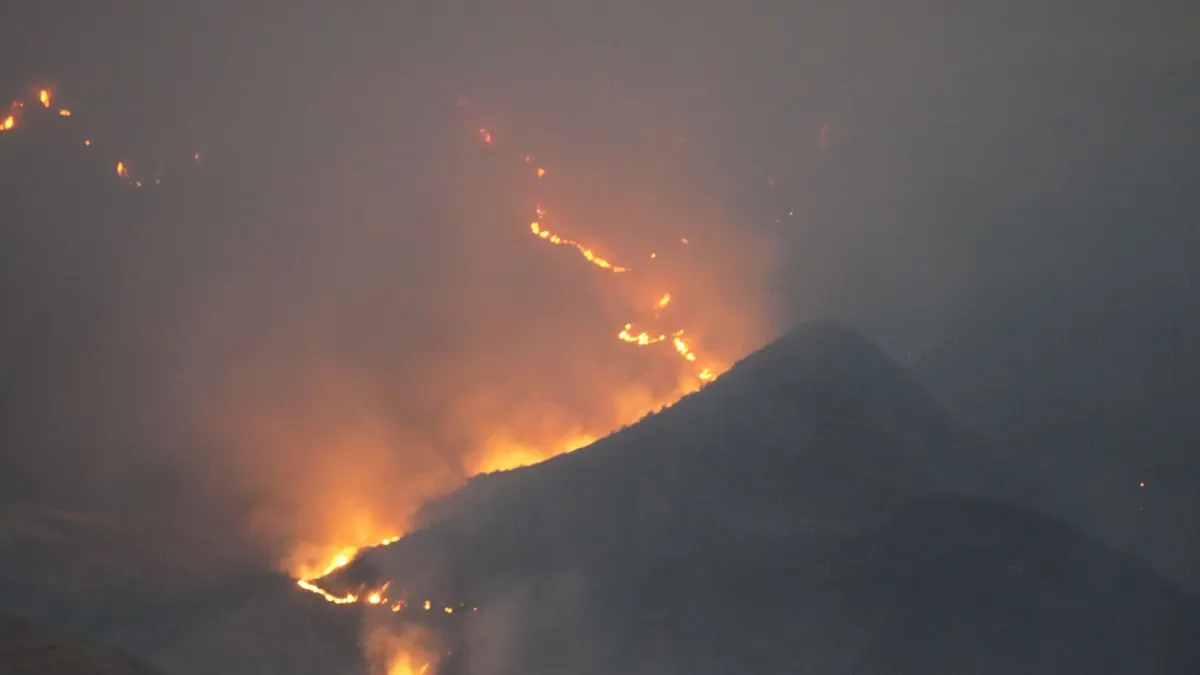
Utah has the shortest federal disaster record of any state in this series and the fewest major disasters. The file starts with a drought emergency in January 1977, and of the 62 declarations since then, only 17 are major disasters; Texas and California each have more than a hundred. But the pace has changed. Nearly half of Utah's declarations have come since 2015, and the 2020s are already the busiest decade in the file with three years still to go. Most of the recent ones are fires. Most of the big ones, going back to 1983, are floods, and nearly all of those floods started in spring, when a deep snowpack lets go at once. If you're sorting out the natural disasters in Utah worth preparing for, those are the two: snowmelt flooding from February into May, and wildfire from June into September.
There's one more entry that no other state in our series shares in quite the same way: a major disaster declaration for an earthquake and its aftershocks in March 2020. It covered only two counties, but it's the reason a Utah kit has to be built for the one hazard that gives no warning at all. This page is part of our natural disasters by state series, and every figure comes from FEMA's public declaration file.
How FEMA counts matters here more than in most states. A major disaster declaration is the one that can send money to counties and households. An emergency declaration is smaller and faster. A fire management declaration repays the state for fighting one wildfire, and every fire gets its own, which is why Utah's 42 fire entries dwarf its 17 major disasters. FEMA only began issuing fire declarations in volume in the 1990s, so the growth in the raw count is partly real and partly bookkeeping. Two entries aren't Utah weather at all, the 2005 Katrina evacuation emergency (the state took in evacuees) and COVID in 2020, and the seasonal numbers below leave them out.
Utah disasters by type since 1977
| Disaster type | Major declarations | When it usually hits | Example from the record |
|---|---|---|---|
| Flooding (mostly snowmelt, with landslides) | 11 | February through May, with a few in late summer | Spring 1983 storms, landslides and flooding, 22 counties |
| Wildfire | 0 major, 42 fire management | June through September, June worst | Five fire declarations in the summer of 2026 |
| Severe storms and wind | 3 | No pattern: January, September, late November | September 2020 straight-line winds, 4 counties |
| Earthquake | 1 | Any time | March 2020 earthquake and aftershocks, 2 counties |
| Tornado | 1 | August | August 1999 tornado, severe storms and hail, 1 county |
| Drought | 1 emergency | 1977 | January 1977 drought emergency, 27 counties |
Counted by major declarations. Utah has never had a major disaster declaration for a hurricane or an ice storm, has had exactly one for a tornado, and no wildfire in the state has risen to a major disaster on its own. The one that came closest is the newest entry in the file: the Cottonwood Fire in Beaver County drew a fire management declaration in June 2026, and the flooding and mudslides off its burn scar three weeks later became a major disaster that October. Fire, then flood, in the same summer on the same ground.
Which counties get named most
All 29 Utah counties have appeared in at least one declaration. The top of the list is the growing southwest corner and the Wasatch Front, with the central counties that flood in spring and burn in summer close behind.
| County | Declarations | Mostly |
|---|---|---|
| Washington (St. George) | 14 | Wildfire, flash floods |
| Utah (Provo, Orem) | 13 | Snowmelt floods, wildfire |
| Salt Lake | 12 | Floods, wind, earthquake, fire |
| Weber, Wasatch, Tooele, Millard, Davis | 11 each | Floods and wildfire |
| Summit, Sanpete, Morgan | 10 each | Snowmelt floods, fire |
| Sevier | 9 | Floods, 2025 fire |
The counts sit close together because Utah's big events are statewide snowmelt years that name ten or twenty counties at once. Washington County leads on its own because it adds desert flash floods and the St. George fires to the statewide floods.
Spring: when the snowpack comes down
Eleven major flood disasters, and the dates tell the story. Six of them started between February and May, two more began with winter rain on snow, and only three were late-summer storms. That's snowmelt: a cold, wet winter leaves a deep pack in the Wasatch and the Uintas, a warm spell in April or May brings it down faster than the creeks can carry it, and the hillsides above the towns let go.
| Flood | Counties | Note |
|---|---|---|
| Spring 1983 storms, landslides and flooding | 22 | The largest weather event in Utah's federal record |
| April 2011 flooding | 19 | Not declared until August; the melt ran for months |
| August 1984 storms, mudslides and landslides | 12 | Late summer, the year after 1983 |
| April 2005 flooding and landslides | 9 | |
| May 2023 flooding | 5 | Declared in December |
| July 2026 flooding and mudslides | Beaver County | Off the Cottonwood Fire burn scar |
The pattern repeats every time the mountains get a big winter. For the valleys along the Wasatch Front and the towns below the Uintas, the spring kit is less about gear and more about knowing the creek. Sandbags, a sump pump with a battery backup if the basement has flooded before, documents in a waterproof pouch, and a weather radio with alerts on through May. The get home bag matters here because a mudslide across a canyon road can close the only route home for days.
Summer: fire, from the St. George desert to the Wasatch canyons
Every one of Utah's fire declarations started between June and September, and June alone accounts for more than any other month. The bad years come in clusters: 2012 and 2026 top the list, then 2020, with a handful of years at three apiece. The 2026 season was the most spread out, with the Iron and Cherry fires in Juab and Tooele counties, the Cottonwood Fire in Beaver County, the Widemouth 2 Fire in Millard County and the Rocky Canyon Fire in Morgan and Summit counties, all between late June and early August.
The recent list shows the fire problem isn't confined to one corner of the state. Washington County, the St. George area, has the Veyo West Fire of 2020 and the Forsyth Fire of 2025. The Wasatch Front has the Parleys Canyon Fire in Salt Lake and Summit counties in 2021 and the Ether Hollow Fire in Utah County in 2020. Southern and central Utah have the Mammoth and Pack Creek fires of 2021, the Silver King Fire in Piute County in 2024, and the Deer Creek and Monroe Canyon fires of 2025. If your house backs onto brush or juniper anywhere from the Dixie desert to the bench above Salt Lake, the go bag should be packed by the first of June, with documents, medications, chargers, masks and a plan for animals. The bug out bag checklist has the full list.
The one with no season: the 2020 earthquake
In March 2020 an earthquake and its aftershocks earned a major disaster declaration for two counties, with individual assistance for households. It's the only earthquake declaration in Utah's file, and Utah is one of only six states among the 22 we've pulled with any earthquake declaration at all. California has the most by far; the rest have one or two.
Earthquake readiness in Utah is mostly about water and about staying put. The water mains and the gas lines are the first things to go. A week of stored water per person, in containers that won't break, is the single most useful thing in the house, and Utah families who already keep a pantry are halfway there. Add a wrench for the gas meter, sturdy shoes and a flashlight by every bed, and a lantern that doesn't need an open flame. The long-term water storage guide covers how to keep that water good for years.
Wind and winter
Utah's three severe storm declarations are odd ones out: the straight-line winds of September 2020 across four counties, declared a major disaster the following January; the January 2005 storms and flooding; and a storm at the end of November 2011 that got a one-county declaration. There's also the single tornado declaration, from August 1999.
Snow itself has never produced a major disaster declaration in Utah, which will surprise anyone who has driven I-80 over Parleys Summit in January. The snow shows up in the file as the flooding that follows it. Even so, I wouldn't skip the winter car kit in a state where a closed canyon or a jackknifed truck on I-15 can leave you parked for hours below freezing, and a grid-down night in a Wasatch winter calls for emergency blankets and a safe way to heat one room.
A Utah disaster calendar
- January: the state's very first declaration (the 1977 drought) and the dike failure and flash flooding of 1989. Winter storms with rain on snow start the early floods.
- February through May: snowmelt season. More than half of the major flood disasters began in these months. Watch the creeks when a big winter meets a warm April.
- June: the worst single month in the file. Fire season opens with the first dry heat.
- July and August: fire continues, and the late-summer floods of 1984, 2012 and 2026 land in this window, the last one on a fresh burn scar.
- September: the last fires of the season, and the 2020 windstorm.
- October: no declaration has ever started in October. Restock month.
- November and December: one declaration each in the whole record. The winter kit goes in the truck.
What to build for Utah, in order
The same mountain-west pattern plays out next door in Colorado, Idaho and Arizona, and the gear for all of it is in the storm prep guides. For Utah specifically, this is the order I'd buy in.
- Water, for the earthquake you cannot schedule. A week per person in containers that survive a shake, rotated on a calendar. The emergency water storage guide covers the containers; the long-term storage guide covers keeping it.
- The outage base. Lantern, headlamps, weather radio, phone power, cash, documents, a week of food. The power outage kit checklist is the full list.
- The winter car kit, from November through April, in every vehicle that crosses a canyon.
- The fire go bag, packed by June 1 if there is brush, juniper or timber within sight of the house.
- The spring flood watch: weather radio alerts on, sandbags if the basement has a history, and a get home bag for the day the canyon road closes.
- Communications. Canyon country kills cell signal, and an earthquake will take the towers with it. GMRS radios for the household, and a Meshtastic node on the roof reaches across a valley with no network at all.
Questions people ask about Utah disasters
What is the most common natural disaster in Utah?
Wildfire by count (two thirds of the FEMA declarations), flooding by weight (11 of the 17 major disasters, and every event that covered more than ten counties). The floods are mostly spring snowmelt, and the fires are mostly June through August.
Why does Utah's record only start in 1977?
FEMA's file goes back to 1953 for most states, but Utah's first entry is the drought emergency of January 1977. The state simply didn't have a federally declared disaster before then. Since 2000 it has had 54.
Has Utah ever had a major disaster declaration for a wildfire?
Not for the fire itself. All 42 fire entries are fire management declarations, which fund the firefighting. The closest thing is the October 2026 major disaster for the flooding and mudslides that followed the Cottonwood Fire in Beaver County.
Is Utah at risk of earthquakes?
Yes, and the federal record shows it: the March 2020 earthquake and aftershocks got a major disaster declaration for two counties, with individual assistance. It's the only earthquake declaration in the state's file, which makes it easy to forget and the reason to store water.
What was the biggest disaster in Utah history by counties covered?
Leaving out the pandemic and the 2005 Katrina evacuation, the spring 1983 storms, landslides and flooding covered 22 of Utah's 29 counties. The April 2011 flooding and the August 1984 storms are the next two, and nothing since has come close.
Does a FEMA declaration mean help for my house?
Rarely. It takes a declaration that includes individual assistance, and most of Utah's don't. In the file, only the 2020 pandemic declaration and the 2020 earthquake carried it. Everything else funded county and city repairs. Check the specific declaration, keep your own insurance current, and photograph the house before the season starts. I pulled FEMA's declaration file on October 31, 2026; the counts will move as new entries come in.
Sources
Ready to buy?
See current models and availability on Amazon. Your clicks keep these guides free.
Shop Emergency Kits on Amazon →