Natural Disasters in Colorado: Fire Is the Big One, and the Season Keeps Getting Longer
Seven major wildfire disasters, a fire year in 2002 that covered 60 counties, a December fire in 2021, and floods that follow the burn scars. What the record says about living along the Front Range and beyond.
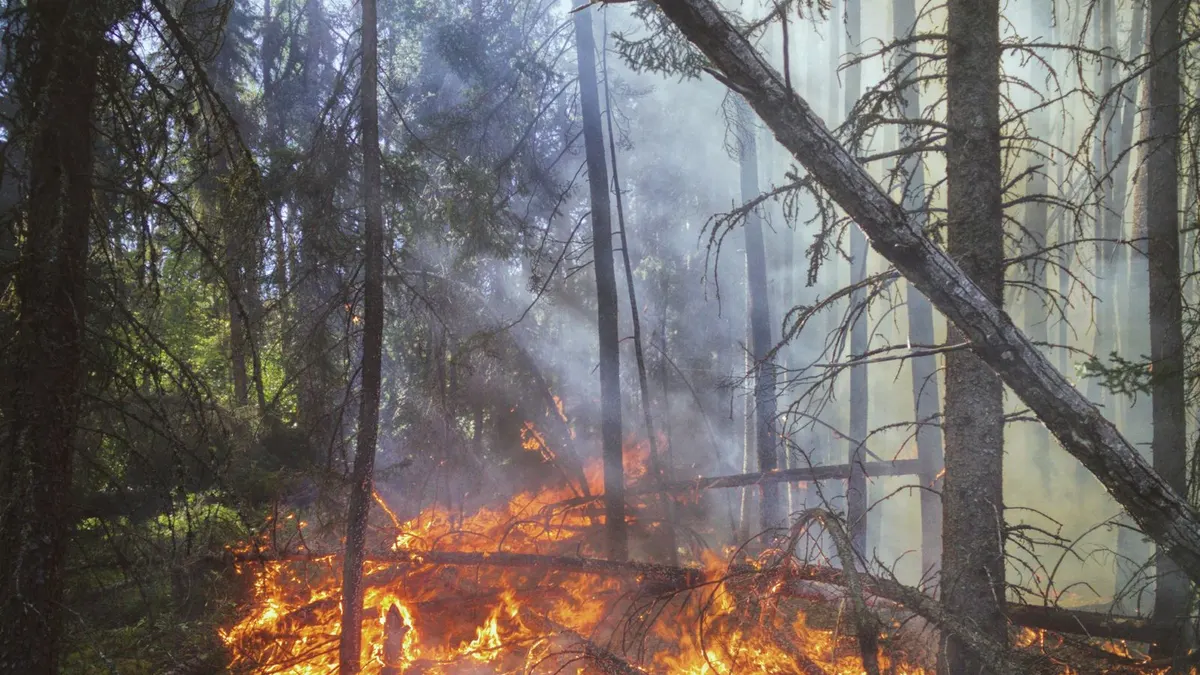
In most states, wildfire shows up in FEMA's file as a long list of small firefighting grants and almost never as a full major disaster. Colorado is the exception. Seven of the state's 26 major disaster declarations are wildfires, a count only California and Washington beat among the states we've pulled so far, and the list reads like the last twenty-five years of Front Range news: the 2002 fire season that put nearly every county under one declaration, High Park and Waldo Canyon, Black Forest and Royal Gorge, the 2020 fires, the wind-driven fire in Boulder County in the last days of 2021, and the wildfires, flooding and mudslides of the summer of 2026. Among the natural disasters in Colorado, fire is the one that reaches houses.
The rest of the record is water. Half of the major disasters are floods, and every one of them started between May and September, the window when snowmelt, afternoon thunderstorms and burn scars line up. The file holds 112 Colorado declarations going back to 1955, and most of them have come since 2000, for reasons explained below. It's one of the pages in our natural disasters by state index, and every number on it is from FEMA's public declaration file as of October 31, 2026.
What the three kinds of declarations mean here
A major disaster declaration (DR) is the full one: governor's request, President's signature, federal money for counties and sometimes for households. An emergency declaration (EM) is faster and narrower; Colorado's are mostly snow, plus a 1977 drought and the September 2013 flood while it was still raining. A fire management declaration (FM) funds the state's cost of fighting one fire that threatens homes, one fire per declaration. Colorado has 79 of those, and nearly half came in the 2000s alone, with 2002 the worst single year. FEMA issued only a handful of fire declarations for the state before 2000, so the early decades look calmer than they were.
Set aside two entries that are in the file but aren't Colorado weather: the 2005 Hurricane Katrina evacuation emergency, which covered the whole state because Colorado took in evacuees, and the COVID-19 declarations.
Colorado disasters by type since 1955
| Disaster type | Major declarations | When it usually hits | Example from the record |
|---|---|---|---|
| Flooding (including flash floods and mudslides) | 13 | May through September | September 2013 floods and landslides, 18 counties |
| Wildfire | 7 major, plus 79 fire management | June and July, with a second peak in October | 2002 wildfires, 60 counties |
| Severe storms (incl. a winter storm) | 3 | April and May | April 2001 severe winter storms, 14 counties |
| Tornadoes | 1 major (1965), plus the May 2008 tornadoes filed under severe storms | May and June | June 1965 tornadoes, storms and flooding, 27 counties |
| Snow | 0 major, 3 emergencies | December and March | March 2003 snow emergency, 29 counties |
| Dam failure | 1 major (plus a 1982 flash flood filed as a flood) | May, July | May 1973 dam failure, 1 county |
Counted by major declarations. The May 2008 storms and tornadoes (2 counties, with individual assistance for households) are filed under severe storms, so the state's tornado history is split across two labels.
A Colorado disaster calendar
- January: a handful of entries, including the 1977 drought emergency and two fires. Winter storms close the passes but rarely reach a federal declaration.
- February: nothing in 70 years. Build the kit.
- March and April: snow (the 2003 emergency, the 2001 winter storms) and the first fires of the year. Defensible space work happens now.
- May: snowmelt floods, the 2008 tornadoes, and the first real fires.
- June: 33 fire declarations. The worst month in the file by a wide margin.
- July: the second fire month, and four of the floods.
- August and September: late fires on the Western Slope, flash floods, and the 2013 flood.
- October: fire again, 8 declarations. CalWood and East Troublesome started here.
- November and December: the December 2006 snow emergencies and the Marshall Fire.
Fire: June on the calendar, but no month is really off
More than half of Colorado's fire declarations started in June or July. That's the core season, when the snow is gone from the foothills and the monsoon hasn't arrived. But the calendar above shows fires starting in every month except February, with October a real second peak: the CalWood Fire in Boulder County and the East Troublesome Fire in Grand County were declared on the same October day in 2020. The December entry is the Marshall Fire, which got a fire management declaration the day it started and a major disaster declaration for Boulder County the next, listed as wildfires and straight-line winds. A grass fire in a windstorm in the last week of December is the clearest sign in the file that the old idea of a fire season no longer holds on the Front Range.
The year that still defines Colorado fire in federal records is 2002: eighteen fire management declarations, then a major disaster in June that covered 60 counties, the widest weather event in the state's file. The 2012 season brought the High Park Fire in Larimer County and the Waldo Canyon Fire above Colorado Springs, declared together as one major disaster with individual assistance. The next summer, Black Forest in El Paso County and Royal Gorge in Fremont County each got their own. The 2020 season (Pine Gulch and Grizzly Creek on the Western Slope, Cameron Peak in Larimer County, CalWood and East Troublesome) became a major disaster the following January. Since then the named fires keep coming: Stone Mountain, Alexander Mountain and Quarry in the summer of 2024, Elk, Lee and Oak in 2025, and Aspen Acres, Gold Mountain and Willow in 2026 before the summer was half over.
The kit for this is a go bag that lives packed all year if your house is in the foothills or the mountain towns, not one that gets assembled in June. Documents, medications, a change of clothes, N95s because the smoke gets to you first, chargers, cash, and a written answer for where the horses and the dogs go. Our bug out bag checklist goes through it item by item. Pair it with a second route out of the neighborhood, because the Front Range canyons mostly have one road, and with the defensible-space work that happens in April, not during the evacuation.
Floods: May to September, and heavier after a fire
All 14 of Colorado's flood declarations (13 major, one emergency) started between May and September, with May and July the busiest. The spring ones are snowmelt and rain on a full river. The summer ones are thunderstorms parked over a canyon. The widest of them are in the table, and nearly all of them cover a dozen counties or more, because a Colorado flood tends to run down several drainages at once.
| Flood | Counties under the major declaration | Household assistance |
|---|---|---|
| September 2013 floods and landslides | 18 | Yes |
| May 1973 floods | 16 | No |
| May 1969 floods | 15 | No |
| July 1984 storms, mudslides and landslides | 15 | No |
| May 2015 storms, tornadoes and flooding | 15 | No |
| June 2023 storms, flooding and tornadoes (declared that August) | 14 | No |
| July 1997 flash floods | 13 | No |
| September 2026 wildfires, flooding and mudslides | 4 | No |
The one everyone along the Front Range remembers is September 2013. FEMA issued an emergency declaration the day after the rain began and a major disaster, with individual assistance, two days after that. It's the largest flood in Colorado's federal record by counties covered. And the newest flood entry shows where things are heading: the 2026 major disaster is filed as wildfires, flooding and mudslides together, because the water came down the slopes the fires had just stripped.
Flood gear here is about warning and about the car. A NOAA weather radio with the alert on, set to your county, from May through September, and especially in the first two summers after a fire above you. A get home bag in every vehicle, because a washed-out canyon road in Boulder or Larimer County can mean a night on the wrong side of it. Documents in a waterproof pouch, and the rule about not driving through water you cannot see the bottom of.
Snow: emergencies, not disasters, but it still shuts the state
Colorado has never had a major disaster declaration for snow alone. What it has is three emergency declarations: the March 2003 storm, which covered 29 counties, and two back-to-back storms in December 2006. The April 2001 severe winter storms did reach a 14-county major declaration, filed under severe storms. The file understates the problem, because a blizzard that closes I-70 and I-25 for two days rarely does the kind of permanent damage that triggers a federal request.
The winter car kit is the first thing a Coloradan should build, ahead of anything else on this page. Blankets, water, food, a shovel, traction aids, a charged power bank, and the understanding that a closed pass can hold you for a night. At home, the grid-down winter kit means emergency blankets, a heater rated for indoor use and a carbon monoxide alarm within arm's reach of it, and water stored before the pipes are at risk.
Where the declarations land
All 64 Colorado counties have been named in at least one declaration. The top of the list is the northern Front Range and the Pikes Peak region, where the foothills meet the cities.
| County | Declarations | Mostly |
|---|---|---|
| Larimer (Fort Collins, Estes Park) | 30 | Wildfire (High Park, Cameron Peak, Alexander Mountain), the 1997 and 2013 floods |
| Pueblo | 20 | Floods, wildfire (Aspen Acres, 2026) |
| El Paso (Colorado Springs) | 20 | Waldo Canyon, Black Forest, floods |
| Boulder | 19 | CalWood, Marshall, Stone Mountain, the 2013 flood |
| Weld | 16 | Floods, tornadoes, 2013 |
| Jefferson, Fremont | 15 each | Wildfire (Quarry, Royal Gorge), floods |
| Custer | 14 | Wildfire, floods |
| Washington, Teller, Las Animas, Elbert | 13 each | Floods, storms, fire |
Larimer County is ten declarations clear of anyone else, and the gap is fire: High Park, Cameron Peak, Stone Mountain and Alexander Mountain, plus the floods that ran down the same canyons afterward.
What to build for Colorado, in order
- The winter car kit, because a shut pass is the disaster most Coloradans will actually meet. The winter car emergency kit guide is the list.
- The go bag, if you can see trees or grass from the porch. Packed all year on the Front Range and in the mountain towns. Masks, documents, meds, a plan for the animals, two ways out.
- The outage base: a week of stored water, food, a lantern and headlamps, a weather radio, phone power. The power outage kit checklist is the full list, and a solar power bank earns its place in a state with this much sun.
- The flood watch, May through September: weather radio alerts on, get home bag in the car, extra caution for two summers below any burn scar.
- Communications. The canyons and the high country have no cell signal, and a fire evacuation is exactly when the towers overload. A GMRS radio in each vehicle, and a Meshtastic node on a ridge with a small solar panel to pass messages up and down a canyon with nothing else working.
Questions people ask about Colorado disasters
What is the most common natural disaster in Colorado?
Wildfire, however you count it. Fire is most of the state's 112 FEMA declarations and 7 of the 26 major disasters, a wildfire count only California and Washington beat in our series. Flooding is second.
When is Colorado's wildfire season?
June and July by the numbers, with more than half of the fire declarations starting in those two months, but the file has fires starting in every month except February, including a real October peak and the Marshall Fire in the last days of December. Treat it as year-round on the Front Range.
What was the biggest disaster in Colorado history by counties covered?
Setting aside the pandemic and the Katrina evacuation, the 2002 wildfires: a major disaster declaration covering 60 of the 64 counties, on top of eighteen separate fire management declarations that year. The 1977 drought emergency and the March 2003 snow emergency are the next widest.
Does Colorado get tornadoes?
Yes, on the eastern plains. The record has a major disaster for the May 2008 storms and tornadoes, with individual assistance, a 1965 declaration for tornadoes, storms and flooding across 27 counties, and tornadoes listed alongside the floods of 2015 and 2023.
How bad was the 2013 flood in FEMA's terms?
It's the widest flood in the state's file: an emergency declaration for 15 counties the day after the rain began, and a major disaster for 18 counties with individual assistance two days later.
Does a declaration mean FEMA will help with my house?
Only if it includes individual assistance. In Colorado's file that applies to the 2008 tornadoes, the 2012 and 2013 fires, the 2013 flood and the Marshall Fire declaration. The 2002 fires, the 2020 fires and the 2026 declaration didn't include it. Read the declaration for your county on FEMA's site. Take photos of the house and the defensible space around it before June, so there is a record of what was there.
Where to go from here
Keep the winter kit in the car, keep the go bag packed if you live near fuel, and keep the weather radio on below the burn scars from May to September. The neighboring states in the series show the same mountain-west pattern from different angles: Utah to the west and Oklahoma out on the plains. The gear is in the storm prep guides. I'll update these counts as FEMA adds declarations.
Sources
Ready to buy?
See current models and availability on Amazon. Your clicks keep these guides free.
Shop Emergency Kits on Amazon →