Natural Disasters in Idaho: Spring Floods, August Fire and a Panhandle That Takes the Worst of Both
A short file with a clear shape: the rivers come up from February to June, the forests burn in August, and the ten northern counties carry most of it. What the record shows and what to keep ready.
Idaho's FEMA file is one of the shortest in our series, 61 declarations between April 1956 and August 2026, and that's the first thing worth knowing. Natural disasters in Idaho don't come every year, and when they do they come in two windows. Half of the state's major disaster declarations are floods, and every one of them began between December and June, most of them when the snowpack lets go in spring. Nearly all of the fire records began in August. Put the two together and you have the Idaho year: watch the rivers in spring, watch the ridges in late summer, and spend the fall and early winter restocking.
The second thing worth knowing is where. The counties at the top of Idaho's list are all in the Panhandle and the Clearwater country, where the rain-on-snow floods come in winter and the timber fires come in August, and the same towns show up in both columns. The Treasure Valley and the Snake River Plain appear far less often. This page is part of the natural disasters by state series, and the list everything below starts from is the power outage kit checklist.
Where it lands
| County | Declarations since 1956 | Main hazards |
|---|---|---|
| Kootenai (Coeur d'Alene) | 18 | Floods, windstorms, the 2015 Cape Horn Fire |
| Idaho County | 18 | Wildfire, river flooding |
| Bonner (Sandpoint) | 18 | Floods, wind, fire in 2015 and 2025 |
| Shoshone | 16 | Floods and slides in the Silver Valley |
| Latah (Moscow) | 16 | Floods, the 2024 fires |
| Benewah | 16 | Floods |
| Nez Perce (Lewiston) | 15 | Floods, fire |
| Clearwater | 15 | Fire, floods, slides |
| Valley, Lewis, Boundary | 12 each | Fire and floods |
| Elmore | 11 | Fire, including the 2013 Elk Fire |
All 44 counties have been named in at least one declaration, but ten of the twelve above are in the Panhandle and the Clearwater country. The wet, timbered north is where the record is.
How FEMA counts, and one thing Idaho has never gotten
A major disaster declaration repays counties and cities for repairs and, when individual assistance is added, pays households directly. An emergency declaration is quicker and narrower; Idaho has three, for the 1977 drought, the Katrina evacuation and COVID. A fire management declaration is a cost-share for fighting one named fire that threatens homes, filed one fire at a time and only in volume since the 2000s, so nearly all of Idaho's are bunched in the last 20 years. That's also why the 2010s look like the worst decade in the file and the 1980s look empty.
One line in the file matters more than the rest for how you prepare: in 70 years, no weather disaster in Idaho has ever included FEMA individual assistance. Every flood, fire, windstorm and earthquake declaration repaid local governments only. The one declaration with household aid was COVID. That's not a prediction about the next one, but it is the record, and it means the money for your own recovery is going to be your insurance and your savings, not a federal check.
Idaho disasters by type, 1956 to 2026
| Hazard | Major declarations | When it usually hits | Example from the record |
|---|---|---|---|
| Flooding | 18 | March through May, and December | December 1964 flood, 27 counties |
| Winter storms and spring storms with slides (filed as severe storm) | 9 | November through March | November 1996 storms, 18 counties |
| Wildfire | 3 major, plus 23 fire management | August | Summer 2000 wildfires, 16 counties |
| Straight-line winds | 1 (plus 2 filed as severe storm) | November through January | December 2025 windstorm, 10 counties |
| Earthquake | 1 | Once | October 1983, 3 counties |
| Volcanic ash | 1 | Once | Mount St. Helens, May 1980, 8 counties |
| Ice jams | 1 | January | January 1984, 1 county |
Counted by major disaster declarations. Katrina evacuation and COVID left out.
Spring floods: the Idaho disaster that keeps coming back
Every one of the 18 flood declarations began between December and June, and none in July through November. That's snowmelt, sometimes with rain on top of it, sometimes with a dam. The widest flood in the record is still the December 1964 flood, filed as heavy rains and flooding. The January 1974 declaration FEMA filed as storms, snowmelt and flooding, which is the recipe for most of the winter entries. The June 1976 dam collapse is in here too.
The modern pattern is a wet winter followed by a bad spring, and the file shows it twice. The winters of 1996 and 1997 produced three declarations in a year and a half, and 2017 produced four in one year. Add the spring floods of 2005, 2008, 2011, 2019 and 2024 and the June 2026 declaration for March storms, and Idaho has had a flood or storm-with-flooding declaration in 10 of the last 30 years.
| Flood season | Declarations | Counties |
|---|---|---|
| February 1996 storms | 1 | 10 |
| November 1996 storms with mud and landslides (declared January 1997) | 1 | 18 |
| March 1997 snowmelt flooding with slides (declared that June) | 1 | 12 |
| 2017: February winter storms and flooding, March flooding and landslides, May flooding, and a fourth declared in October | 4 | 11, 9, 5 and 2 |
| March 2026 storms and flooding (declared June 2026) | 1 | 6 |
The flood kit in Idaho is about roads and wells more than rising water in the living room. A NOAA weather radio with the alert tone on for the flash flood and landslide warnings. A week of stored water, because a flooded well is a boil notice that lasts. A get home bag in the truck for the day the river road or the pass is closed by a slide and the detour is three hours. And sandbags if the creek has ever reached the yard.
August fire
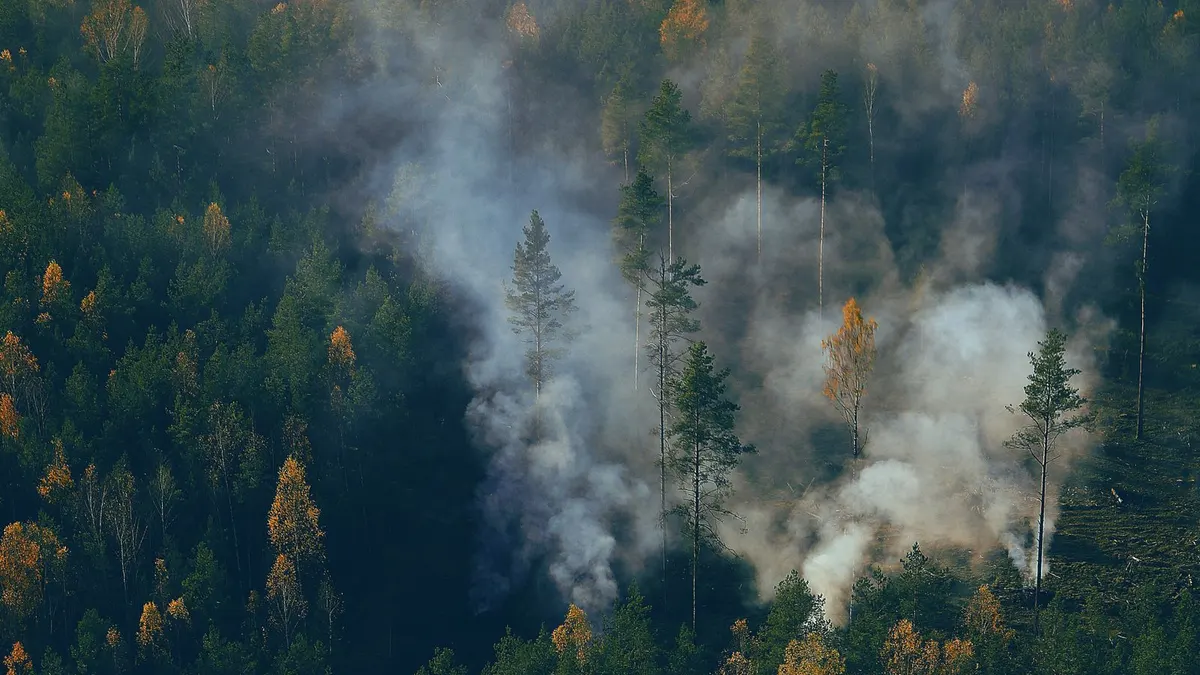
Idaho's fire season is short and it is August. Of the 26 fire-related records, 18 began in August, a handful in July, two in September, and none in any other month. The three major wildfire declarations are 1960, the August 1967 forest fires and the summer of 2000, which is the third-widest natural-event declaration in the file. The fire management records name the ground. The 2015 season drew four of them (Cape Horn in Bonner and Kootenai, the Clearwater Lawyer Branch complex in Idaho and Lewis counties, the Municipal Fire in Clearwater, Tepee Springs in Idaho County), and 2007 drew three. Since 2015 there's been one or two nearly every year: Henrys Creek in Bonneville, Grassy Ridge in Clark, Bedrock on the Nez Perce Reservation, Four Corners in Adams, Gem and Valley, Ross Fork in Blaine, the Texas and Gwen fires in Latah and Nez Perce, the Sunset Fire in Bonner, and the Tartar Fire in Washington County this past August.
If you live in timber, the kit is a go bag per person, packed by the Fourth of July, with the documents, medications, a few N95s, chargers, and an answer for the animals that doesn't depend on finding a trailer at the last minute. The bug out bag checklist covers it. The smoke settles into the valleys long before any fire is close, so the masks and a way to seal a room matter even for people who will never be told to leave.
Wind, ice, ash and one earthquake
- Straight-line winds. Idaho has three windstorm declarations, all recent and all in the cold months: November 2015, January 2021, and the December 2025 windstorm that drew a 10-county major declaration the following April. Wind in Idaho means trees on lines and days without power in January, which is the emergency blanket and safe indoor heat problem, not the rain problem.
- Winter storms. The December 2015 winter storms and the January 1984 ice jams. A small entry in the file, but a closed pass is a closed pass.
- Volcanic ash. Eight Idaho counties were declared after Mount St. Helens in May 1980. The ash came east with the wind. An N95 mask and a way to seal windows is the whole kit, and it overlaps with the smoke kit.
- Earthquake. One major declaration, for the October 1983 earthquake. Once in 70 years, no warning, so the water is already stored and the shoes are by the bed.
- Drought. One emergency declaration in May 1977. It belongs to the farms more than the kit, but a dry year is a bad fire year a few months later.
The Idaho calendar
- December and January: rain-on-snow floods, most of the windstorms, and ice. The winter car kit is in the truck and the house can go three days without power.
- February through May: the main flood window, with 14 flood declarations in these four months. Weather radio on, water stored, know which road is the detour.
- June: the tail of the snowmelt, the 1976 dam collapse among it. Pack the fire go bag before the month ends.
- July: fire season opens.
- August: the single worst month in the file, with 19 declarations, all but one of them fire. Go bag by the door, masks in the car.
- September through November: fire winds down, then the quietest stretch of the year. Restock here.
The kit, hazard by hazard
- The grid-down week. Lanterns and headlamps, a crank weather radio, phone power, a week of shelf food, cash, documents, and a way to heat one room without the grid, plus the carbon monoxide alarm that goes next to it. The power outage kit checklist is the full list. Idaho's windstorms and winter outages make this the kit you'll actually use.
- Water. A week per person, stored right. It covers the flooded well, the quake and the fire outage. See how to store water long term.
- The winter car kit. Idaho's distances and passes make this the one most people skip and most people need. The winter car emergency kit guide has the list.
- The fire go bag, if you're in or near timber, which in the Panhandle is nearly everyone. Packed by July.
- Communications. Cell coverage in the mountains is thin on a good day and gone when the power fails. GMRS radios in the truck and the house cover the first few miles; a Meshtastic node on a ridge carries text the length of a valley when there's no signal to begin with.
Questions people in Idaho ask
What is the most common natural disaster in Idaho?
Flooding, with 18 of the state's 35 major disaster declarations, nearly all from snowmelt and rain on snow between February and June. Wildfire has more total records, but most of those are single-fire management declarations rather than major disasters.
Is Idaho a safe state for natural disasters?
Compared with the rest of our series, yes. Idaho's 61 declarations put it near the bottom of the 22 states we have pulled, alongside Ohio and ahead of only South Carolina and Michigan, and in 70 years it has had one earthquake declaration and no tornado declaration at all. Safe isn't the same as nothing, though: 26 of those 61 declarations have come since 2015.
When is wildfire season in Idaho?
August, almost entirely. Eighteen of the state's 26 fire declarations began in August, the rest in July and September, and none in any other month.
Which part of Idaho has the most disasters?
The Panhandle and the Clearwater country. Kootenai, Idaho and Bonner counties lead the list, and the next seven counties on it are all in the north as well.
Has Idaho ever had a federal earthquake disaster?
Once. The October 1983 earthquake drew a major declaration for three counties. The May 1980 Mount St. Helens eruption also produced an eight-county declaration in Idaho for the ash.
Will FEMA pay me after a flood or fire in Idaho?
Based on the record, don't count on it. None of Idaho's weather declarations since 1956 has included individual assistance for households; they repaid counties and cities. Flood insurance and your own savings are the plan. Keep dated pictures of the house and the creek bank from before the melt, because that's what the insurer will ask for.
What the record says, in four lines
Build the grid-down week and store the water, then put a winter kit in the truck, because that covers most of what Idaho actually does. Add the fire go bag by July if you live in the trees, and keep the weather radio on from February through May. The numbers here are FEMA's public declaration file as of October 31, 2026, and I'll update them as new declarations post. Neighbors in the series: Washington and Utah. The gear guides live in the storm prep section.
Sources
Ready to buy?
See current models and availability on Amazon. Your clicks keep these guides free.
Shop Emergency Kits on Amazon →