Natural Disasters in Tennessee: A Record That Has Sped Up, and One Storm That Reached Every County
A third of the state's whole federal disaster record has come since 2015. Spring storms fill it, November fires and winter ice round it out, and January 2026 reached all 95 counties.
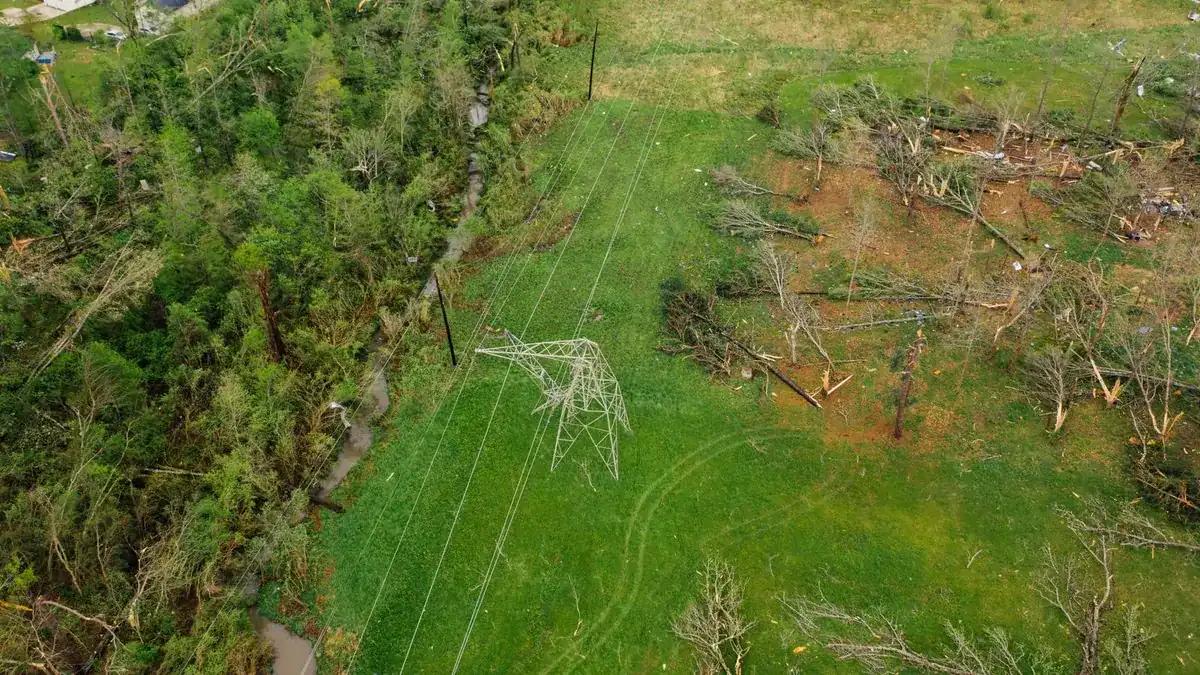
More than a third of the natural disasters in Tennessee that ever earned a federal declaration came in the last eleven years. FEMA's file for the state runs from March 1963 to February 2026, and the 2020s are already the busiest decade in it, ahead of the whole of the 2000s and the whole of the 2010s. In 2023 alone the state drew seven major disaster declarations. If you've lived here a long time and it feels like the storms have gotten worse, the declaration count agrees with you.
What those declarations are for is mostly one thing: severe storms carrying tornadoes and straight-line winds, which make up roughly two thirds of the state's major disasters. Only Oklahoma has more of them in this series; Missouri matches Tennessee, and Alabama is just behind. Floods are second, and most of those are old. Winter storms, one November wildfire that became a major disaster, and Helene fill in the rest. The event to plan around, though, isn't a tornado outbreak. It's the winter storm of January 2026, the only weather event in the whole file to put all 95 counties under a major disaster at the same time. Tennessee is a spring problem and a winter problem, and the kit for both starts with a week without power (the power outage kit checklist is the base). This page is one of our natural disasters by state pages.
A word on the counting. A major disaster declaration is the full presidential declaration, with repair money for counties and towns and, when FEMA adds it, individual assistance for households. An emergency declaration is faster and narrower, often signed the day a storm begins. A fire management declaration reimburses the state for fighting one named wildfire. Three entries in the file aren't weather (the 2005 Katrina evacuation, COVID, and the Christmas Day 2020 explosion), and I've set those aside.
Tennessee declarations by type, 1963 to 2026
| Disaster type | Major declarations | When it usually hits | Example from the record |
|---|---|---|---|
| Severe storms, tornadoes and straight-line winds | 51 (44 severe storm, 7 tornado) | February through May, with a December cluster | May 2003 storms and tornadoes, 73 counties with individual assistance |
| Flooding | 18 | March and May | February 2019 flooding and landslides, 59 counties |
| Ice storms and winter storms | 6 by label, about 9 counting those filed under severe storms | December through February | January 2026 winter storm, all 95 counties with individual assistance |
| Tropical storms | 1 | September | Helene, September 2024, 14 counties with individual assistance |
| Wildfire | 1 major, 10 fire management | November | Chimney Top Fire, Sevier County, November 2016 |
Major declarations only, by FEMA's label. The February 1994 ice storm, the December 1998 winter storm and the February 2022 storm are filed under severe storms, and the March 1993 blizzard was an emergency declaration for most of the state.
Why the file is getting thicker
The 1960s, 70s and 80s together produced fewer declarations than the 2020s have on their own. Part of that is FEMA signing more declarations everywhere. Part of it is Tennessee: the spring of 2011 produced four separate storm declarations, 2023 produced seven, and 2025 and 2026 each opened with a statewide emergency. Individual assistance, the help that reaches a household rather than a county road department, has been turned on twenty times here, most of them since 2010.
The practical reading: a kit built for one storm a decade is the wrong kit. The one I'd build is the one you can restock in a weekend, because the record now shows declarations weeks apart in the same spring.
Spring storms: the season that fills the file
April and May are the peak, with February and March close behind, and the big outbreaks have reached well over half the state more than once:
| Storm declaration | Counties | Individual assistance |
|---|---|---|
| April 1974 tornadoes | 45 | No |
| April 1998 storms | 43 | No |
| May 2003 storms and tornadoes | 73 | Yes |
| Late April 2010 storms and flooding | 46 | Yes |
| April 2011 outbreak (one of four storm declarations that spring) | 52 | Yes |
| March 2023 storms | 45 | No |
| April 2025 storms (statewide emergency the day they began) | 30 on the major declaration | Yes |
Tennessee also has a second tornado season that the calendar on the wall doesn't show. Two of the tornado-labeled declarations began in December, in 2021 and 2023, both with individual assistance, and there are others from November 2002 (the first declaration in the state's record to carry individual assistance), January 1999, February 2008 and March 2020. Counted together, the file has tornadoes in every month from November through May. That's seven months of the year with a weather alert switched on.
What a tornado season this long asks of a household is mostly attention, not money. The one purchase that matters is a NOAA weather radio programmed to your county and left on from Thanksgiving to Memorial Day; the December outbreaks came with people asleep. Then a shelter spot that is ready before the siren, not after: shoes, a flashlight, a helmet per person already sitting in it. And a lantern and headlamps plus phone power for the stretch afterward, because a wide outbreak here takes the lines down across a dozen counties at once.
Winter: the one declaration that reached every county
Tennessee's winter record is a handful of ice storms and a few more winter storms filed under the severe storm label. Most were regional. One wasn't:
| Winter declaration | Counties |
|---|---|
| March 1993 blizzard (emergency) | 57 |
| February 1994 ice storm and flash flooding | 71 |
| December 1998 winter storm | 33 |
| February 2015 ice storm and flooding | 45 |
| February 2021 winter storms | 13 |
| January 2026 winter storm (emergency, then major with individual assistance) | All 95, both times |
The January 2009 ice storm, the March 2014 winter storm and the February and December 2022 storms were smaller. The January 2026 storm is the one that matters for planning: no tornado outbreak, no flood and no fire in the whole file has covered the state that way, and it came with individual assistance for every county.
An ice storm in Tennessee is a cold house for several days, roads you can't use, and often a pipe that lets go when the heat comes back. The things that get a family through it aren't exotic. Heat you can run inside without the grid, and the carbon monoxide alarm that must live beside it. Emergency blankets and sleeping bags rated for real cold, not camping cold. Water filled before the freeze, since the pipes and the pumps both quit. And the winter car kit, because the 1993 and 2014 storms came in March, later than most people's guard is up.
Floods: old declarations, new ones
Eighteen major flood declarations, and all but two date from before 1995, when the March floods of 1973 and 1975 each reached nearly half the state. After 1994 the flooding was mostly filed with the storm that brought it, which is how the April 2010 event and the 2011 declarations show up under severe storms. Two recent floods stand on their own: the February 2019 flooding, landslides and mudslides across 59 counties, and the August 2021 flood, a small declaration that carried individual assistance. March and May are the usual months, which is the spring storm season draining off the Cumberland Plateau and down the Tennessee and Cumberland rivers. On a creek in Middle or West Tennessee, a flash flood warning deserves the same response as a tornado warning.
November fire, and the one tropical storm
Ten of Tennessee's eleven fire declarations came in the fall, nearly all in November, the one exception being April 1999. The first cluster is the Knoxville, Greeneville and Cookeville fire complexes of early November 2000 and the Chattanooga complex and Ridge Crest fire of November 2001. The second is the bad month of November 2016: Flippers Bend in Hamilton County, the Smith Mountain complex on the Plateau, East Miller Cove in Blount County, and Chimney Top in Sevier County. Chimney Top became a major disaster declaration for Sevier County that December, with individual assistance, the only wildfire in the state's file to reach that level. If you live on the Plateau or in the Smokies foothills, November is your go-bag month, and the thing to pack that most people forget is a mask for weeks of smoke in the valleys.
Helene is the other recent entry. The remnants of the storm drew an emergency declaration for a handful of counties in late September 2024 and a 14-county major declaration with individual assistance in October, in the east Tennessee counties along the North Carolina line. It's the only tropical declaration in the state's file, and the lesson is the same one the mountains learned next door: tropical rain stalls on steep ground. Our hurricane kit checklist has a mountains section that applies on this side of the ridge too.
The counties with the longest records
Counted as the number of separate declarations each county has been named in since 1963. The list is West and Middle Tennessee, with one Upper Cumberland county at the top.
| County | Declarations | Where it sits |
|---|---|---|
| Jackson | 35 | Upper Cumberland |
| Shelby (Memphis) | 28 | West Tennessee, the Mississippi |
| Houston, Hardin, Gibson, Decatur | 28 each | West and Middle Tennessee river counties |
| Davidson (Nashville) | 28 | Middle Tennessee, the Cumberland |
| Wayne, Henderson, Dickson | 27 each | Middle and West Tennessee |
| Scott, Humphreys | 26 each | The Plateau and the Tennessee River |
Most of these counties sit on the Tennessee or Cumberland rivers or their tributaries, and most of their declarations are spring storms with flooding attached. The east Tennessee counties appear less often, and when they do it's for fire, ice or Helene.
A Tennessee disaster calendar
- January and February: ice storm season, from the 1994 ice storm to the statewide storm of 2026, plus the winter tornadoes of 1999 and 2008. Winter kit, water stored, weather radio on at night.
- March: the start of the main storm season, the big floods of 1973 and 1975, and the 1993 blizzard.
- April and May: the peak, more than a quarter of the whole file, from the 1974 tornadoes to the April 2025 storms. Shelter spot ready, lantern charged, kit restocked between storms.
- June through August: mostly straight-line wind events, and the August 2021 flood. Summer outage gear: a solar power bank and a battery fan.
- September and October: the quietest stretch, but it holds Helene (2024), the October 2019 straight-line winds and the start of the fall fire season.
- November: wildfire month, plus the 2002 tornadoes and the 1977 flood. Go bag by the door on the Plateau and in the foothills.
- December: the tornadoes of 2021 and 2023, and the first winter storms.
What to stock, in the order Tennessee's record suggests
- A week without power, in any season. Water at a gallon a person a day, food that needs no cooking, a weather radio, light, phone power, cash and copies of the documents. The power outage kit checklist is the full list. This is the same kit for January 2026 and for May 2003.
- A warning you'll hear asleep. The weather radio stays on from November through May. That's the whole tornado layer for most houses, plus the shelter spot stocked ahead of time.
- The ice layer. Indoor-safe heat with a CO alarm beside it, cold-rated sleeping bags, the winter car kit, water filled before the storm.
- The creek layer, West and Middle Tennessee. Documents in a dry bag, a get home bag in the vehicle, and a mark on the creek that means it's time to go.
- The November layer, east. A packed go bag on the Plateau and in the foothills, with smoke masks and somewhere for the animals, and along the North Carolina line the full seven-day kit Helene showed was needed.
- A way to talk when the towers are down. A pair of GMRS radios covers a household and a road; a Meshtastic node keeps short text messages moving across a neighborhood.
Questions people ask about Tennessee disasters
What is the most common natural disaster in Tennessee?
Severe storms with tornadoes and straight-line winds. They account for 51 of the state's 78 major disaster declarations since 1963 (44 under FEMA's severe storm label and 7 under tornado). Floods are second at 18.
Has Tennessee ever had a statewide disaster declaration?
For weather, once. The January 2026 winter storm drew an emergency declaration for every county on January 24 and a major disaster declaration for every county, with individual assistance, on February 6. The April 2025 storms drew a statewide emergency declaration too, but the major declaration that followed covered 30 counties.
When is tornado season in Tennessee?
The main season is February through May, which holds about half of the state's declarations, with April and May the peak months. There's a second, smaller season in November and December: the November 2002, December 2021 and December 2023 tornadoes all drew declarations with individual assistance.
Which was the biggest tornado or storm outbreak in Tennessee by FEMA's count?
By counties under a major declaration, the May 2003 storms and tornadoes, which reached 73 counties with individual assistance. The April 2011 outbreak and the late April 2010 storms are next; the spring storm table above has the figures. The April 2025 storms drew the widest emergency declaration for a storm, the whole state.
Does Tennessee get hurricanes?
Not as hurricanes. The only tropical declaration in the file is Helene in September 2024, filed as a tropical storm, with a 14-county major declaration and individual assistance in the east Tennessee mountains. The damage was rain and flooding, not wind.
Does a declaration mean FEMA pays homeowners?
Sometimes. It takes individual assistance being included for your county. In Tennessee's file it has been turned on twenty times, including the big spring storms of 2003, 2010 and 2011, the Sevier County fire, the recent winter tornadoes, Helene, the April 2025 storms and the January 2026 winter storm. Most declarations only repay counties and towns. The county list is on FEMA's disaster page. Keep dated photos of the house from before the storm season.
In plain terms
Plan for a week without power in any season, because Tennessee's record now has a statewide spring storm and a statewide winter storm within a year of each other. Keep the weather radio on at night from November through May. Restock between storms, not after the season. The counts here come from FEMA's public declaration file as of the end of October 2026, and I'll update them when the file changes. Neighbors in the series: Kentucky, Alabama and North Carolina. The full list is at natural disasters by state, and the gear guides are in storm prep.
Sources
Ready to buy?
See current models and availability on Amazon. Your clicks keep these guides free.
Shop Emergency Kits on Amazon →