Natural Disasters in Alabama: Two Tornado Seasons, a Hurricane Coast, and the Counties That Get Both
Forty-eight tornado and storm declarations, sixteen hurricanes, and only two major declarations that covered all 67 counties. When each comes, where it lands, and what to keep ready.
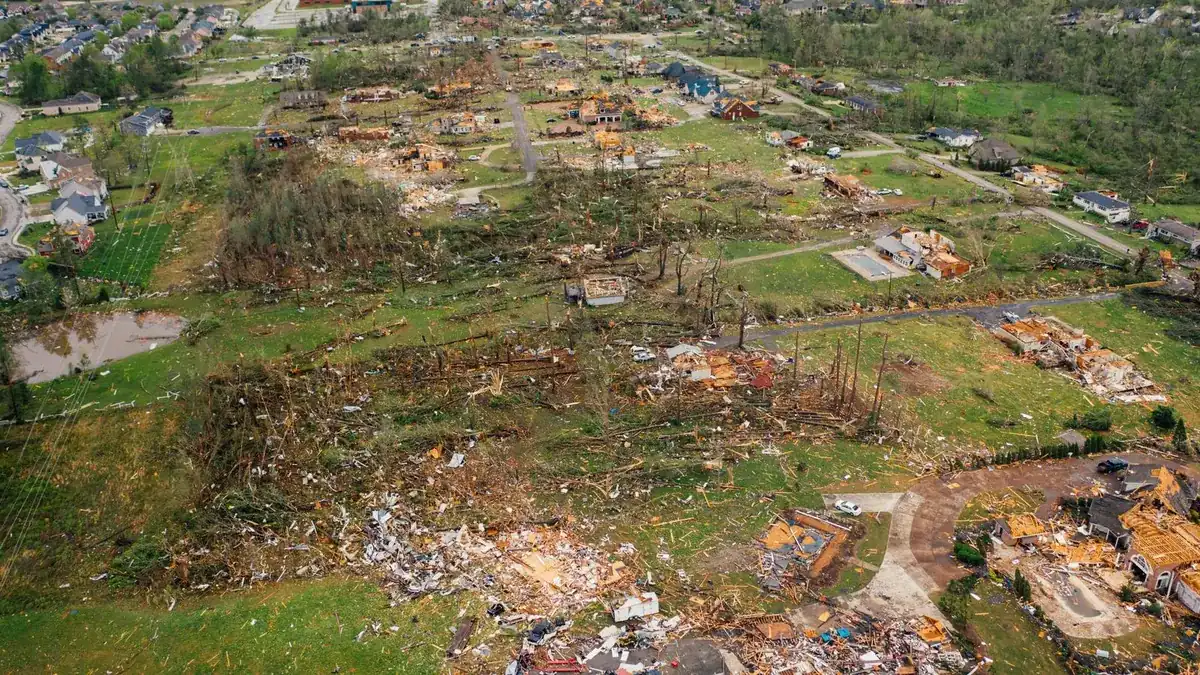
Alabama is a tornado state with a hurricane coast, and the record of natural disasters in Alabama reads that way. Of the 75 major disaster declarations FEMA has issued for the state, 44 are filed under severe storms, and nearly every one of those titles has the word tornadoes in it. Hurricanes come second. They do their worst in Mobile and Baldwin counties and then march inland through the Wiregrass. Only two weather events have ever put all 67 counties under a major disaster at once: Hurricane Ivan in 2004 and the tornado outbreak of April 2011.
Those two events set the pattern. Alabama natural disasters come in two seasons, spring and fall, from two directions, the sky and the Gulf, and both end the same way: days without power across a wide area, in weather that's either humid or freezing. So the kit is the week-without-power base from the power outage kit checklist, with a tornado plan for every household north of Montgomery and a hurricane kit south of it. A word on the counting before the seasons: FEMA's file holds 103 Alabama declarations, but only the 75 major ones carry real weight. The emergency declarations are quicker and smaller, and for a hurricane one usually goes out for the whole state while the storm is still in the Gulf, which is why Irma, Gustav, Sally and Helene all show up as statewide entries even though their damage was narrow. The nine fire management declarations cover one named wildfire each. And a few statewide entries aren't weather at all: the Katrina evacuation of 2005, when Alabama sheltered Mississippi and Louisiana evacuees, and the COVID declarations. The rest of the country is in our natural disasters by state index.
Alabama declarations by type, 1961 to 2026
| Disaster type | Major declarations | When it usually hits | Example from the record |
|---|---|---|---|
| Severe storms and tornadoes | 48 (44 severe storm, 4 tornado) | March and April, then November through February | April 27, 2011 outbreak, 67 counties with individual assistance |
| Hurricanes and tropical storms | 16, plus 10 emergencies | August through October, a few in July and November | Hurricane Ivan, September 2004, 67 counties |
| Flooding | 9 | March through May | April 1979 storms and flooding, 28 counties |
| Winter storms and ice | 0 by label, 4 filed under severe storms | December through February | March 1993 blizzard, 67-county emergency declaration |
| Wildfire | 0 major, 9 fire management | September and November | Six fires declared on one day, September 18, 1999 |
Major declarations only, by FEMA's label. Three more tornado events in the 1970s and 1980s drew emergency declarations rather than major ones, and the winter storms of the 1990s are filed under severe storms, so both of those rows are a little bigger than they look.
Tornadoes: two seasons, not one
The spring season is the obvious one. March and April hold more severe storm declarations than any other two months, and the tornado-labeled ones follow the same curve. The second season is the one people forget. November through February together hold 17 severe storm declarations. The November 2002 outbreak was the first in the file with individual assistance, and the January tornadoes of 2012 and 2023 kept the pattern going. Alabama gets tornadoes at Thanksgiving and Christmas, and a household that only watches the sky in April is watching half the calendar.
The outbreaks with the widest reach are in the table below. April 2011 stands alone: an emergency declaration for the whole state the day of the outbreak, a major declaration for all 67 counties the next day, with individual assistance. No other tornado event in Alabama's file has covered the whole state. Since then the file shows a declaration most springs and several winters, and the small ones matter too; March 2019 was a single county, and it still came with individual assistance.
| Outbreak | Counties under the major declaration | Household assistance |
|---|---|---|
| April 2011 | 67 | Yes |
| December 2015 | 39 | No |
| May 2003 | 38 | Yes |
| March 1990 | 33 | No |
| November 2002 | 29 | Yes |
| March 1973 | 28 | No |
| February 1990 | 27 | No |
| March 2009 and April 2014 | 21 each | Yes |
| April 1974 | 20 | No |
| January 2023 | 13 | Yes |
What to have: a NOAA weather radio with the alert tone set for your county, because the winter tornadoes come after dark and the sirens don't reach everyone. A known safe spot and a helmet for each person in it. A lantern and headlamps and a way to charge phones, since the outage after a wide outbreak runs for days. The April season overlaps with warm weather, so stored water matters as much as the light.
Hurricanes: Mobile Bay, then the Wiregrass
Twenty-six tropical declarations counting the emergencies, and the months are tight: nearly all of them began in August, September or October, with Dennis in July 2005 and a pair of November entries as the exceptions. The names run from Camille and Frederic through Opal, Georges, Ivan, Dennis, Katrina, Gustav, Ike, Ida, Isaac, Irma, Nate, Michael, Sally, Zeta, Helene and, in October 2026, Isaias.
Ivan in September 2004 is the one the record measures by: all 67 counties under a major declaration with individual assistance. Dennis the next July covered 46 counties, and Opal back in 1995 was the first hurricane declaration in the file to pass a dozen. Katrina's major declaration was narrower than its reputation, 22 counties, but it came with individual assistance and with the separate statewide evacuation declaration. The modern pattern is the fall of 2020: Sally in September, then Zeta six weeks later, both with individual assistance, so the kit had to be restocked before the season was over.
Two things in that list matter for the kit. First, an Alabama hurricane isn't only a Mobile and Baldwin problem. The Wiregrass counties (Geneva, Dale, Coffee and Covington) sit in the state's top ten for declarations because storms that come ashore on the Florida panhandle or Mobile Bay run straight up through them. Second, two storms in one fall is normal now. The coast needs the full seven-day hurricane kit (ours is written for North Carolina, and the list doesn't change), packed to travel, with the vehicle fueled before the emergency declaration goes out. Inland, the same kit minus the evacuation plan, with a solar power bank and a battery fan for a September outage.
Floods and winter
Alabama's nine major flood declarations are old, every one between 1961 and 1991, and most of them began in spring. The biggest was the April 1979 storms and flooding across 28 counties, with the March 1975 floods not far behind. Since then the flooding has been filed with the storm that caused it, so the flood risk hasn't gone away, it has moved into the severe storm column; the December 2009 storms and the October 2021 flooding are the recent examples. If you live on the Tombigbee, the Black Warrior, the Cahaba or the Coosa, the weather radio is a flood tool as much as a tornado tool, and a get home bag in the truck covers the night the road goes under.
Winter is rare here, and that's what makes it dangerous. The March 1993 blizzard drew an emergency declaration for all 67 counties. Four smaller winter storms in the 1990s drew major declarations under the severe storm label, none of them wider than 14 counties. Alabama houses aren't built for a week below freezing with no power. That's the argument for emergency blankets, a heater that's actually rated for indoor use (and the carbon monoxide alarm you buy the same day), and the winter car kit for the few days a year the roads ice.
Fire: one day in September 1999
Nine fire management declarations, and six of them carry the same date. On September 18, 1999, FEMA approved fire management assistance for the Chelsea Fire in Shelby County, the Lookout Mountain Fire in DeKalb, the MacIntosh Fire in Washington County, the Fayette Fire, the Russellville Fire in Franklin County and the Jackson Farms Fire in Jackson County, with the Martin School Fire in Walker County following six days later. The County Line Fire in Jefferson County came the next September, and the North East Alabama Fire Complex in Cherokee, Etowah and Jackson counties in November 2001. Nothing since. The pattern is a dry late summer and fall, and the gear is a packed go bag for anyone on a wooded ridge in north Alabama when the drought maps go red.
Where it hits hardest, by county
Counted as the number of separate declarations each county has been named in since 1961. The coast, Birmingham, the northeast hill counties and the Wiregrass fill the list.
| County | Declarations | Mostly |
|---|---|---|
| Mobile | 41 | Hurricanes |
| Jefferson (Birmingham) | 39 | Tornadoes and severe storms, plus the 2000 County Line fire |
| Baldwin (Gulf Shores, Daphne) | 39 | Hurricanes |
| DeKalb (Fort Payne) | 34 | Tornadoes, the 1999 Lookout Mountain fire |
| Geneva, Dale, Covington | 33 each | Hurricanes running inland, spring tornadoes |
| Cullman | 32 | Tornadoes |
| St. Clair, Coffee | 30 each | Tornadoes; hurricanes in Coffee |
| Marshall, Etowah | 29 each | Tornadoes, the 2001 fire complex in Etowah |
Mobile and Baldwin lead because nearly every Gulf storm names them. The rest of the list is the tornado belt from Birmingham northeast to the Georgia line, and the Wiregrass, which gets both.
An Alabama disaster calendar
- January and February: the winter tornado season and the rare ice storm, including the January tornadoes of 2012 and 2023 and the winter storms of the 1990s. Weather radio on at night; winter kit in the car.
- March and April: the heart of tornado season, 31 declarations, more than any other two months. Most of the big outbreaks and most of the old floods began here. Safe spot known, helmets in it, lantern charged.
- May: the tail of spring storms (2003 and 2009 were the ones that reached far).
- June: none. Not one Alabama declaration in 65 years began in June. Build the hurricane kit now.
- July: early tropical systems: Alberto, Danny and Dennis.
- August: mostly tropical: Elena, Katrina, Gustav and Isaac, plus the 1978 flood.
- September: the busiest month in the file, 18 declarations: Frederic, Georges, Isidore, Ivan, Ike, Irma, Sally and Helene, plus the 1999 fires and the County Line fire a year later. Car fueled, kit in the vehicle.
- October: Opal, Nate, Michael, Zeta and Isaias, and the storms of 1975 and 2021.
- November and December: Camille's late declaration, Ida, the 2001 fire complex, and the start of the second tornado season.
From the data to the shelf
- The week-without-power base, statewide. Seven days of water at a gallon per person per day, shelf-stable food, a weather radio, headlamps, phone power, cash and documents. The power outage kit checklist has it in order. This is the kit for April 2011 and for Ivan.
- The tornado layer, north of Montgomery. Weather radio alert on in every bedroom from November through April, a safe spot, helmets, and a light source that doesn't depend on the grid.
- The hurricane layer, Mobile and Baldwin. The seven-day kit packed to travel, tarps and contractor bags, a chainsaw if you have trees, the vehicle fueled by the time the emergency declaration posts.
- The Wiregrass layer. Both of the above. Geneva, Dale, Coffee and Covington counties get the hurricane without the evacuation and the tornado without the warning time.
- Communications. Two GMRS handhelds let a family find each other on a road full of downed trees, and a Meshtastic node carries short text messages across a neighborhood.
Questions people ask about Alabama disasters
What is the most common natural disaster in Alabama?
Tornadoes and severe storms, by a wide margin: 48 of the state's 75 major disaster declarations. Hurricanes are second at 16.
When is tornado season in Alabama?
Twice a year. The main season is March and April, which hold more declarations than any other two months. The second runs November through February and holds 17 severe storm declarations, including the November 2002 outbreak and the January tornadoes of 2012 and 2023.
What was the worst tornado outbreak in Alabama by FEMA's measure?
April 27, 2011. It's the only tornado event in the state's record to draw a major disaster declaration for all 67 counties, with individual assistance, and an emergency declaration for all 67 the day it happened. The April 1974 and March 1973 outbreaks are the largest earlier ones.
Which hurricanes have hit Alabama hardest?
By counties under a major declaration, Ivan in 2004 (all 67, with individual assistance), then Dennis and Opal. Katrina's major declaration was narrower but came with individual assistance. Sally and Zeta in 2020 were the most recent with individual assistance.
Does north Alabama get hurricanes?
As rain and wind, yes. Opal, Ivan and Dennis all drew declarations for counties well north of Montgomery, and Helene's 2024 emergency declaration covered all 67 counties. The coast gets the surge; the rest of the state gets the outage.
If my county is declared, do I get help?
Only when individual assistance is included for your county. In Alabama's file it has been turned on 19 times since 2002, including Ivan, Dennis, Katrina, the April 2011 outbreak, Sally, Zeta and the most recent January tornadoes. Most declarations only repay counties and towns. Look your county up on FEMA's disaster page, and keep dated photos of the house and the roof from before the season, because that's what a claim adjuster asks for.
So, what do you build
Build for a week without power, because both of Alabama's statewide disasters, Ivan and April 2011, ended that way. Keep the weather radio on at night from November through April everywhere north of Montgomery, and keep the hurricane kit packed to travel from August through October on the coast and in the Wiregrass. Every count here is from FEMA's own declaration file as it stood on October 31, 2026; when FEMA adds a declaration, the page gets corrected. Neighbors in the series: Tennessee, Georgia and Florida. The full list is at natural disasters by state, and the gear guides are in storm prep.
Sources
Ready to buy?
See current models and availability on Amazon. Your clicks keep these guides free.
Shop Emergency Kits on Amazon →