North Carolina Hurricane Kit Checklist: Coast, Piedmont and Mountains
What to have ready by June 1 if you ride it out in Charlotte, evacuate from Wilmington, or lose the road in Yancey County.
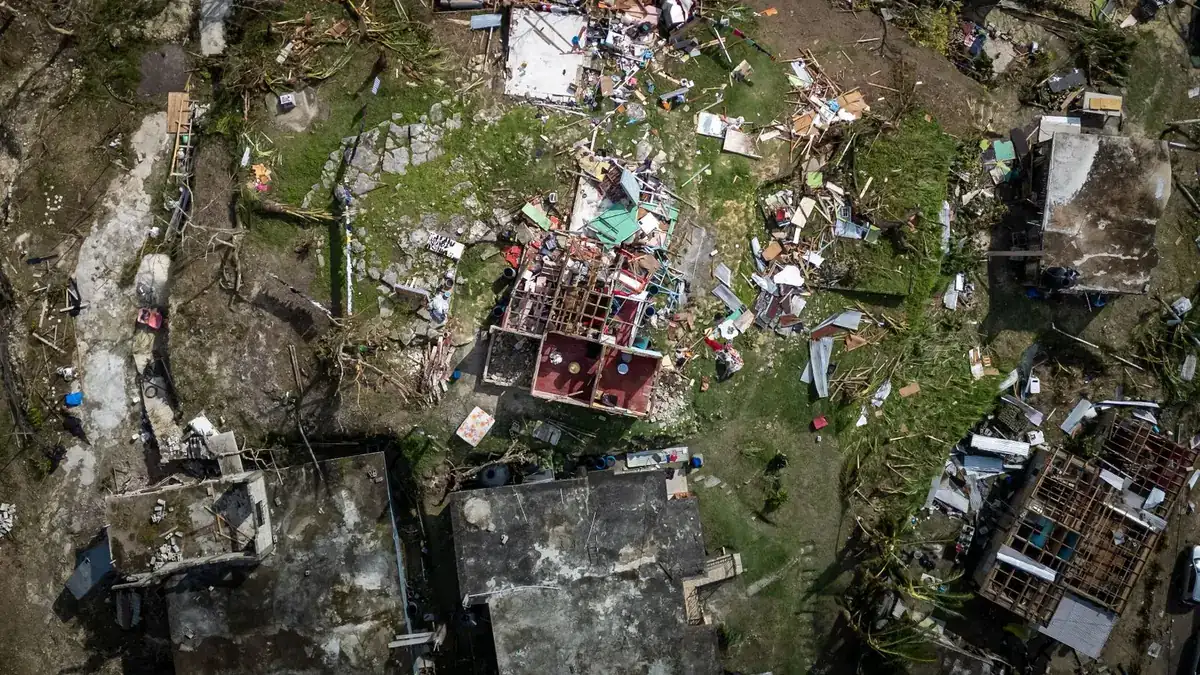
A North Carolina hurricane kit is seven days of water, food, light, a NOAA weather radio, phone power, your papers, cash and pet supplies, packed so you can ride out a week without power or load it in the truck when your county calls your zone. NC Emergency Management's checklist says three to seven days per person and pet; after Helene we treat seven as the floor. The gear that matters is boring: a crank weather radio, a headlamp per person, a 7 gallon water container, a tarp and contractor bags for the morning after, and a pouch for the documents you would need to file a claim from a hotel in Greensboro.
The power outage kit checklist covers the week-without-power basics in more depth, and the emergency water storage guide goes deeper on containers.
Season, zones and the seven day rule
The Atlantic hurricane season runs June 1 to November 30, and the National Hurricane Center puts the peak at September 10, with most activity from mid August to mid October. Build the kit by Memorial Day.
If you live in one of the 21 coastal counties that use Know Your Zone (Brunswick, New Hanover, Pender, Onslow, Carteret, Dare, Currituck and the rest of the sounds and Outer Banks), look up your address on the state's lookup tool now, not when a watch is posted. Zones are lettered, Zone A is typically evacuated first, and the state says a shelter should be a last resort, so the plan is a relative's house or a hotel inland with the kit already in the car.
NC Emergency Management says three to seven days of supplies for each person and pet, and at least one gallon of water per person and pet per day. CDC says at least one gallon per person per day for three days and to try for two weeks if you can. We build for seven because that is how long power was out for thousands of people in the mountains in 2024.
Coast, Piedmont and mountains: same kit, different emphasis
Coast and the sounds
- Surge and evacuation are the problem, so the kit has to be portable: two or three totes plus the water.
- Fill the vehicle before the watch becomes a warning. Know your route inland; US 17 and I-40 back up early.
- Plan to be gone a week. Local officials control reentry and it is usually staged.
Piedmont (Charlotte, the Triad, the Triangle)
- What reaches you is usually a tropical storm with flooding rain, falling trees and multi day outages, not surge.
- Shelter in place: more water storage, more food, and a generator or battery station if you can afford one. Creek flooding closes roads for a day or two, so keep enough on hand that you do not need to drive.
Mountains
- Helene in September 2024 dropped 14 to 20 inches along the Blue Ridge escarpment, with over 30 inches at Celo in Yancey County, per the National Weather Service office in Greer. The French Broad at Asheville crested at 24.82 feet, above the 1916 record, and sections of I-40 washed out in the Pigeon River gorge.
- NWS reports most people lost power for at least a couple of days and thousands for a week or more. Cell service went with it.
- So the mountain kit is the Piedmont kit plus more water, a way to get information without cell towers (see the emergency radio guide), and the assumption that you cannot drive out for days. Do not park or camp in a creek bottom or below a steep slope in a tropical rain event; one debris flow near Fairview killed 11 people.
The checklist
Water
- One gallon per person per day, seven days. A family of four is 28 gallons, or four 7 gallon containers.
- Fill the bathtub and every pot before the storm for flushing and washing.
- Bottled water for the car, plus water for pets on top of the people count.
- Unscented bleach for treating water per CDC instructions. Filters and tablets are the sister site's area: Pure Flow Lab.
Food and cooking
- Seven days of food that needs no refrigeration and little cooking: canned meat, beans, soup, peanut butter, crackers, dried fruit, nuts, shelf stable milk.
- Manual can opener. A camp stove or the grill, outdoors only, with a week of fuel.
- Paper plates and utensils. A cooler, and the plan to eat the refrigerator first, then the freezer, then the pantry.
- Formula, special diets, and a week of medications, per the state checklist.
Light
- One headlamp per person. Hands free light is what you want moving a wet limb at 2 a.m.
- A lantern per room you will use; see the power outage lantern guide.
- A week of batteries in one labeled bag. Standardize on AA and AAA. No candles.
Radio and information
- A NOAA weather radio with alert tone, with your county's channel programmed before the season. Charge it by USB before the storm; the crank is for day six.
- A printed list: county emergency management, the power company's outage line, your insurance agent, and local AM frequencies.
Power
- Charged power banks, one per person, plus cables and a car charger. The vehicle is your biggest battery.
- If you own a generator: stabilized fuel in approved cans, a heavy gauge outdoor extension cord, and a battery powered carbon monoxide alarm inside. CPSC says outside only, at least 20 feet from doors, windows and vents, and never in a garage, crawlspace or shed even with the door open.
- Deciding what to buy: the sister site covers the best generator for home and battery backup vs gas generator.
Documents and cash
- In one pouch: IDs, insurance policy numbers and agent contact, deed or lease, vehicle titles, birth certificates, passports, a medication list, and photos of every room for the claim. Copies on a USB drive.
- Cash in small bills. NC Emergency Management says it plainly: ATMs and card machines may be down after a storm.
- Spare house and car keys.
Pets and kids
- A week of pet food, bowls, leash, crate or carrier, vaccination records and medications. Many shelters do not take pets; know which hotels on your route do.
- Diapers, wipes, formula, and something to do without a screen.
Health and sanitation
- A first aid kit and the training to use it. We point to a Red Cross or Stop the Bleed class rather than giving medical advice.
- Sanitizer, soap, toilet paper, a bucket with a lid and bags if the septic is down, bug spray, closed toe shoes and rain gear.
Tools and after the storm
- A tarp big enough to cover a section of roof, with rope, furring strips and screws. 12 by 16 covers most single leaks.
- Leather work gloves for every adult. Debris is nails, glass and splintered wood.
- Contractor bags, 3 mil, for wet drywall, carpet, spoiled food and everything else that has to leave the house.
- A chainsaw if you have trees, with chaps, bar oil and fuel, and the honesty to leave the big ones to a crew.
- Wrench or pliers to shut off gas and water, a pry bar, duct tape, zip ties, plastic sheeting for a broken window, and an ABC fire extinguisher. Photos of damage before you clean up.
Generators, power stations, chainsaws and heaters live on the sister site, Garage Shop Lawn. More storm and outage gear is in the storm prep category.
Midland ER310 Emergency Crank Weather Radio

NOAA Radio Pick
Midland ER310 Emergency Crank Weather Radio
- NOAA weather band with alerts
- USB, solar and hand crank charging
- Up to 45 hours normal use per Midland
- Optional 6 AA backup, not included
- Flashlight with SOS beacon
For every NC household: the weather radio that keeps working on day six when the phone is dead.
Check price on AmazonSold by Midland Radio
The NOAA weather radio we would put in every NC kit. Midland lists a rechargeable lithium battery, charging by USB, solar or hand crank, with an optional backup of six AA cells, not included. It has AM/FM, NOAA weather band with alerts that sound when the Weather Service issues them for your channel, a flashlight, an SOS strobe and an ultrasonic whistle that Midland says is meant for trained search and rescue dogs. Midland claims up to 45 hours of normal use on a charge.
What it does badly: Midland's FAQ says the solar panel cannot charge a dead battery and the USB out often will not charge newer phones, so it is not a power bank.
Black Diamond Spot 400 Headlamp
One Per Person
Black Diamond Spot 400 Headlamp
- 400 lumens high, 6 lumens low
- 3 AAA included, BD 1500 compatible
- IPX8, 1.1 m for 30 minutes
- 86 g with batteries
- Red night vision mode
For anyone who will be working in the dark with both hands, which is everyone during a storm week.
Check price on AmazonSold by Black Diamond Equipment
The Spot 400 on AAA cells is the kit headlamp because it runs on the same batteries as everything else in the bag. Black Diamond lists 400 lumens on high, 200 on medium and 6 on low, burn times of 2.5, 5 and 200 hours on AAA (high, medium, low), a 100 meter beam on high, IPX8 (tested at 1.1 meters underwater for 30 minutes), a red night vision mode, and 86 grams with batteries. It takes the BD 1500 rechargeable battery if you want it later.
What it does badly: the 200 hour low setting is 6 lumens, a reading light. Expect a few hours of real brightness per set of AAAs.
Reliance Jumbo-Tainer 2.0, 7 Gallon
One Week, One Person
Reliance Jumbo-Tainer 2.0, 7 Gallon
- 7 gal (26 L)
- Leak-proof hideaway spigot
- Dual handles for pouring and tie-down
- Food safe: FDA compliant, BPA-free
- 2.9 lb empty
For the week of drinking water per person, in a shape that stacks in a closet and straps into a truck bed.
Check price on AmazonSold by Amazon.com
Seven gallons is one person's week. Reliance lists it as 7 gallons (26 L), 15.3 by 8.5 by 18.0 inches and 2.9 pounds empty, with a slender design, a leak-proof hideaway spigot, and dual handles for pouring and tie-down. It is food safe (LFGB certified and FDA compliant) and BPA-free.
The water alone weighs about 58 pounds, so fill it where you will use it, and test the spigot before the season.
Xpose Safety 12 x 16 Heavy Duty Tarp
Roof Cover
Xpose Safety 12 x 16 ft 16 Mil Tarp
- 12 x 16 ft
- 16 mil Super Heavy Duty polyethylene
- Brass grommets every 18 in
- UV treated
For the three weeks between the storm and the roofer.
Check price on AmazonSold by All In Safety (third party reseller)
A roof tarp keeps a small leak from becoming a ruined ceiling in the weeks before a roofer can get to you. Xpose Safety lists this line as 16 mil Super Heavy Duty polyethylene with brass grommets every 18 inches and a UV treatment. 12 by 16 feet covers a typical damaged section with overhang to run under the ridge.
What it does badly: no tarp survives a second storm on a roof without furring strips screwed through it into the decking, so buy 1 by 3s and roofing screws with it.
SentrySafe Fire Bag
Papers and Cash
SentrySafe Fire and Water Resistant Document Bag
- 15.0 x 11.0 x 1.5 in
- Fire resistant stitching
- Four-layer protection
- Fire and water peril resistant, not a safe
For the deed, the titles, the passports and the twenties, in one pouch you can grab on the way out.
Check price on AmazonSold by Amazon.com
SentrySafe lists its FBWLZ0 fiberglass fire resistant document bag at 15.0 by 11.0 by 1.5 inches, with fire resistant stitching and four-layer protection that it says stands up against basic fire and water peril. The Amazon version is SentrySafe's retail model FBWLZ0SSC, sold by Amazon.com. It fits passports, titles, birth certificates and cash, and it is thin enough to live in a go bag.
What it does badly: SentrySafe publishes no temperature or time rating, and a thin bag is not a safe, so do not count on it through a serious house fire. It is described as resisting water, not as waterproof, so put the papers in a zip bag inside it.
Amazon Basics 42 Gallon Contractor Bags
After the Storm
Amazon Basics 42 Gallon Contractor Bags, 50 Count
- 42 gallon
- 3 mil black plastic
- 50 bags
- Puncture and tear resistant
For wet drywall, ruined carpet and a freezer full of spoiled food.
Check price on AmazonSold by Amazon.com
Fifty 3 mil, 42 gallon black bags, puncture and tear resistant, which is a flooded den's worth of carpet pad, wet drywall and a freezer of spoiled meat. Kitchen bags tear on the first nail. Fill them half way; 42 gallons of wet carpet is more than one person can drag.
Questions people ask about NC hurricane kits
What is Know Your Zone?
North Carolina's system of predetermined evacuation zones in 21 coastal counties. Zones are lettered, Zone A typically goes first, and the state's lookup tool tells you which zone an address is in. Local officials decide when a zone is ordered out.
Can I run the generator in the garage with the door open?
No. CPSC says outside only, at least 20 feet from doors, windows and vents, never in a garage, shed or crawlspace, with a battery powered CO alarm inside the house.
The kit in one sentence
Seven gallons of water per person, seven days of no-cook food, a headlamp each, a charged Midland ER310, a tarp and a box of contractor bags, your papers and a roll of twenties in one pouch, and the pet's crate by the door before June 1.
Sources
- National Hurricane Center, Tropical Cyclone Climatology (season dates and peak)
- NC Department of Public Safety, Know Your Zone
- NC Emergency Management, Hurricane Preparedness Checklist
- NWS Greenville-Spartanburg, Helene flood event summary, Sept 26 to 27, 2024
- CDC, How to Create and Store an Emergency Water Supply
- CPSC, Portable Generator Safety Alert
- Midland ER310 product page
- Black Diamond Spot 400 Headlamp product page
- Xpose Safety tarps product line
- SentrySafe Fire Bag FBWLZ0 product page
- Reliance Jumbo-Tainer 7 gallon product page
Ready to buy?
See current models and availability on Amazon. Your clicks keep these guides free.
Shop Hurricane Supplies on Amazon →