Natural Disasters in Kentucky: Why February Is the Worst Month and the East Gets Hit Hardest
More declarations begin in February than any other month, twelve eastern counties have each been named in 40 or more, and the state has had three statewide emergencies since 2025.
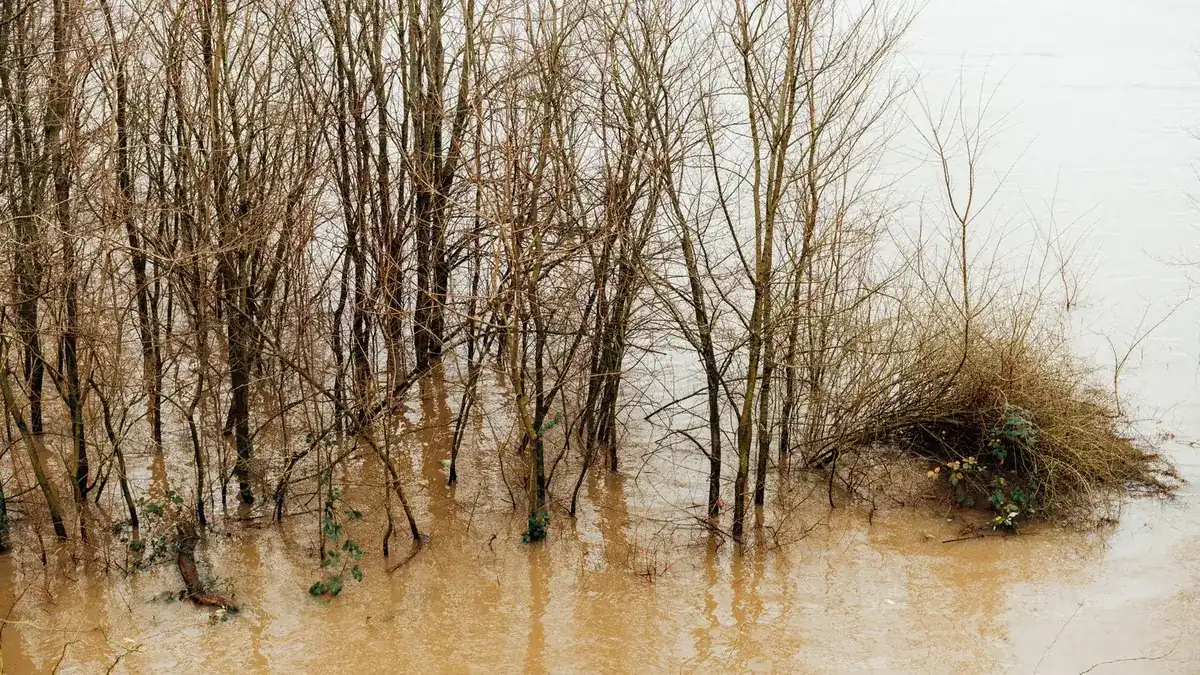
The month that produces the most natural disasters in Kentucky is February. Not May, not the heart of tornado season: February, with 17 of the state's 99 federal disaster declarations beginning in that month, ahead of May, March and April. The reason is in the titles. Kentucky's February and March declarations read "severe storms, flooding, landslides and mudslides," and the counties they name are the same ones every time: Breathitt, Owsley, Magoffin, Lawrence, Floyd, Johnson, Clay, Pike, Perry. The eastern coalfield counties have each been named in more than 40 separate declarations since 1957, and the late-winter rain that runs off frozen, steep ground into narrow creek valleys is the hazard that keeps putting them there.
The rest of the state has its own list. Severe storms are the most common major disaster, flooding is a close second (fifth highest of the 22 states in this series), and winter weather accounts for about ten. The Blizzard of '96 is still the only weather event to earn a major disaster declaration for all 120 counties at once. And the record is getting busier, not quieter: the 2020s already have more declarations than the whole of the 2010s, and since February 2025 Kentucky has drawn three statewide emergency declarations. This page sorts the data by hazard, month and county and says what to keep on hand for each. It's one of our natural disasters by state pages, and the basics for a week without power are in the power outage kit checklist.
Two notes on the counting. FEMA's major disaster declarations are the full federal response; Kentucky has 82, sixth of the states we've pulled, in the same tier as Tennessee and Louisiana. Emergency declarations are the fast, narrow version, and fire management declarations repay the state for fighting one named wildfire; Kentucky has only eight of those, all for fall fires in the eastern counties, which is why its raw total sits well below Texas or Oklahoma. Three statewide declarations in the file are not weather (the Katrina evacuation, when Kentucky took in evacuees, and the two COVID declarations), and the 1981 sewer explosion is filed as a toxic substances disaster for one county. Set those aside and the record is storms, floods, ice and snow.
Kentucky disasters by type, 1957 to 2026
| Disaster type | Major declarations | When it usually hits | Example from the record |
|---|---|---|---|
| Severe storms (wind, tornadoes, flooding and slides together) | 39 | February, April and May | April 2025, 91 counties |
| Flooding | 27 | February and March, again in July | January 1989, 67 counties |
| Snowstorms, ice storms and winter storms | 7 filed as winter, plus 2 or 3 winter events filed as storms or floods | January through March | Blizzard of '96, all 120 counties |
| Tornadoes (filed as the main hazard) | 6 | May, and December | December 2021, 23 counties |
| Tropical remnants | 1, plus Ike in 2008 filed as a wind storm | September | Remnants of Hurricane Helene, 2024, 34 counties |
| Wildfire | 0 major; 8 fire management | October and November | Southeastern Kentucky Fire Complex, November 2016 |
Kentucky files most tornado damage under severe storms, so read the first row and the tornado row together.
The eastern floods: February, March and the creek valleys
Most of the 27 major flood declarations began in February or March, and the pattern runs back to the start of the file: March floods four times in the 1960s, the snowmelt flood of February 1970, the January 1989 flood that covered more than half the state. Since 2015 the late-winter declarations have come almost every year, and the February 2025 flood turned into a statewide emergency within two days.
| Late-winter flood | Counties on the major declaration | Household assistance |
|---|---|---|
| February 2018 (two declarations) | 22 and 35 | No |
| February 2019 storms and flooding | 61 | No |
| February 2020 | 27 | No |
| February 2021 | 50 | Yes |
| February 2023 | 22 | No |
| February 2025 (statewide emergency first) | 69 | Yes |
The summer version is shorter and more violent. The flooding that began in late July 2022 drew a 20-county major declaration with individual assistance within three days. The July floods of 1969 and 1979 are in the file too, and the Kentucky River Complex fires of 2001 and the Eagles Nest fire of 2016 hit the same Breathitt County that floods.
What this means for the kit in the eastern counties is different from the rest of the state. Flash floods in a hollow give minutes, not hours, in the coldest, wettest part of the year. A NOAA weather radio with the alert tone on is the piece of gear that wakes you. Documents and medications in a waterproof pouch, a get home bag in the truck for the drive that meets water across the road, and a plan for where you go uphill. The go bag guide covers a kit you can carry out on foot, which in the hollows is the one that matters.
Spring storms across the whole state
After February the severe storm count rises again in April and May, and these are the declarations that cover the most ground. Tornadoes filed under their own label are rarer, six in all, but the most recent one came in December: the December 10, 2021 outbreak drew an emergency declaration and then a 23-county major declaration within two days, and the storms of New Year's Eve that year drew another declaration two months later.
| Spring storm declaration | Counties | Household assistance |
|---|---|---|
| March 1997 storms | 101 | No |
| May 2004 storms | 78 | Yes |
| May 2010 storms | 83 | Yes |
| April 2011 storms | 79 | Yes |
| March 2023 storms | 88 | No |
| May 2024 storms | 58 | Yes |
| April 2025 storms (statewide emergency first) | 91 | Yes |
| May 2025 storms and tornadoes | 39 | Yes |
The gear for this is the shelter spot and the outage that follows: helmets, shoes and a flashlight in the safe place by April, a lantern and headlamps for the days after, a solar power bank for phones, and a few days of stored water for the boil notice. The December tornado risk is the reason I'd leave the weather radio on year round in western Kentucky, not only in spring.
Winter: the Blizzard of '96, the 2009 ice storm and January 2026
Kentucky has seven major declarations filed as winter weather, plus two or three winter events FEMA filed under other labels (the February 1998 winter storm, the February 2003 ice and snow storms, the March 2015 storm filed as a flood). Three of them are among the widest declarations in the file. The Blizzard of '96 covered all 120 counties, the only weather disaster ever to do so. The ice storm of January 2009 drew a statewide emergency and then a major declaration for nearly every county. And the winter storm of January 2026 drew a statewide emergency the next day and a smaller major declaration that May. The February 1994 storm, the March 1993 snowfall emergency, the December 2004 record snow and the February 2021 ice round it out.
Ice is the one that takes the power out for a week. The kit: indoor-rated heat and a carbon monoxide alarm within reach of it, emergency blankets and sleeping bags rated below freezing, water stored before the pipes freeze (the water storage guide covers amounts), light for a week, and a winter car kit for the roads the 2009 storm closed. Size the battery bank for winter; a solar panel under an ice storm earns almost nothing.
Where the declarations land
I counted how many separate declarations each county has appeared in since 1957. Every one of the top twelve is in the eastern coalfield.
| County | Declarations | What drives it |
|---|---|---|
| Owsley, Magoffin, Lawrence, Breathitt | 49 each | Creek flooding, slides, fall wildfire |
| Johnson, Floyd, Clay | 48 each | Flooding and storms; Floyd and Clay in the 2000 and 2001 fire complexes |
| Pike, Perry | 47 each | Flooding and slides; Pike in the 1999 fires and the 2016 fire complex |
| Knott | 43 | Flooding |
| Lee | 42 | Flooding |
| Letcher | 40 | Flooding, the 2016 fire complex |
All 120 counties have been named in at least one declaration, and the seven statewide ones add a count to each. The gap between the eastern counties and the rest of the state comes from the late-winter floods, which hit the same valleys over and over.
A Kentucky disaster calendar
- January: the big winter ones: the Blizzard of '96, the 2009 ice storm, the January 2026 winter storm, and the January 1989 flood. Winter kit, stored water, car kit.
- February: the worst month in the record, with 17 declarations, mostly storms and floods in the east. Weather radio alert on, documents dry, truck fueled.
- March: more floods, and the March 1997 storm that covered most of the state.
- April and May: spring storms statewide, and half of the tornado declarations began in May.
- June: the season eases.
- July: the flash floods of 1969, 1979 and 2022, and the 2015 storms.
- August through October: the quiet stretch, nine declarations in three months. Restock. In October the fall fire season starts in the east.
- November: nearly every declaration this month is wildfire. All eight fire management declarations began in October or November.
- December: the two December tornado events of 2021 and the December 1978 flood. The radio stays on.
What goes on the shelf, and in what order
- The warning layer first. A weather radio with the alert on, set to your county. In Kentucky it earns its keep in February for floods, in May for storms and in December for tornadoes.
- The winter outage week. Indoor-safe heat with a CO alarm, below-freezing sleeping bags, seven days of water and shelf-stable food, light, phone power. The checklist is the full list.
- The flood layer, if you live in a hollow or along a creek. Waterproofed documents and medications, a get home bag in each vehicle, a packed go bag you can carry uphill, and a written rule about when you leave. The bug out bag checklist has the contents.
- The shelter spot with helmets, shoes and a flashlight in it by April 1.
- Communications. The hollows lose cell service with the power, and sometimes before. Two GMRS handhelds keep a family in touch up and down a road, and a Meshtastic node on a ridge does the same by text.
Questions people ask about Kentucky disasters
What is the most common natural disaster in Kentucky?
Severe storms, 39 of the 82 major disaster declarations since 1957, followed closely by flooding with 27. In practice they overlap: most Kentucky storm declarations list flooding, landslides and mudslides in the title, and the eastern counties are named in both kinds.
Why does Kentucky flood so much in February?
The FEMA file shows more declarations beginning in February and March than in any other two-month stretch. The titles name flooding, landslides and mudslides, and the counties named are the steep eastern ones. Late-winter rain on saturated or frozen hillsides runs straight into narrow valleys. That's the pattern the record shows; the geology behind it is beyond this page.
What was the biggest disaster in Kentucky's FEMA record?
By counties covered, the Blizzard of '96, a major disaster declaration for all 120 counties. The 2009 ice storm and the March 1997 storms are next. For emergencies, three events since February 2025 have each covered every county: the February 2025 storms and flooding, the April 2025 storms and the January 2026 winter storm.
When is tornado season in Kentucky?
Spring, with a second window in December. Half of the six tornado-labeled declarations began in May, and two began in December 2021. Most other tornado damage is filed under severe storms, which peak in February, April and May.
Does Kentucky get wildfires?
Small ones, in the fall, in the east. All eight fire management declarations in the file began in October or November, in the fire years of 1999 through 2001 and 2016, and name counties like Breathitt, Pike, Harlan, Letcher and Floyd. There has never been a major disaster declaration for fire.
Will a FEMA declaration pay me anything?
Only when Individual Assistance is turned on for your county. In the Kentucky file it was added for the 2010 and 2011 storms, the February 2021 flooding, the December 2021 tornadoes, the July 2022 flooding, both 2024 storm declarations and all three 2025 major declarations. Most declarations only repay counties and utilities. Check your county on FEMA's site. And take pictures of the house, the foundation and the creek bank in the fall, while they're dry; an adjuster will want them.
The one-paragraph answer
If you live in eastern Kentucky, the kit is built for a February flood: a radio that wakes you, dry documents, a bag you can carry uphill. Everywhere in the state, build for a week without power in winter, keep a shelter spot ready by April, and leave the weather radio on through December. The numbers are FEMA's declaration file as it stood on October 31, 2026, and the page gets corrected when FEMA adds to it. Neighbors in the series: Tennessee to the south and Ohio across the river. The full list is on the state index, and the gear is in storm prep.
Sources
Ready to buy?
See current models and availability on Amazon. Your clicks keep these guides free.
Shop Emergency Kits on Amazon →