Natural Disasters in North Carolina: Hurricanes East, Ice in the Piedmont, and the Mountains After Helene
Twenty-six tropical declarations, six winter ones, and a 2024 storm that rewrote the mountain map. When each hits, where it lands, and what to have on the shelf.
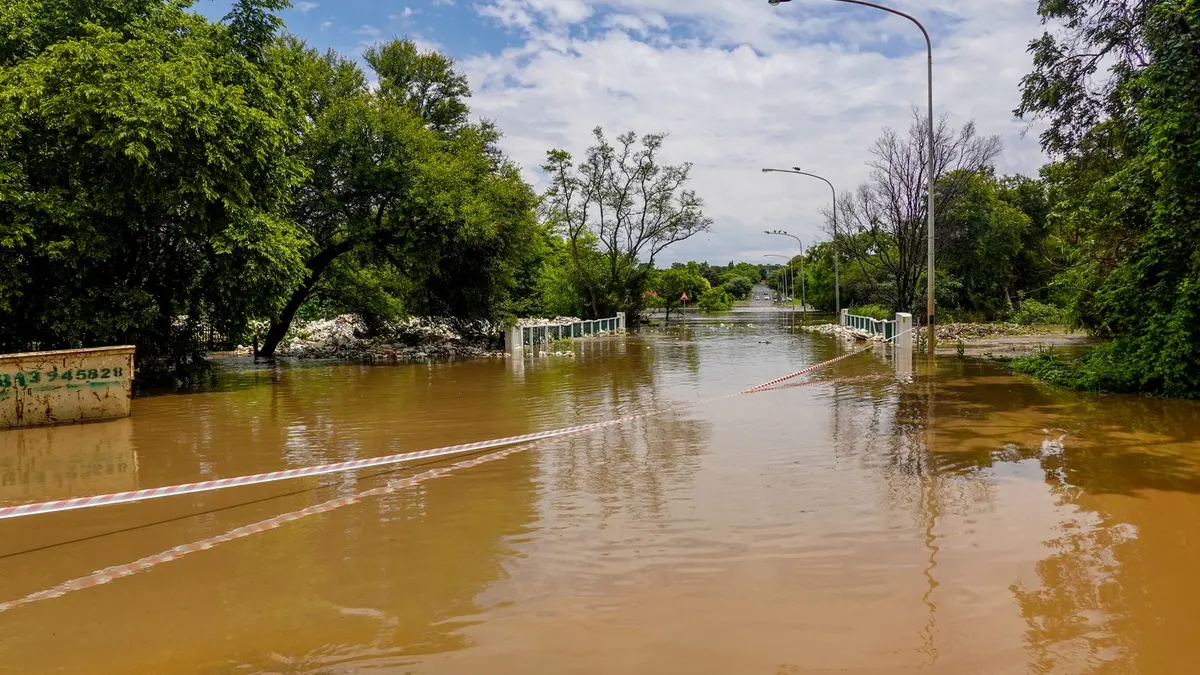
North Carolina natural disasters are, first and last, tropical. Of the 57 major disaster declarations FEMA has issued for the state since 1954, 26 came up out of the Atlantic or the Gulf, and only Florida and Louisiana have more hurricane declarations. Most of the rest is winter: ice storms and snow that land on the Piedmont, where most of the state's people live. Helene in September 2024 rewrote that. It put the mountains, which had spent 70 years as the quiet end of the state, under a major declaration with individual assistance, and the five wildfire declarations of spring 2025 followed it.
The kit follows the geography. On the coast and in the eastern river basins, build the full seven-day North Carolina hurricane kit and keep it portable, because the county may tell you to leave. In the Piedmont, ice is what takes your power, so the kit leans toward heat, light and a week of water in January. In the mountains after Helene, it's both, plus a way to talk to people when the roads are gone. This page is part of our natural disasters by state series, and the gear basics are in the power outage kit checklist.
A word on what the counts mean. FEMA files three kinds of declarations: a major disaster declaration (the one that brings money to counties and sometimes to households), an emergency declaration (quicker, smaller, often signed while the storm is still offshore) and a fire management declaration (one named wildfire, one declaration). North Carolina's pattern for a big hurricane is an emergency declaration for all 100 counties before landfall, then a major declaration a few days later for the counties that actually took damage; Florence, Dorian, Isaias, Ian and Helene all went that way. The state has 85 declarations in all, every one of the 100 counties has been named in at least one, and once you set aside the two that aren't weather (the 2005 Katrina evacuation and COVID), the widest event in the file isn't a hurricane. It's the January 2026 winter storm.
North Carolina declarations by type, 1954 to 2026
| Disaster type | Major declarations | Emergency declarations | When it usually hits | Example from the record |
|---|---|---|---|---|
| Hurricanes and tropical storms | 26 (23 hurricane, 3 tropical storm or depression) | 13 | August through early October | Hurricane Florence, September 2018, 52 counties with individual assistance |
| Severe storms and tornadoes | 15 (11 severe storm, 4 tornado) | 0 | Late winter and spring | April 2011 tornado outbreak, 20 counties |
| Flooding and landslides | 9 (8 flood, 1 landslide) | 0 | Scattered, often the tail of a tropical system | July 2013 mountain floods and landslides, 14 counties |
| Ice storms and snowstorms | 6 (4 ice, 2 snow) | 3 | December through early March | December 2002 ice storm, 44 counties |
| Wildfire | 0 major, 10 fire management | 0 | March through May, again in November | Five separate fires in spring 2025 |
Counted by FEMA's incident label. The January 2000 and December 2009 winter storms are filed under severe storms, so the real winter count is a little higher than the table shows.
The most-declared counties
Counted as the number of separate declarations each county has been named in since 1954. It's the coast and the sounds from top to bottom, with the eastern river counties right behind, and no mountain county makes the top twelve. That's the part of this table worth sitting with: the west had the thinnest record in the state, so the fewest kits, when Helene came.
| County | Declarations | Mostly |
|---|---|---|
| Brunswick (Southport, Oak Island) | 35 | Hurricanes, plus the 2025 Sunset Drive fire |
| New Hanover (Wilmington) | 32 | Hurricanes |
| Hyde (Ocracoke, Swan Quarter) | 32 | Hurricanes, the 2008 Evans Road fire |
| Craven (New Bern) | 32 | Hurricanes and river flooding |
| Beaufort (Washington) | 32 | Hurricanes and sound flooding |
| Pender, Dare | 31 each | Hurricanes |
| Pitt (Greenville), Onslow (Jacksonville), Carteret | 30 each | Hurricanes, Tar River flooding in Pitt |
| Pamlico, Lenoir (Kinston) | 29 each | Hurricanes, Neuse River flooding in Lenoir |
Hurricanes: the coast, the rivers, and now the mountains
Thirty-four of the state's declarations, major and emergency together, carry FEMA's hurricane label, and half of those began in September. August is the next busiest month, then October, then a few in July. Almost nothing tropical has earned a North Carolina declaration outside those four months; the one exception is Eta in November 2020, filed as a severe storm. The names run from Donna in 1960 and Hugo in 1989 through Fran, Floyd, Isabel, Frances and Ivan, Irene, Matthew, Florence, Dorian, Isaias, Ian, and Debby and Helene in 2024.
| Storm | Counties on the major declaration | Individual assistance | Where the damage went |
|---|---|---|---|
| Hugo, September 1989 | 29 | No | Wind, all the way to the Piedmont |
| Floyd, September 1999 | 66 (the widest in the file) | No | River flooding in the Tar, Neuse and Cape Fear basins |
| Frances and Ivan, September 2004 | 35 and 29 | Yes | Flooding in the western valleys |
| Matthew, October 2016 | 50 | Yes | Inland river flooding, same places as Floyd |
| Florence, September 2018 | 52 | Yes | River flooding that outlasted the storm |
| Fred (remnants), August 2021 | 11 | Yes | Mountain flooding |
| Helene, September 2024 | 40 (after a 101-area emergency) | Yes | The mountains, nearly all of it west of Charlotte |
Floyd, Matthew and Florence tell you where the damage goes. Each one got its widest counties inland, in the river basins that flooded after the wind was gone. The lesson eastern North Carolina already knows: the water comes after the wind, and it comes to Kinston and Greenville, not only to Wilmington.
I was here for Hugo. We were out of power for twelve days, and two huge trees were down, one at each end of our subdivision. People who lived through it in the Piedmont still measure every storm since against that one, and the record says they're right to.
Then Helene. The emergency declaration covered the whole state; the major declaration two days later covered the mountains, with individual assistance turned on. Frances and Ivan had flooded the same valleys in 2004, and the remnants of Fred had done it in 2021, so the mountains weren't new to tropical rain. What was new was the scale, across a region that had never built a hurricane kit because it was a long way from the ocean.
Anywhere in the eastern half of the state, build the seven-day hurricane kit by Memorial Day and know your evacuation zone if you're in one of the Know Your Zone counties. In the mountains, build the same kit and add the things Helene exposed: a week of stored water, a NOAA weather radio, and a way to reach neighbors when the towers are down. In a storm like Helene, a handheld GMRS radio or a Meshtastic node is the thing that still passes a message.
Ice: the Piedmont's hurricane
Hugo is the one storm Charlotte, the Triad and the Triangle remember as a hurricane. What takes their power year after year is ice. The December 2002 ice storm drew a major declaration across most of the Piedmont, and it's the one I'd plan around if you live between Charlotte and Raleigh. That one was bad at our house too: a tree came down on it. There was one generator in the whole neighborhood, and we all took turns on it to get a shower and try to stay warm. That is where the "one week of heat and water" rule on this page comes from. The February 1968 ice storm, the Blizzard of 1996 and its follow-up storm a month later, and the March 1993 storm all left wide declarations too. Then came January 2026: an emergency declaration for 102 designated areas, the widest weather declaration in North Carolina's FEMA history, for a storm that put ice and snow on every part of the state at once.
Ice storms here come in a narrow window, December through early March, and they do their damage through tree limbs on power lines, so the outage can run four or five days in the suburbs and longer in the country. The kit for it is the power outage kit with a cold-weather layer: a safe indoor heat source with a carbon monoxide alarm, emergency blankets and sleeping bags, a lantern and headlamps for the long nights, and the winter car kit, because the back roads stay iced long after the interstates are clear. Store the water before the storm, not after the pipes freeze.
Tornadoes and spring storms
Fifteen major declarations fall under severe storms or tornadoes, and they cluster in late winter and spring, with April the busiest month. The ones with reach were the March 1984 outbreak, the May 1989 tornadoes, the April 2011 outbreak that ran from the Sandhills to Raleigh and put 20 counties under a major declaration with individual assistance, and the April 2018 Greensboro tornado. North Carolina doesn't sit in the Plains corridor, but it gets a real tornado season from March through May.
Tornado prep here is the same as anywhere: a weather radio with the alert tone set for your county, a known safe spot, helmets for the kids in it, and a light source for after.
Floods and landslides on their own
Eight major flood declarations plus one for landslides, most of them before 1980 and most of them small. The exceptions are the 2013 mountain events: July rain produced two declarations for flooding, landslides and mudslides across the western counties, after a slide declaration that January. The mountains flood from stalled summer storms as well as from hurricanes. If you live on a creek in Buncombe, Haywood, Jackson or Swain, the weather radio and a get home bag in the truck matter in July as much as in September.
Wildfire: the 2025 spring
North Carolina has ten fire management declarations through 2026, and five of them came in nine weeks in spring 2025: Black Cove in Polk County, Alarka in Swain, Table Rock in Transylvania, Sam Davis Road in Swain and Sunset Drive in Brunswick. Four of the five burned in mountain counties that Helene had hit six months earlier. The earlier fires in the file are Party Rock and Chestnut Knob in November 2016, Evans Road in June 2008 and Simmons Road in July 2011.
The fire months in the record are March, April and May, with a second window in November when the leaves are down and dry. For the mountain counties, that means a packed go bag from March through May, with the papers, the medications, masks for smoke, and somewhere already arranged for the dogs and the horses to go. The bug out bag checklist has the full list.
A North Carolina disaster calendar
- January and February: ice and snow. The January 2026 storm began in this window, the December 2009 storm ran into it, and the Blizzard of 1996 ran through both months. Winter kit ready, water stored, heat you can run safely.
- March: the busiest non-tropical month, with nine declarations: late ice storms (1993, 2014, and the 2003 storm that began in the last days of February), spring tornadoes (1984) and the start of fire season in the mountains (2025). Weather radio on.
- April and May: tornado season (2011, 2018, 1989) and the rest of the spring fire window. Go bag packed in the mountains.
- June: quiet. Two declarations in 72 years. Build and restock the hurricane kit now.
- July: early tropical systems (Bertha, Isaias, Chantal) and summer mountain flooding (2013).
- August: hurricane season proper. Bonnie, Dennis, Irene, Fred and Debby all began in August.
- September: the worst month in the file by a wide margin, with 23 declarations: Hugo, Fran, Floyd, Isabel, Frances, Ivan, Ophelia, Florence, Dorian, Ian, Helene, and Potential Tropical Cyclone Eight a week before Helene in 2024. Car fueled, kit in the truck, zone known.
- October: late hurricanes (Matthew, Michael) and fall flooding.
- November and December: mountain fire season (Party Rock, Chestnut Knob) and the first ice.
What to build, by region
- Everyone: the week-without-power base. One gallon of water per person per day for seven days, shelf-stable food, a weather radio, headlamps, phone power, cash, documents. The power outage kit checklist has it in order. This is the kit for a Piedmont ice storm and for the outage after any of the storms above.
- Coast and eastern rivers: the hurricane layer. Everything above, packed in totes you can load in an hour, plus tarps, contractor bags, a chainsaw if you have trees, and a route inland. The North Carolina hurricane kit checklist goes region by region.
- Mountains: the Helene layer. The hurricane kit, a longer water supply, a go bag for the spring fire window, and a radio plan. A storm like Helene takes the phones with the power.
- Piedmont: the ice layer. Indoor heat with a CO alarm, blankets rated for a cold house, the winter car kit, and water stored before the freeze.
- Communications for all of it. A pair of GMRS radios keeps a street talking, and a Meshtastic or MeshCore node keeps a neighborhood passing messages with the towers down.
Questions people ask about North Carolina disasters
What is the most common natural disaster in North Carolina?
Hurricanes and tropical storms. They account for 26 of the state's 57 major disaster declarations since 1954, and more than a third of all declarations once you count the emergencies signed before landfall. Severe storms and tornadoes are a distant second.
Which North Carolina hurricane was the biggest by FEMA's measure?
By counties under a major declaration, Floyd in 1999 leads with 66, then Florence in 2018 and Matthew in 2016. Helene's major declaration was narrower, but it was the first to put the mountain counties under individual assistance at that scale. Florence, Dorian, Isaias, Ian and Helene each drew an emergency declaration for all 100 counties.
When is hurricane season in North Carolina?
The Atlantic season runs June 1 to November 30, but every hurricane-label declaration in the state's file began between July and October, and half of them began in September. Have the kit done by the end of May and the car fueled by Labor Day.
Does the Charlotte area get hurricanes?
Rarely as wind. Hugo in 1989 is the one that reached the Piedmont with hurricane force. What Charlotte, the Triad and the Triangle get from tropical systems is rain and flooding, and what takes their power is ice: the December 2002 ice storm hit the Piedmont hardest, and the January 2026 winter storm reached nearly every county in the state.
Are the North Carolina mountains safe from natural disasters?
They were the least-declared part of the state until 2024. Frances and Ivan in 2004, the 2013 floods, Fred in 2021 and then Helene in September 2024 show the pattern: tropical rain stalling over steep ground. Four of the five 2025 wildfire declarations were in the mountains too, burning in the timber Helene brought down.
Will FEMA pay me after a declaration?
Not unless the declaration includes individual assistance, and then only for the listed counties. In North Carolina's record it was turned on for Isabel, Frances, Ivan, the 2010 and 2011 storms, Irene, Matthew, the 2018 Greensboro tornado, Florence, Fred and Helene. Most declarations only repay counties and towns. Check your county on FEMA's disaster page, and keep photographs of your property from before the storm.
The whole page in a paragraph
Stock a week without power anywhere in North Carolina, because ice can do that in Charlotte and a hurricane can do it in Wilmington. Add the full hurricane kit east of I-95 and, since Helene, in the mountains too, with a radio plan on top. The data behind this page is FEMA's public declaration file, pulled October 31, 2026, and the counts will change as new declarations are added. Neighboring states in the series: South Carolina, Virginia and Tennessee. The rest of the series is at natural disasters by state, and the gear guides are in storm prep.
Sources
Ready to buy?
See current models and availability on Amazon. Your clicks keep these guides free.
Shop Emergency Kits on Amazon →