Natural Disasters in Florida: 39 Hurricane Declarations, a Spring Fire Season and the Freezes Nobody Plans For
The hurricane record is what you expect. The 67 wildfire declarations, the six statewide freezes and a storm season that now runs into November are the parts most Floridians have not built for.
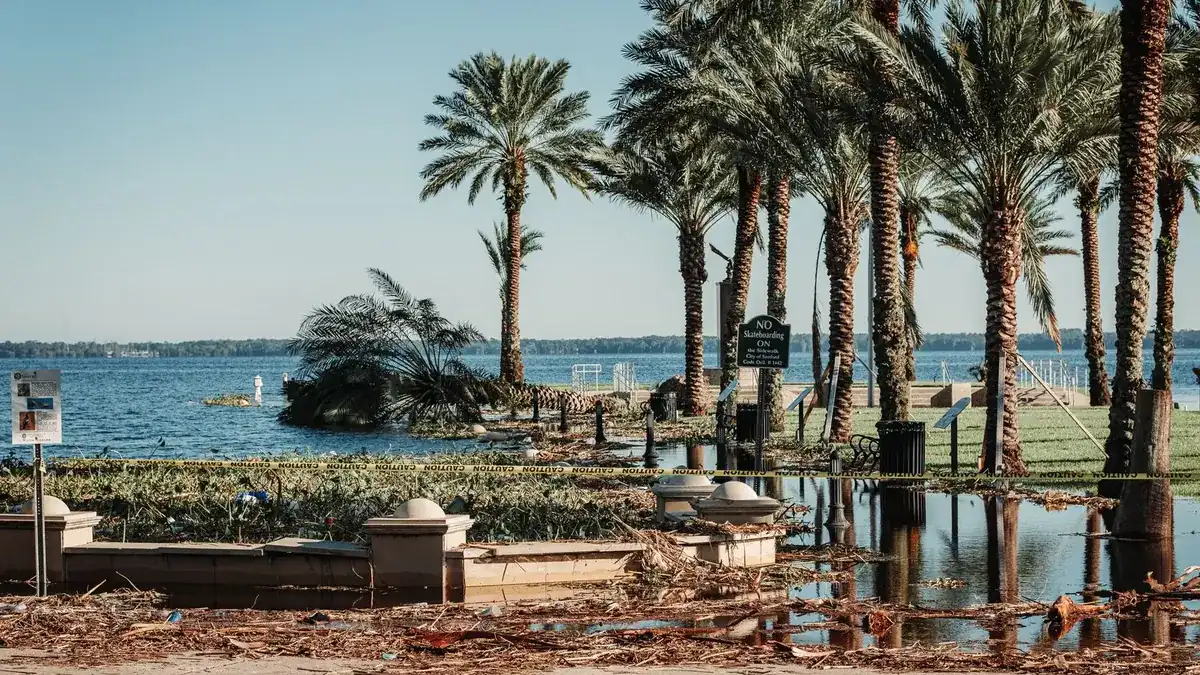
Florida has 39 major hurricane declarations on FEMA's books, more than any other state we've pulled, and that's the number everyone expects. Florida natural disasters also include 67 fire management declarations, nearly all of them in April, May and June, and six major disaster declarations for freezing weather, the most of any state in this series. The whole record runs to 190 declarations going back to 1953, and this decade alone has already produced more of them than the entire 2010s.
The hurricane kit is the Florida kit, and most people in the state have at least thought about one. What the record adds is three things. The season has stretched: three of the last five years brought a tropical declaration in October or November, and the state's newest major declaration, Hurricane Isaias, was signed at the end of October 2026. The dry spring is a fire season, not a quiet season, especially from Collier County up through the ranchland and the Panhandle. And a hard freeze has reached far enough south to earn a federal declaration six times, in places that own no winter clothes. This page sits in our natural disasters by state index. The gear list behind it is the seven day hurricane kit, which I built for the Carolina coast, though nothing on it changes south of the state line.
A note on reading the counts. A major disaster declaration is the full federal response, signed by the President, and the only kind that can open Individual Assistance for households; Florida has 87. An emergency declaration is quicker and smaller and is often issued while the storm is still offshore, which is why a hurricane like Irma shows up twice, as a statewide emergency and then a statewide major disaster five days later. A fire management declaration reimburses the state for fighting one named fire that threatens homes, so the 67 fire declarations are 67 separate fires, not 67 disasters, and FEMA only began issuing them in volume in the 1990s. Two more statewide entries aren't weather at all, the Katrina evacuation in 2005 and the COVID declarations in 2020, and I leave those out when talking about storms.
Florida disasters by type, 1953 to 2026
| Disaster type | Major declarations | When it usually hits | Example from the record |
|---|---|---|---|
| Hurricanes | 39 major, plus 21 emergencies | August through October, September worst | Hurricane Ian, September 2022, 69 areas |
| Tropical storms and severe storms | 22 severe storm, plus 1 tropical storm and 2 coastal storm | Spread through the year, heaviest in storm season | Tropical Storm Fay, August 2008, 44 counties |
| Flooding | 12 | July, September and October | Severe storms and flooding, April 2023, 1 county |
| Freezes | 6 | December and January, declared by March | Severe freeze, winter of 2000 to 2001, 49 counties |
| Wildfire | 1 major, plus 67 fire management and 1 emergency | April, May and June | Extreme fire hazard, June 1998, all 67 counties |
| Tornadoes | 1 | Late winter and spring | March 1993, 38 counties |
FEMA files many of Florida's tropical storms under "severe storm" rather than "hurricane", so the storm total is really higher than the hurricane line suggests. Tropical Storm Fay, Debby in 2012, Elsa in 2021 and the remnants of Alberto, Gordon, Josephine, Mitch, Helene (the 2000 one) and Allison all sit in the severe storm column.
Hurricanes: the month pattern and the big years
Sixty hurricane declarations in all, counting emergencies, and the month pattern is as sharp as any in the country. September alone holds more than forty percent of them, August and October split most of the rest, and not one hurricane declaration in Florida began before July or after November. The National Hurricane Center puts the Atlantic peak at September 10, and the Florida file says the same thing in its own way.
The 2004 season is still the one to measure against: four major disasters in six weeks, two of them statewide, all four with individual assistance. The next year brought Dennis, Katrina on its way to the Gulf, and Wilma. Then a long gap. From Wilma in 2005 to Hermine in 2016, the only hurricane major declarations were small ones for Gustav and Isaac, the quietest stretch in the modern record, and a lot of people who moved to the state in those years have never packed for a real one.
The gap closed hard. Irma covered all 67 counties. Michael drew a Panhandle major declaration. Dorian put the whole state on an emergency declaration while it sat off the coast. Then a run of named storms nearly every year since: Isaias, Sally and Eta, then Elsa and Fred, Ian and Nicole, Idalia, three in ten weeks in the fall of 2024, and Isaias again in October 2026. The widest of them are in the table.
| Hurricane | Counties under the major declaration |
|---|---|
| Ian, September 2022 | 69 areas (all 67 counties plus tribal land) |
| Charley and Tropical Storm Bonnie, August 2004 | 67 |
| Frances, September 2004 | 67 |
| Irma, September 2017 | 67 |
| Debby, August 2024 | 61 |
| Jeanne, September 2004 | 53 |
| Milton, October 2024 | 52 |
| Helene, September 2024 | 47 |
| Ivan, September 2004 | 45 |
| Hermine, September 2016 | 26 |
| Michael, October 2018 | 18 |
| Isaias, October 2026 | 15 |
What the record changes about the kit: the season isn't over at Labor Day. Nicole was a November landfall. Eta was November. Milton was October. Keep the hurricane kit stocked through Thanksgiving, not through the end of September. And because Florida's outages run in heat, the two items that earn their place first are a way to charge a phone and run a fan, which is what a solar power bank is for, and enough stored water to get through the boil notice that follows almost every landfall.
The spring fire season most people ignore
Florida has more fire declarations than most states in this series, well behind the western fire states, Texas and Oklahoma, but ahead of every other state east of the Mississippi. That surprises people who think of the state as a swamp. The dry season ends in a hot, windy April and May before the summer rains start, and that's exactly when the fire declarations land: more than nine in ten of them began in April, May or June, and none at all began between July and January.
The bad years cluster. In June 1998 the state got a major disaster declaration for extreme fire hazard covering all 67 counties, on top of thirteen separate fire management declarations that year, and the three years after it were nearly as bad. The more recent ones are smaller but keep coming: the Collier County fires and Lehigh Acres in the spring of 2017, three in one May in Santa Rosa, Walton and Collier, the Chipola fire complex in Bay County, and two in April 2026 (the Railroad Complex in Clay and Putnam counties and the Cow Creek fire in Levy County). Collier County appears again and again.
If you live on the edge of the Big Cypress, in the ranch country of Polk and Highlands, or in the pine flatwoods of the Panhandle, the spring kit is a go bag that is already packed by April with documents, medications, a few N95s for the smoke that drifts over the flatwoods, and somewhere lined up for the animals. Fire moves faster than a horse trailer. The bug out bag checklist has the full list.
Freezes: six major disasters in a state with no snow shovels
No state in this series has more major disaster declarations for freezing weather than Florida: six of them between 1971 and the winter of 2000. The two widest, the December 1989 freeze and the December 2000 freeze, reached 32 and 49 counties, which meant burst pipes, dead space heaters and people who had never seen their breath indoors.
There hasn't been one since, which is exactly why it belongs on the list. Twenty-five years is long enough for a whole state to forget. The gear is cheap: emergency blankets, a heater you can safely run indoors and the carbon monoxide alarm that must go with it, and the habit of dripping faucets when the forecast says the twenties.
Where the declarations land
I counted how many separate declarations each county appears in since 1953. The top of the list is the Gulf side, from Collier up through Tampa Bay to the Big Bend and the Panhandle. The Atlantic coast and the inland counties are further down, though no county in Florida is far down.
| County | Declarations | What drives it |
|---|---|---|
| Collier (Naples) | 54 | Hurricanes plus wildfire on the fire management list |
| Bay (Panama City) | 51 | Panhandle hurricanes, Michael in 2018, fires in 2022 |
| Manatee | 50 | Gulf hurricanes and tropical storms |
| Gulf | 49 | Panhandle hurricanes |
| Sarasota, Franklin | 48 each | Gulf hurricanes, Franklin for the Big Bend landfalls |
| Wakulla, Monroe (the Keys), Hillsborough (Tampa) | 47 each | Hurricanes and storm surge |
| Santa Rosa, Pinellas, Levy | 45 each | Panhandle and Gulf coast storms, Levy also for fire |
Monroe County is the Keys, and its 47 is a reminder that the Keys get declared for nearly every storm that passes within reach, because the one road out is the whole evacuation plan.
A Florida disaster calendar
- December through February: the quiet months in the count, but the freeze window. Keep the blankets where you can find them.
- March: the odd tornado outbreak and the first fires. The March 1993 storm was declared for 38 counties as tornadoes, flooding, high tides and freezing all at once.
- April, May and June: fire season, and the busiest stretch of the calendar after the storm months. Go bag packed, burn bans respected.
- July: the first tropical systems, and a few floods. Build the kit now if you didn't do it in June.
- August through October: 54 of the 60 hurricane declarations began in these three months. Fuel in the car, water stored, cash on hand, documents in a dry bag.
- November: a handful of late hurricanes and tropical storms. Keep the kit stocked through Thanksgiving.
What goes on the shelf, and in what order
- The seven day base. Water (one gallon per person per day), shelf-stable food, a weather radio, headlamps and a lantern, phone power, cash, documents, pet supplies. The power outage kit checklist is the full list, and it covers every outage on this page.
- Make it portable if you are in an evacuation zone. The Keys, the barrier islands, the Big Bend coast and the low side of Tampa Bay leave when told. Two or three totes plus the water, and a full tank before the watch becomes a warning.
- Heat management for the week after. A solar power bank or a small generator for a fan and the phones, and a cooler plan for medication that needs it.
- The fire layer, April to June, inland and south. Packed go bag, masks, animal plan.
- The freeze layer. Blankets, safe heat, a CO alarm, and faucets dripping. Six declared freezes and then a quarter century of nothing is exactly how a state forgets to own it.
- Communications. When the power is out for a week, the phones are the next thing to go. GMRS radios keep a household in touch across a few miles, and a Meshtastic node keeps a neighborhood passing text with no tower involved.
Questions people ask about Florida disasters
What is the most common natural disaster in Florida?
Hurricanes, by a wide margin. Thirty-nine of Florida's 87 major disaster declarations are hurricanes, and the total rises to 60 when emergency declarations are counted. Add the tropical storms FEMA filed under other labels and tropical weather accounts for more than half of the state's major disasters. By raw count, wildfire is second, but those are counted one fire at a time.
What month do hurricanes hit Florida most?
September. Twenty-five of the 60 hurricane declarations in FEMA's Florida file began in September, with August and October next. The earliest was July and the latest November.
What was the biggest hurricane disaster in Florida by FEMA's measure?
By area covered, Hurricane Ian in 2022, whose major declaration listed 69 areas, all 67 counties plus tribal lands. By volume in one season, 2004: Charley, Frances, Ivan and Jeanne drew four major declarations within six weeks, two of them statewide.
Does Florida get wildfires?
Yes, and more federal fire declarations than most states. Florida has 67 fire management declarations plus a 1998 major disaster for extreme fire hazard covering all 67 counties. The season is April through June, before the summer rains, and Collier County leads the state.
Has Florida ever had a federal disaster for cold weather?
Six times, the most of any state we've pulled, between 1971 and the December 2000 freeze that was declared for 49 counties. None since.
Which part of Florida has the fewest disasters?
None of it is spared. The Gulf coast from Naples to the Panhandle carries the most declarations. The interior and the northeast Atlantic coast sit lower in the count, but every county in the state was named in the statewide storms, and those alone (Charley, Frances, Irma, Dorian, Ian) covered all 67. Next door, Georgia and Alabama catch the same storms a day later. Every figure here is from FEMA's declaration file as of October 31, 2026, and the rest of our storm prep guides cover the gear in detail.
Sources
Ready to buy?
See current models and availability on Amazon. Your clicks keep these guides free.
Shop Emergency Kits on Amazon →