Natural Disasters in Oklahoma: Ice Storms, Tornadoes and a Fire Season Most People Miss
Five statewide ice emergencies, more severe-storm declarations than any state we've pulled, and a grass fire season that runs through the winter.
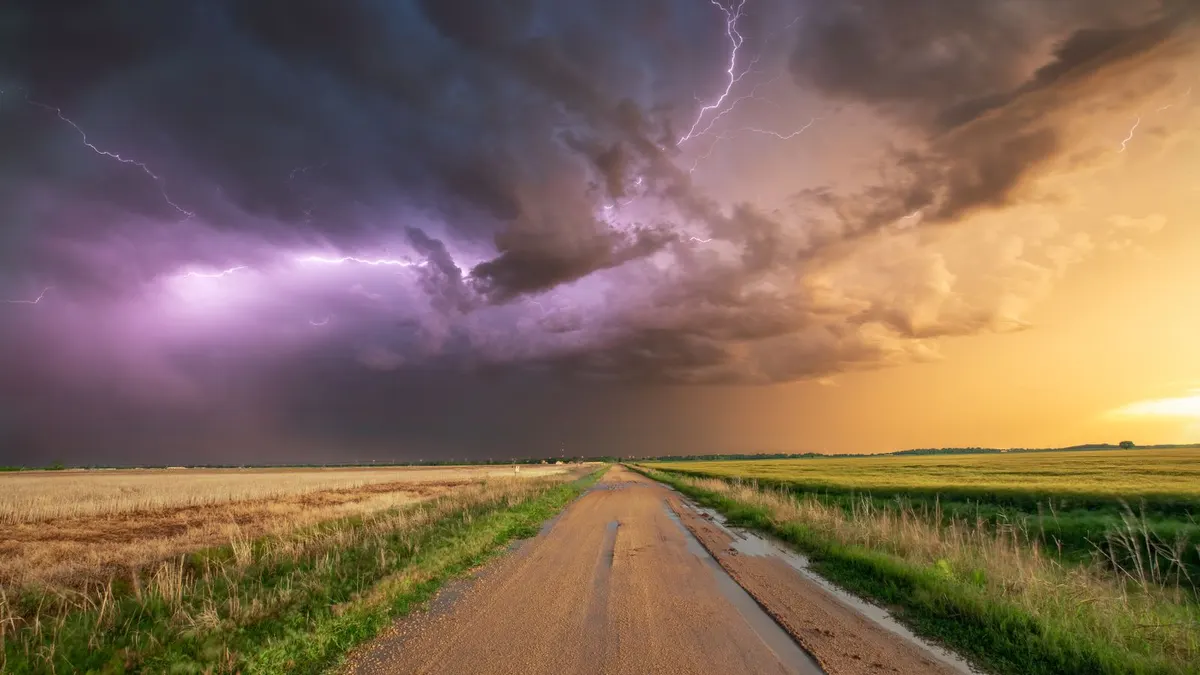
Tornadoes are what Oklahoma is known for, but they're a small slice of the natural disasters in Oklahoma that FEMA has actually declared. Of the 99 major disaster declarations the state has received since 1955, only 13 are filed as tornadoes. Severe storms account for about half, more than any state we've pulled so far, and roughly one in six is winter weather once you count the ice storms FEMA filed under the severe storm label. Every one of the five weather emergencies that covered all 77 counties at once was a winter storm, not a tornado outbreak (the only statewide major declaration that wasn't winter was a wildfire threat, in January 2006). Add the part almost nobody outside the state knows about, a grass fire season that peaks in March, and the Oklahoma kit looks less like a storm shelter and more like a plan for a week of no power in freezing weather, with the shelter still in the picture from April through June.
On the counting: a major disaster declaration is the full federal response to a storm that has already done its damage, and an emergency declaration is the faster, smaller one, which in Oklahoma usually means signed while the ice is still falling. Fire management declarations are a different animal. They reimburse the state for fighting one named fire, so a bad grass fire year stacks them up fast, and FEMA only started issuing them in volume in the late 1990s. Oklahoma has 132 of those on top of the 99 majors and 28 emergencies, which is why its 259 total is third in this series behind California and Texas. The Katrina evacuation emergency in 2005 and the COVID declarations in 2020 cover every county in every state and have nothing to do with weather, so I've set them aside below.
This page works through the FEMA record by hazard, county and month, then says what to put on the shelf. It's one of our natural disasters by state pages, and the week-without-power basics are in the power outage kit checklist.
Oklahoma disasters by type, 1955 to 2026
| Disaster type | Major declarations | When it usually hits | Example from the record |
|---|---|---|---|
| Severe storms (wind, hail, tornadoes, flooding mixed) | 49 | April and May | May 2015, 63 counties |
| Flooding | 22 | May and June | October 1986, 41 counties |
| Tornadoes | 13 | April and May | May 2013 (Moore), 21 counties |
| Ice storms and winter storms | 8 filed as ice storms, 9 more filed as severe storms | December through February | February 2021, all 77 counties |
| Wildfire | 5 major, plus 132 fire management | January through April | March 2025 wildfires and straight-line winds, 7 counties |
| Other | 2 | The April 1995 Oklahoma City bombing, filed as a human-caused disaster |
The totals use FEMA's own incident labels. Oklahoma storms rarely come one hazard at a time, so a single May declaration often reads "severe storms, tornadoes, straight-line winds, and flooding" and gets filed under whichever one the state put first.
Ice is the hazard that reaches everyone
Oklahoma leads this series in major ice storm declarations, and the emergency list tells the rest of the story. The big ones since 2000:
| Ice or winter storm | Declaration | Counties |
|---|---|---|
| Late December 2000 | Emergency, then major | 39, then 65 |
| January 2002 | Major | 45 |
| January 2007 | Emergency | All 77 |
| December 2007 | Emergency | All 77 |
| January 2010 | Emergency | All 77 |
| February 2011 | Emergency | All 77 |
| October 2020 | Major | 29 |
| February 2021 | Emergency and major | All 77, both |
Most of them start in December or January, a couple in February, and the October 2020 storm is the oddity that arrived before Halloween. The pattern is a storm every two to four years that takes down lines across half the state and leaves rural co-op customers dark for a week or more.
That's the kit to build first, because it applies in Guymon and Idabel alike. Heat you can run indoors without the grid, and the carbon monoxide alarm that has to go with it. Emergency blankets and sleeping bags rated well below freezing. Water stored before the pipes freeze, not after; the water storage guide covers containers and amounts. A lantern and headlamps for a week, and a winter car kit because a storm like 2007 or 2021 shuts the roads down. A small generator or a solar power bank keeps the phone and a radio alive; in February the panel won't do much, so size the battery for it.
Tornado season is real, and shorter than you think
Thirteen major tornado declarations, and nearly all of them began in April or May. The lone exception was a December outbreak. Mix in the severe storm declarations, which peak in May, and the picture is a six-week window from mid April through the end of May when Oklahoma gets most of its wind, hail and tornado damage. The declarations people remember are all in the data: the May 1999 outbreak, the May 2013 storms that hit Moore, the May 2015 event that put most of the state under a declaration, and the April 2023 and April 2024 storms.
The state's most-declared counties are the ones that sit in that corridor: Oklahoma County first, then Logan, Creek, Lincoln, Pottawatomie, McClain and Caddo, with Cleveland County, home of Moore and Norman, close behind. The county table below has the counts.
Tornado prep in Oklahoma comes down to hearing the warning and having a place to go, because the hazard arrives in minutes. A NOAA weather radio with the alert set to your county is the single most useful piece of gear on this page; outdoor sirens don't reach inside a house with the air conditioner running. Keep helmets for everyone in the shelter spot, keep shoes by the bed in April and May, and expect a day or two without power afterward.
Flooding, mostly in late spring
Twenty-two major flood declarations, with May and June the usual start months. The widest recent one came in May 2019, when flooding drew a small emergency declaration and the storms behind it a 51-county major declaration a week later, filed under severe storms. The biggest flood by label was October 1986, which covered 41 counties, at the end of a stretch in the 1970s and 1980s when the state was getting two or three flood declarations a decade. Since 2000 most flooding has been folded into the mixed "severe storms and flooding" filings, which is part of why the severe storm count runs so high.
The flood gear is simple and cheap: documents in a waterproof pouch, a get home bag in the truck for the drive that turns around at a flooded low-water crossing, and the weather radio again.
The winter fire season
This is the part of the Oklahoma record that surprises people who live elsewhere. March is the worst fire month in the file by a wide margin, with January and April next, and there's a second bump in August. The reason is grass. Oklahoma's rangeland cures in the fall, and from the first hard freeze until spring green-up, any dry windy day in the western two thirds of the state can carry a fire for miles. The bad years stand out:
| Year | Fire management declarations | Note |
|---|---|---|
| 2006 | 22 | Plus a statewide major declaration for extreme wildfire threat in January |
| 2011 | 25 | The heaviest year in the file |
| 2025 | 15 | The March fires earned a 7-county major declaration with individual assistance |
| 2026 | 10 through October | Fires from Beaver and Texas counties in the Panhandle to Osage, Carter and McClain |
If you live west of I-35, and especially in the Panhandle, northwest Oklahoma or the Osage, the kit from December to April is a go bag that's already packed: documents, medications, a change of clothes, N95 masks for smoke, and a plan for livestock and pets. Grass fires move faster than a loaded trailer. The bug out bag checklist has the full list. Fire season and ice storm season overlap, which is a strange thing to plan for, but the record says you should.
Which counties get hit most
I counted how many separate declarations each county has appeared in since 1955. Central Oklahoma dominates, because it sits in the tornado and severe storm corridor and catches the ice storms too.
| County | Declarations | What drives it |
|---|---|---|
| Oklahoma (Oklahoma City) | 52 | Severe storms, tornadoes, ice storms |
| Logan (Guthrie) | 47 | Severe storms, ice, grass fire |
| Creek (Sapulpa) | 47 | Severe storms, flooding, ice |
| Lincoln | 45 | Severe storms, ice |
| Pottawatomie (Shawnee), McClain, Caddo | 44 each | Tornadoes, severe storms, fire |
| Osage, Cleveland (Norman, Moore) | 43 each | Tornadoes, fire in the Osage |
| Okmulgee, Okfuskee, Canadian | 40 each | Severe storms and ice |
All 77 counties have been named in at least one declaration. The far western counties show up less here because fire management declarations are filed against the fire rather than always against a county, and because the statewide ice emergencies count once for every county.
An Oklahoma disaster calendar
- December through February: ice storm season, and the start of grass fire season. Winter kit, water stored, go bag packed if you're west of I-35.
- March: the single worst fire month in the record. Still ice-possible early in the month.
- April and May: tornado season; all but one of the tornado declarations began in these two months. Weather radio on, shelter plan rehearsed.
- June: flood month, and the tail of storm season.
- July: quiet. Eleven declarations in 71 years. Heat is the problem, not storms.
- August: the second fire bump as the summer dries the grass.
- September and October: the quietest stretch of the year. Restock and test the generator.
- November: the first ice is possible, and late-season storms do happen; the November 2024 storms drew a major declaration for eight counties.
The Oklahoma kit, layer by layer
- The cold-weather, no-power week. Indoor-safe heat and a CO alarm, below-freezing sleeping bags and emergency blankets, seven days of stored water and shelf-stable food, a lantern and headlamps, and a way to keep the phone charged. This covers the hazard that has reached every county five times.
- The warning layer. A weather radio with the alert on, programmed to your county. It covers tornadoes, flash floods and ice storm warnings alike.
- The spring shelter plan. Where you go, what's already there (a helmet per person, the radio, a light, shoes) and a way to get out if the door is blocked. Rehearse it in March.
- The go bag, if you're in grass fire country. Packed by December, checked in March. The checklist covers it.
- Communications for after. Oklahoma outages are county-wide and cell sites go dark with the lines. A pair of GMRS radios keeps a household talking across a farm or a neighborhood.
The winter car kit belongs in every vehicle from November to March, because the two biggest ice storms in the file were road-closing events.
Questions people ask about Oklahoma disasters
What is the most common natural disaster in Oklahoma?
By FEMA's major disaster count, severe storms: 49 of the state's 99 major declarations, usually a mix of straight-line wind, hail, tornadoes and flooding in April and May. Counting every type of declaration, wildfire leads with 139, and 132 of those are one-fire reimbursements to the state rather than household disasters.
Is Oklahoma the worst state for tornadoes?
Not by declarations. Oklahoma has 13 major tornado declarations since 1955, second in our series to Texas with 15. The difference is that many Oklahoma tornado events are filed under severe storms, where the state leads every other state we've pulled.
What was the biggest disaster in Oklahoma's FEMA record?
By reach, the February 2021 winter storm, which drew an emergency declaration and a major disaster declaration for all 77 counties. Four other winter storms (January and December 2007, January 2010 and February 2011) drew statewide emergencies, the January 2006 wildfire threat drew a statewide major declaration, and the ice storms of 2000 and 2002 came close. No declaration filed as a tornado has covered more than 29 counties.
When is tornado season in Oklahoma?
April and May. Twelve of the state's 13 major tornado declarations began in those two months, with the one exception in December. Severe storm declarations follow the same curve and peak in May.
Does Oklahoma have a wildfire season?
Yes, and it runs in winter. Ninety of the state's fire declarations began between January and April, with March the worst month. 2006, 2011, 2025 and 2026 were the heaviest years in the record. A smaller second season runs through August.
Does a FEMA declaration mean I will get help?
Only sometimes. Most declarations turn on Public Assistance, which repays cities, counties and co-ops for repairs and debris. Individual Assistance for households is a separate switch; in the Oklahoma record it was added for the May 2013 and May 2015 storms, the 2021 winter storm, the April 2024 tornadoes and the March 2025 fires, among others. FEMA's declaration page has the county list. Walk the house and the outbuildings with your phone while the weather is good; the photos are what the adjuster asks for.
If you read nothing else
Build the cold-weather kit first, because ice is the one hazard that has reached every county in Oklahoma, and it's done it five times. Put a weather radio in the house for the six-week tornado window and the flash floods that follow it. If you live in grass country, keep a go bag packed from December through April. The counts on this page come from FEMA's public declaration file, pulled October 31, 2026, and get refreshed as FEMA adds to it. The neighbors are here too: Texas to the south and Missouri to the east, and the rest of the series is on the state index. The gear guides live in storm prep.
Sources
Ready to buy?
See current models and availability on Amazon. Your clicks keep these guides free.
Shop Emergency Kits on Amazon →