Natural Disasters in Missouri: Spring Storms, River Floods and the Ice That Shuts the State Down
Forty-six major severe storm declarations, the 1993 flood that covered 105 counties, and three ice storms that put every county under an emergency at once.
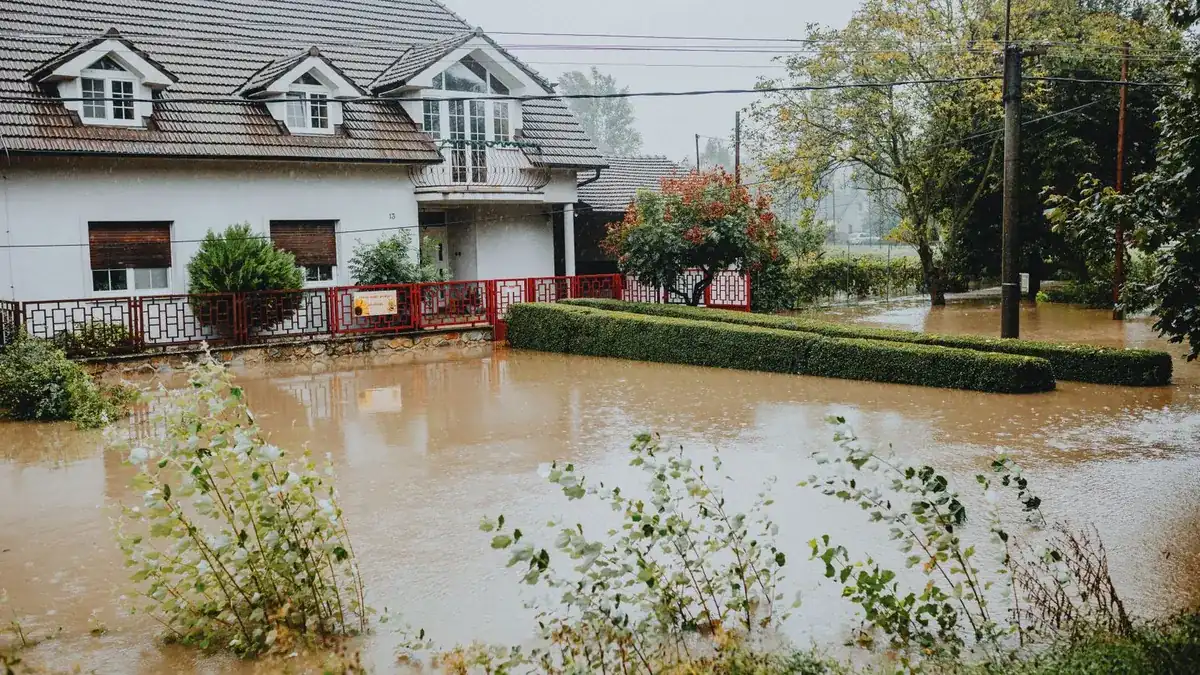
Three things stand out in the federal record of Missouri natural disasters, and none of them is a tornado. The summer flood of 1993 put 105 counties under a single declaration, still the widest weather declaration in the state's file. Three ice storms, in December 2007, January 2009 and the end of January 2011, drew emergency declarations for every county at once, which no storm or flood has ever done. And 2025 produced six major disaster declarations in one year, tying the record. The everyday weather in between is spring storms: nearly two thirds of Missouri's major disasters are filed as severe storms, and May is the worst month in the file by a wide margin.
So the Missouri kit has two halves. The first is a spring plan: a weather radio that wakes you up, a shelter spot, and a week of water and light for the outage that follows a straight-line wind event. The second is a winter plan for a week without power in January, built around heat and stored water, because the ice storms arrive every few years and take out lines across the whole state. This page lays out what FEMA's records show for each hazard, which counties see the most of it, and what to put on the shelf. It's part of our natural disasters by state series; the gear basics are in the power outage kit checklist.
One note on the counting before the tables. FEMA files major disasters (the full federal response after damage is done), emergency declarations (quicker and narrower; in Missouri they've mostly been used for ice storms and the 1976 drought) and fire management declarations (one named wildfire each; Missouri has exactly one, the Camden Fire Complex in March 2000). Nearly everything in Missouri's file is a major disaster, which is unusual, and it means the count here is a count of real damage rather than of fires fought. The two statewide entries that aren't weather, the Katrina evacuation in 2005 and COVID in 2020, are set aside below.
Missouri disasters by type, 1957 to 2026
| Disaster type | Major declarations | When it usually hits | Example from the record |
|---|---|---|---|
| Severe storms (wind, hail, tornadoes, flooding together) | 46 | April, May and June | April to July 2019, 87 counties |
| River and flash flooding | 21 | June and July, with a second peak in December | Summer 1993, 105 counties |
| Tornadoes (filed as the main hazard) | 5 | May | April 1979, 17 counties |
| Ice storms | 4, plus 3 winter storms filed as severe storms | December through February | December 2007, 42 counties (116 on the emergency) |
| Wildfire | 0 major; 1 fire management | March | Camden Fire Complex, 2000 |
Missouri files most of its tornado damage under severe storms, so the five "tornado" declarations understate the hazard. Read the first two rows together.
Spring: the six weeks that produce half the record
Forty-six major severe storm declarations, and the calendar is lopsided toward May, with April next and a tail into June and July. The tornado-labeled declarations follow the same curve. Put another way, from the first week of April through the end of June, Missouri has picked up a major storm disaster about every three years, and in the bad years two or three at once.
| Storm season | Counties on the major declaration | Note |
|---|---|---|
| April 1973 | 94 | Heavy rain, tornadoes and flooding |
| April 2019 | 87 | Storms and flooding from late April into July; individual assistance |
| April 2002 | 79 | |
| May 2003 | 76 | |
| May 2015 | 76 | Declared that August |
| March 2008 | 71 | Individual assistance |
| May 1995 | 62 | |
| May 2011 | 41 | The declaration the Joplin tornado was added to later that month; a separate flooding emergency followed in June |
Then there's the recent run. Missouri received six major disaster declarations in 2025, matching 2008 for the most in a single year: storms that began in November 2024, two declared the same day in May for the March storms (one of them listing wildfires alongside the straight-line winds), two more in June, and one in July for the May flooding. Half of those carried individual assistance. 2026 has added three more through September, including a wide declaration for the June storms. The 2020s already have more declarations than the whole of the 2010s.
For a household, the spring season comes down to two purchases and one habit. The purchases are a NOAA weather radio set to your county (sirens are for people outdoors) and the outage kit for the straight-line winds that follow the tornado warning: a lantern and headlamps, a solar power bank, and water for the boil notice. The habit is restocking in June, because the 2025 record shows the second and third storms arriving before anyone has replaced what the first one used.
The rivers: 1993 and everything since
Twenty-one major flood declarations, spread wider across the calendar than the storms because Missouri floods two different ways. Spring and summer rain on the Missouri and Mississippi brings the long, slow river floods; the state's biggest declaration, signed in July 1993 for flooding that began in June, covered 105 counties. The flash floods on the Meramec, the Gasconade, the Black and the Ozark streams come fast after a stalled front, and those are the December ones: a 74-county emergency in the first days of January 2016 for flooding that began just before Christmas, followed by a narrower major declaration with individual assistance.
The other large ones were the November 1973 and September 1986 floods, the April 2017 flooding (55 counties, individual assistance), the March 2019 river flooding that ran straight into the big storm declaration that summer, and the July 2022 flash flooding, small in counties but with individual assistance.
Two different floods, two different plans. On the big rivers you get days of warning and the problem is what you can carry out, so the kit in the bottoms should fit in the truck bed; the go bag guide covers packing it. On the Ozark streams you get an hour, usually at night, so the plan is the weather radio's alert and the agreement, made in daylight, about which low-water bridge you will not try. A get home bag in the vehicle is for the commute that ends at one of those bridges with the water already over it.
Ice: the hazard that reaches every county
By the table above, winter weather is seven of Missouri's major disasters, four ice storms by label and three winter storms filed as severe storms. That undersells it badly. The three widest emergencies in the state's weather record are all ice, and they're the only declarations of any kind to reach every county.
| Ice storm | Emergency declaration | Major declaration |
|---|---|---|
| January 2002 | 43 counties | |
| January 2007 | 39 counties | |
| December 2007 | 116 areas (every county and the city of St. Louis) | 42 counties |
| February 2008 | 18 counties | |
| January 2009 | 115 areas | |
| End of January 2011 | 115 areas | 62 counties, declared in March |
The pattern is a storm every two to four years that coats lines across a third to all of the state and leaves rural electric customers dark for a week or more in the coldest part of the year. I'd build that kit first, because it applies in Kirksville and Poplar Bluff alike. Heat you can run indoors, and the carbon monoxide alarm that is part of the purchase, not an extra. Emergency blankets and sleeping bags that are honest about their temperature rating. Water put up before the storm, because the well pump and the pipes quit together (the water storage guide covers how much and in what). A week of light. And the winter car kit, because a storm like 2007 or 2011 closes roads for longer than an afternoon. Charge the phone bank before the ice, not during it; there's no sun to speak of under a January ice storm.
Which counties see the most
I counted how many separate declarations each county has appeared in since 1957. The list is spread across the whole state. No corner of Missouri sits out.
| County | Declarations | What drives it |
|---|---|---|
| St. Louis County | 34 | Severe storms, flash floods, ice |
| Ray (Richmond) | 33 | Severe storms, Missouri River flooding |
| Webster (Marshfield), Andrew (Savannah) | 32 each | Severe storms and ice in the Ozarks; river flooding in the northwest |
| Ste. Genevieve, Scott (Sikeston) | 31 each | Mississippi River flooding, storms |
| Osage, Miller (Lake of the Ozarks), Jefferson | 30 each | Flash flooding on the Gasconade and Meramec, storms |
| Perry, Newton (Neosho), Lincoln (Troy) | 29 each | Storms, river flooding, the 2011 southwest storms |
Every one of Missouri's 114 counties has been named in at least one declaration. The three statewide ice emergencies add one each to every county, so the differences in the table come from the spring storms and the rivers. The pattern across the state line is different in both directions: Kentucky is a February flood state and Oklahoma adds a grass fire season Missouri doesn't have.
A Missouri disaster calendar
- January and February: ice storm season. The ice storms of 2002 and 2007 and the statewide emergencies of 2009 and 2011 all began in January. Heat, stored water, blankets, car kit.
- March: the season turns, mixing late ice (the February 2008 storm), early severe storms (March 2008) and the 2025 storms and wildfires.
- April: the big spring storm systems start here (1973, 2002, 2017, 2019).
- May: the worst month in the record by a wide margin, with 19 declarations. Most of the tornado declarations and a quarter of the severe storm declarations began in May.
- June and July: the river floods (1993, 2011, 2019) and more storms.
- August through October: the quiet stretch. Restock, test the generator, replace the radio batteries.
- November: a few late-season storms (November 2024) and the 1973 flooding.
- December: two kinds of trouble: the December 2007 ice storm and the December 2015 flash floods both started in this month.
What the record says to stock
The gear itself is covered guide by guide in storm prep. This is the order I'd buy it in for Missouri.
- The winter outage week. Indoor-safe heat with a CO alarm, below-freezing sleeping bags, seven days of water and shelf-stable food, light for a week, phone power. The power outage kit checklist is the full list. This covers the one hazard that has reached every county three times.
- The warning layer. A weather radio with the alert on. It covers the May tornadoes, the December flash floods and the ice storm warnings alike.
- The shelter spot. Stocked before the season, not during the warning: head protection for each person, something on your feet, a light, and the radio. Walk through it with the household once.
- The flood layer, if you live in the bottoms or on an Ozark stream. Papers in a dry bag, a get home bag in the vehicle, and the low-water bridge you've agreed never to cross.
- Communications. Missouri outages are county-wide and cell sites go dark with the lines. A pair of GMRS radios keeps a farm or a street in touch, and the winter car kit covers the drive home when the roads ice.
Questions people ask about Missouri disasters
What is the most common natural disaster in Missouri?
Severe storms, by a wide margin. Forty-six of Missouri's 77 major disaster declarations since 1957 are filed as severe storms (wind, hail, tornadoes and flooding together), and most began in April, May or June. Flooding is second.
What was the biggest disaster in Missouri's FEMA record?
By counties covered, the summer flood of 1993: a major disaster declaration for 105 counties, signed that July. For emergencies, the ice storms of December 2007, January 2009 and January 2011 each covered every county in the state.
When is tornado season in Missouri?
May, with April and June on either side. Most of the tornado-labeled declarations began in May, and about half of the severe storm declarations began in April, May or June. There's a smaller late-season risk: the storms of November 2024 and December 2021 both earned major declarations.
Does Missouri get ice storms often enough to plan for?
Yes. The file shows major ice storm declarations in 2002, 2007 (twice) and 2008, winter storm declarations in 2006, 2009 and 2011, and statewide emergencies in 2007, 2009 and 2011. Call it one serious ice event every three to four years, and the big ones take out power across most of the state.
Is wildfire a risk in Missouri?
Barely, by the federal record. Missouri has one fire management declaration (the Camden Fire Complex in March 2000) and no major disaster filed as fire. The March 2025 declaration did list wildfires alongside straight-line winds, so a dry windy March in the Ozarks isn't nothing, but it's not a season you plan around.
Does a declaration put money in my pocket?
Not unless Individual Assistance is switched on for your county. In Missouri's file it was added for the May 2003 storms, the 2008 storms and floods, the 2016 and 2017 floods, the 2019 storms, the July 2022 flooding, and three of the six 2025 declarations, among others. Most declarations only repay counties and utilities for repairs. Look your county up on FEMA's disaster page, and keep dated photos of the house and the barn from before the season. The counts on this page are from FEMA's public declaration file as of the end of October 2026.
Sources
Ready to buy?
See current models and availability on Amazon. Your clicks keep these guides free.
Shop Emergency Kits on Amazon →