Natural Disasters in Ohio: Summer Storms, River Floods, Tornadoes and Two Blizzards
A quieter record than its neighbors, with a clear shape: wind and flooding from June through August, tornadoes in spring, and the southeastern river counties named most often.
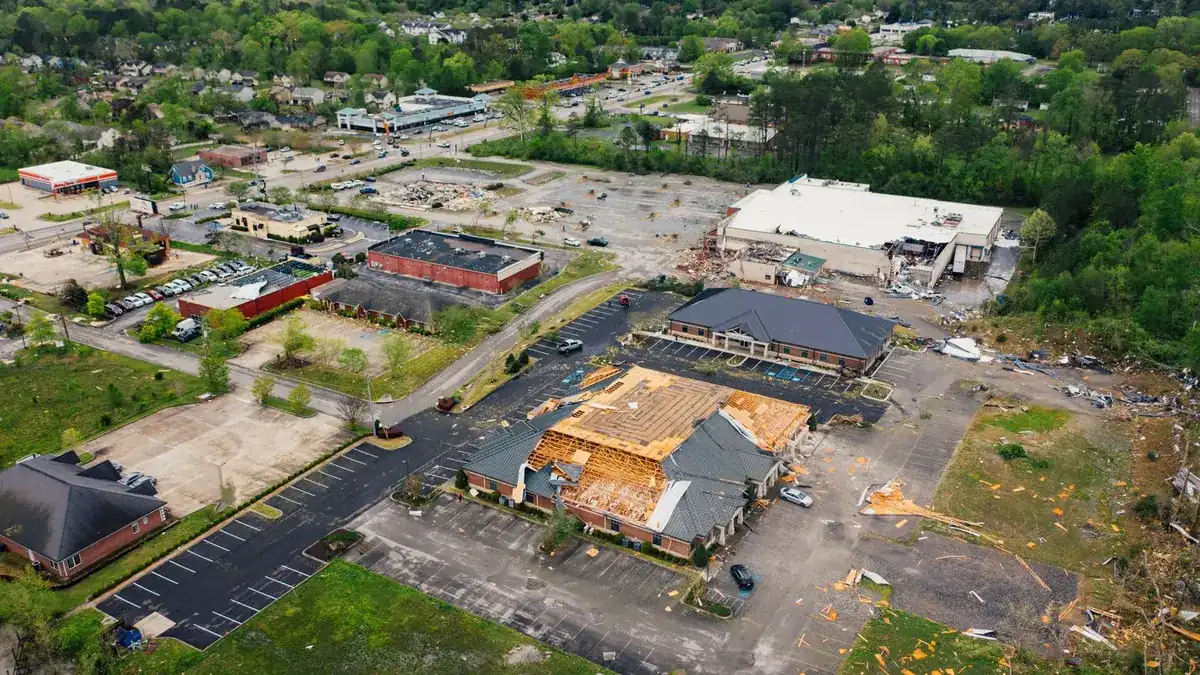
Ohio natural disasters are fewer and smaller than the state's size would suggest. FEMA has issued 61 declarations for Ohio since 1956, near the bottom of this series, and only a handful have come since 2015. Ohio is also the only state we've pulled with no fire management declarations at all. What the record does show is a clear shape. Most of the declarations began in June, July or August, almost all of them wind and flooding from summer storms. Tornadoes are a real second hazard, clustered in April and May. Only three events have ever reached every county at once: the blizzard of January 1978, the storms and flooding of August 2004, and the straight-line wind storm of June 2012. And the counties named most often aren't Cleveland or Columbus. They're Monroe, Jefferson and Belmont, along the Ohio River in the southeast.
A quick word on what's being counted. A major disaster declaration is the full federal response after the damage is done, and Ohio has 53 of them. An emergency declaration is faster and narrower, often signed during the event; Ohio's are mostly snow. States like Texas and California also have hundreds of fire management declarations, one per wildfire, which inflate their totals. Ohio has none, so its count is an honest one. Two statewide declarations in the file aren't weather (the 2005 Katrina evacuation and COVID in 2020), and the August 2003 emergency for a regional power outage wasn't weather either, but it's exactly the kind of event this site is about. It's the reason a two-day kit belongs in every Ohio home regardless of the forecast.
That shape tells you what to build. For most of Ohio the kit is a few days without power after a summer wind storm or a winter storm, plus a weather radio for the spring tornado window. In the river counties and the hill country of the southeast, add a flood plan. This page goes through the FEMA record by hazard, county and month, then lays out the kit. It's one of our natural disasters by state pages, and the week-without-power basics are in the power outage kit checklist.
Ohio disasters by type, 1956 to 2026
| Disaster type | Major declarations | When it usually hits | Example from the record |
|---|---|---|---|
| Severe storms (wind, hail, flooding together) | 23 | June through August | August 2004 storms and flooding, all 88 counties |
| Flooding | 18 | Spread across the year; May and July most often | June 1968, 28 counties |
| Tornadoes | 8 | April and May, with a few in July | March 2024 tornadoes, 11 counties |
| Winter storms | 2 filed as severe storms, plus 4 snow emergencies | January and February | Blizzard of January 1978, all 88 counties (emergency) |
| Tropical remnants | 1, plus Ike in 2008 filed as a wind storm | September and October | Remnants of Hurricane Sandy, 2012, 2 counties |
| Landslides, wind storm, other | 2 | Mudslides, June 1973 |
FEMA files most Ohio tornado damage under severe storms, so the first row and the tornado row overlap.
Which counties get named most
Before the hazards, the map, because in Ohio the map is the finding. I counted how many separate declarations each county has appeared in since 1956.
| County | Declarations | What drives it |
|---|---|---|
| Monroe, Jefferson, Belmont (Ohio River, southeast) | 22 each | River flooding, landslides, summer storms |
| Licking (Newark), Franklin (Columbus) | 21 each | Summer storms, tornadoes, 2012 wind storm |
| Washington (Marietta), Perry | 20 each | River and creek flooding |
| Lorain, Cuyahoga (Cleveland), Hamilton (Cincinnati), Clermont, Brown | 19 each | Storms and flooding, north and southwest |
Every county has been named at least once, and the statewide declarations add one to each. The gap between the southeast and the rest of the state comes from the river.
Summer: wind and water from June to August
The summer owns Ohio's record. Twenty-three major declarations are filed as severe storms, and most of them, along with a good share of the floods and the summer tornadoes, started in June, July or August. Two of the three statewide events are in here. The storms and flooding that began in late August 2004 drew a major declaration for all 88 counties with individual assistance. The straight-line wind storm of June 29, 2012 was faster: an emergency declaration for the whole state the next day, then a smaller major declaration in August for the counties that took the worst of it. The remnants of Tropical Depression Ike in September 2008 did the same kind of damage, a wind storm filed under severe storms that reached a third of the state.
The 2000s were Ohio's busiest decade by a wide margin, with 20 declarations, and most of them were summers like these.
The gear for a wind storm is the outage kit, because that's what a wind storm does in Ohio: it drops trees onto lines across dozens of counties at once, in July heat. A lantern and headlamps, a solar power bank (summer is when a panel actually earns its keep), a way to run a fan, a few days of stored water for the boil notice, and a cooler plan for the refrigerator. The water storage guide covers containers and amounts.
Tornadoes: April, May and the odd July
Eight major tornado declarations, which puts Ohio fourth in the series behind Texas, Oklahoma and Georgia. Most began in April or May, two in July, one in March. These are the ones in the file; the November 2002 storms and tornadoes are filed under severe storms and aren't listed.
| Tornado declaration | Counties | Individual assistance |
|---|---|---|
| April 1965 | 15 | No |
| May 1968 | 5 | No |
| July 1969 | 26 | No |
| April 1974 outbreak | 14 | No |
| May 1985 | 6 | No |
| July 2003 | 15 | Yes |
| May 2019 | 12 | Yes |
| March 2024 | 11 | Yes |
Tornado prep is cheap: a warning you'll hear and a place to go. A NOAA weather radio with the alert set to your county. A shelter spot with a helmet for each person and a light that lives there. And the outage kit for the days after, since the storms that produce tornadoes in Ohio also take the power out.
The Ohio River and the hill country
Eighteen major flood declarations, spread more evenly across the year than the storms, with May and July the most common start months and a cluster in late winter. The widest was the June 1968 flood, 28 counties. The recent ones are all late winter in the southeast: the February 2018 flooding with landslides and mudslides, the February 2019 flooding, and the storms and flooding of August 2026, a small declaration but one with individual assistance. Tropical Storm Agnes in July 1972 is in here too, along with the January 2004 storms with landslides and the February 2005 winter storm, flooding and mudslides, which at 62 counties is the widest declaration in the state's file outside the three statewide events.
The county table above is the clearest evidence. Monroe, Jefferson and Belmont counties, all on the Ohio River across from West Virginia, lead the state, with Washington, Perry, Clermont and Brown close behind. If I lived in one of those counties, the kit would include documents in a waterproof pouch, a get home bag in the truck for the night a creek takes the road home, and a plan for where the vehicles go when the river comes up.
Winter: 1978 and the record-snow years
Ohio has four snow emergencies in the file and two winter storms filed as major disasters under the severe storm label. The Blizzard of January 1978 drew an emergency declaration for all 88 counties, the widest weather declaration in the state's record, a year after the February 1977 snowstorms had covered about half the state. The others are the record snow of February 2003 (a major declaration with individual assistance), the December 2004 snow that became the big February 2005 declaration, and the record snow of March 2008.
That works out to one serious winter event about every ten years in the federal record, which is enough to plan for. Indoor-safe heat with a carbon monoxide alarm, emergency blankets and sleeping bags rated below freezing, water stored before the pipes go, and a winter car kit for the roads the 1978 storm closed.
An Ohio disaster calendar
- January and February: twelve declarations between them. The blizzards of 1977 and 1978, the 2003 record snow, the winter storm declared in February 2005 (it began just before Christmas), and the late-winter floods of 2018 and 2019 in the southeast.
- March and April: eight declarations. The 1974 and 2024 tornadoes, the April 1965 tornadoes, the 2008 record snow.
- May: nine declarations. Three tornado events, the 1990 and 2004 storms, the 2019 outbreak.
- June through August: the heart of the record, 24 declarations. Wind storms (2012, Ike in 2008), the 2004 statewide flooding, the 1968 flood.
- September and October: four declarations. The September 1975 storms, Ike, and the remnants of Sandy in October 2012.
- November and December: four declarations, including the November 2002 tornadoes and the December 2004 snow.
Gear for the hazards above
- The summer outage kit. Light, phone power, a fan you can run, water for a boil notice, a cooler plan. The power outage kit checklist is the full list. Summer storms are the hazard that has reached every county twice, in 2004 and 2012.
- The warning layer. A weather radio with the alert on, set to your county.
- The shelter spot stocked by April: helmets, a light, shoes you can walk on glass in.
- The winter layer. Indoor-safe heat with a CO alarm, warm sleeping bags, and the winter car kit from December to March.
- The flood layer, if you're in the river counties. Dry documents, a get home bag, and a written rule about when you move the vehicles. The bug out bag checklist covers a kit you can carry.
- Communications. A pair of GMRS radios keeps a household in touch when a wind storm takes the cell sites down with the lines.
Ohio's record is quiet, which is exactly when people skip the kit. Neighbors in the series: Kentucky across the river and Michigan to the north. The rest of the states are on the index, and the gear is in storm prep. The counts come from FEMA's public declaration file, as of the end of October 2026.
Questions people ask about Ohio disasters
What is the most common natural disaster in Ohio?
Severe storms, 23 of the 53 major disaster declarations since 1956, most of them summer wind and flooding events. Flooding is second with 18, and tornadoes third with eight.
Is Ohio a safe state for natural disasters?
Safer than most, by the federal record. Ohio ranks 19th of the 22 states in this series by total declarations and has had only seven since 2015. It's the only state we've pulled with no wildfire declarations at all. The risks that remain are real but short: a few days without power after a wind storm, a tornado in spring, and flooding along the Ohio River.
What was the biggest disaster in Ohio's FEMA record?
By reach, three events have covered all 88 counties: the Blizzard of January 1978 (an emergency declaration), the storms and flooding of August 2004 (a major declaration with individual assistance), and the wind storm of June 29, 2012 (an emergency declaration). The February 2005 winter storm, at 62 counties, is next.
When is tornado season in Ohio?
April and May, with a few in July. Five of the eight tornado declarations began in those two spring months, and the two most recent, in 2019 and 2024, began in late May and mid March.
Does Ohio get hurricanes?
Only the remnants. The file has Tropical Storm Agnes in 1972 (flooding, seven counties), Tropical Depression Ike in 2008 (a wind storm that covered 33 counties) and the remnants of Hurricane Sandy in 2012 (two counties). Ike is the one to plan for: a September wind event that reached a third of the state with no hurricane anywhere near Ohio.
Who gets paid when Ohio is declared?
Counties and towns, mostly. Households only when Individual Assistance is turned on for your county, which in Ohio's file happened for the 2002 tornadoes, most of the 2003 to 2007 declarations, the 2019 and 2024 tornadoes, and the August 2026 flooding. Most declarations repay counties and utilities for repairs. The county list is on FEMA's declaration page. Dated photos of the house are worth taking now, not after.
Sources
Ready to buy?
See current models and availability on Amazon. Your clicks keep these guides free.
Shop Emergency Kits on Amazon →