Heltec V3 vs V4 for Meshtastic and MeshCore: What Changed and Which to Buy
Same size, same firmware, stronger radio and a solar input on the V4. Here is who needs it.
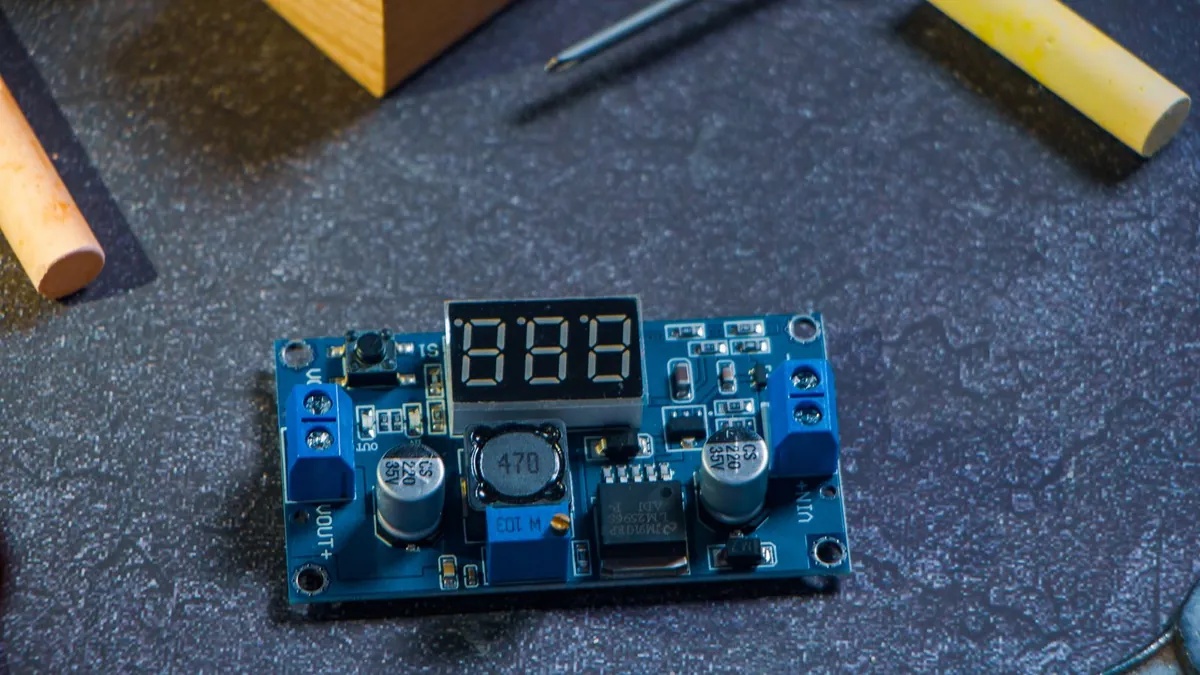
Buy the Heltec WiFi LoRa 32 V4 if the node is going outside, on a roof or in a solar box. Buy the V3 if you want the cheapest working Meshtastic or MeshCore node to carry in a pocket, pair to a phone, and hand to family members. The V4 is the same board family with a stronger radio (Heltec rates the high-power version at 28±1 dBm against 21±1 dBm on the V3), a solar input, a GNSS header and more memory. The V3 is still fully supported by both firmwares. We run both on our own mesh; the notes below are the maker's published specs, not bench measurements.
What actually separates the two boards
Radio and transmit power
Both use the Semtech SX1262 LoRa chip. The difference is the power amplifier stage. Heltec lists the V3 at 21±1 dBm maximum output and a receive sensitivity of -134 dBm at SF12 with 125 kHz bandwidth. The V4 high-power version is listed at 28±1 dBm on 863 to 928 MHz, which covers the US 915 MHz ISM band that Meshtastic and MeshCore use without a license. Heltec also sells a low-power V4 at 22 dBm that covers 433 to 510 MHz, which is not what you want for a US mesh, so check the frequency before ordering.
Seven extra dB is roughly five times the output. That helps the V4 be heard farther away. It does not help it hear farther, because receive performance comes from the SX1262 and your antenna, not the amplifier. A high-power node with a poor antenna gets heard by nodes it cannot hear back, which produces one-way links. The V4's power is something you unlock with a decent antenna and height, not a substitute for them.
Processor and memory
The V3 uses an ESP32-S3FN8 with 8 MB flash in the package, and Heltec lists no PSRAM for it. The V4 moves to an ESP32-S3R2 with 2 MB of PSRAM and 16 MB of external flash. A V4-R8 variant with 8 MB of PSRAM also exists, and Meshtastic treats it as a separate hardware target with its own firmware file. For plain mesh messaging the V3 has enough; the V4's headroom matters for busier features and future firmware.
Battery, charging and solar
Both boards have a 1.25 mm two-pin lithium battery connector and onboard charge management with overcharge protection. The V4 adds a second two-pin connector for a solar panel, accepting 4.7 to 6 V, which is the single biggest reason to pick it for an outdoor box. A V3 can be solar powered too, but it needs an external charge controller feeding its battery or USB port. Heltec lists the V4's low-power consumption as under 20 µA and gives no test conditions; it publishes no sleep figure for the V3. Treat any such number as the board asleep, not running a mesh, and do not plan a solar budget around it. See our solar node build guide for the parts that matter there.
One practical note from the Meshtastic hardware docs: several Heltec boards, including the V3 and V4-R8, may not charge over a USB-C to USB-C cable. Use a USB-A to USB-C cable if the charge light never comes on.
Display
Both have a 0.96 inch monochrome OLED at 128 by 64 pixels. On the V4 it sits under a polycarbonate cover, and Heltec sells a headless V4 for repeaters. The display is fine for reading node counts, battery level and a short message, but nobody types on these boards. If you want a screen you can message from, look at the LILYGO T-Deck family instead.
Antenna connectors
The LoRa antenna on both boards plugs into an IPEX (U.FL) connector, and Heltec ships a LoRa antenna in the box. The V4 adds a second IPEX 1.0 for the 2.4 GHz side next to its integrated FPC antenna, where the V3 has an onboard spring antenna. Never power either board with the LoRa antenna disconnected; the amplifier can be damaged transmitting into nothing.
GNSS
Neither board has GPS built in. The V4 adds a 1.25 mm eight-pin GNSS connector with individually controlled power, and Heltec sells an L76K module for it as a separate accessory. Position on a V3 comes from the paired phone.
Deep sleep in practice
In our use, both boards drain a small battery pack in days, not weeks, as active Meshtastic nodes. Meshtastic enables power saving automatically on ESP32 boards set to the ROUTER role and does not let you turn it off. If you need a node that runs for weeks on a small battery, neither Heltec ESP32 board is the right tool; an nRF52 board like the Heltec T114 or RAK4631 sleeps in the microamp range while still listening. For a pocket node or a solar-fed node with a real panel, both are fine.
Firmware support
Meshtastic. The V3 and V3.1 share one firmware target (firmware-heltec-v3). The V4 has its own (firmware-heltec-v4), and the V4-R8 has separate OLED and TFT builds. The docs are explicit: do not flash the standard V4 firmware on a V4-R8 board. The web flasher at flasher.meshtastic.org handles all of them over USB.
MeshCore. The MeshCore flasher catalog lists Heltec v3, v4 and v4 R8, each with Companion (Bluetooth or USB), Repeater and Room Server builds. In MeshCore a Companion node does not relay for others, so the V4's power only matters when you flash it as a Repeater and put it somewhere high. If you have not chosen a firmware yet, our MeshCore vs Meshtastic comparison covers the tradeoffs.
Heltec WiFi LoRa 32 V3

Entry Node
Heltec WiFi LoRa 32 V3
- ESP32-S3FN8, 8 MB flash
- SX1262, 21±1 dBm max
- 0.96 inch OLED, 128 by 64
- Two SH1.25-2 battery connectors with charging
- Box: board, LoRa antenna, battery connector, headers
The cheapest fully supported node for pockets and indoor use.
Check price on AmazonSold by Heltec Automation
The V3 is the board most Meshtastic tutorials were written for, and that is its strength. Every case design, pigtail, battery and how-to fits it. It runs either firmware, charges a LiPo from USB-C and disappears in a jacket pocket with a small battery pack. Heltec's page lists the board, a LoRa antenna, a battery connector and header pins in the box.
Where it falls short: 21 dBm is the weakest transmitter here, and there is no solar input, PSRAM or GNSS header. It still needs a battery, a case and a better antenna than the stub in the box before it is a reliable emergency node.
Heltec WiFi LoRa 32 V4
Best for Relays
Heltec WiFi LoRa 32 V4
- ESP32-S3R2, 2 MB PSRAM, 16 MB flash
- SX1262, 28±1 dBm high-power version
- Solar input 4.7 to 6 V
- 1.25 mm 8-pin GNSS connector
- Under 20 µA low-power draw
The board for the node that sits high and relays for everyone else.
Check price on AmazonSold by Heltec Automation
The standard V4 with OLED, sold on Amazon by Heltec Automation. Heltec rates the high-power version at 28±1 dBm, the strongest radio Heltec puts on this form factor. The solar connector and GNSS connector are on the board, and Meshtastic's docs list it as pin compatible with the V3.
Who it suits: anyone building a rooftop, attic or solar node. Who should pass: someone buying six nodes for family handhelds, where the V3's lower cost and identical pairing experience make more sense. The V4 draws more current at full power, so a handheld V4 does not gain battery life over a V3.
Heltec WiFi LoRa 32 V4 with GNSS
For Moving Nodes
Heltec WiFi LoRa 32 V4 with L76 GNSS
- V4 board plus L76K GNSS module
- SX1262, 28±1 dBm on the high-power version
- Solar and battery connectors
- 0.96 inch OLED
For vehicle, trail and remote nodes that need their own position fix.
Check price on AmazonSold by Heltec Automation
Same V4 board bundled with Heltec's L76K GNSS module, which Heltec also sells separately. Buy this version for a node that runs without a phone and still needs to report position: a vehicle node, a trailhead node, a tracker. For a fixed node, skip the module and set a fixed position in the app, which saves power and money.
Heltec V4 two-pack kit with batteries, cases and antennas
Household Pair
Heltec V4 Two-Pack Kit
- Two V4 boards with OLED
- Two batteries
- Two antennas and two cases
- DIY assembly required
Two complete V4 nodes for a house-and-truck pair, assembled by you.
Check price on AmazonSold by Heltec Automation
Heltec's own bundle: two V4 boards, two batteries, two antennas and two cases, sold as a kit you assemble yourself. For a household this is the fastest way to a working pair, one for the house and one for the truck. If you only need one board, buy the single V4 above.
muzi WORKS 915 MHz whip antenna
Antenna Upgrade
muzi WORKS 915 MHz Whip Antenna
- 915 MHz, 17 cm flexible whip
- SMA male connector
- SWR 1.3 measured vs 3.5 for the stock antenna, per muzi WORKS
- About 98% efficiency at SWR 1.3, per muzi WORKS
A flexible 17 cm whip for 915 MHz that replaces the stubby antenna on a V3 or V4.
Check price on AmazonSold by muziWORKS
A 17 cm flexible whip for 915 MHz, sold by muzi WORKS, the small shop that makes it. The maker's page gives a measured SWR of 1.3 against 3.5 for the stock stubby antenna, which it puts at about 98% efficiency versus about 69%. The connector is SMA male, so on a V3 or V4 you need a U.FL to SMA pigtail between the board and the antenna. The stubby antenna in the box is a compromise, and a proper whip is the first thing we swap on a new board. SMA and RP-SMA look alike and do not mate.
Side by side
| Spec | WiFi LoRa 32 V3 | WiFi LoRa 32 V4 (high power) |
|---|---|---|
| MCU | ESP32-S3FN8 | ESP32-S3R2 (R8 variant: S3R8) |
| Flash / PSRAM | 8 MB / none listed | 16 MB / 2 MB (R8: 8 MB) |
| LoRa chip | SX1262 | SX1262 |
| Max TX power | 21±1 dBm | 28±1 dBm |
| Frequency | 470 to 510 and 863 to 928 MHz | 863 to 928 MHz |
| Display | 0.96 inch OLED, 128 by 64 | 0.96 inch OLED under PC cover (headless version sold) |
| Battery connector | Two SH1.25-2, charging onboard | 1.25 mm 2-pin, charging onboard |
| Solar input | None | 1.25 mm 2-pin, 4.7 to 6 V |
| GNSS | None | 1.25 mm 8-pin connector, L76K sold separately |
| LoRa antenna | IPEX 1.0 | IPEX 1.0 |
| 2.4 GHz antenna | Onboard spring | Integrated FPC plus IPEX 1.0 |
| USB | USB-C | USB-C |
| Size | 50.2 by 25.5 by 10.2 mm | 51.7 by 25.4 by 10.7 mm |
| Meshtastic target | firmware-heltec-v3 | firmware-heltec-v4 (R8 separate) |
| MeshCore roles | Companion, Repeater, Room Server, KISS | Companion, Repeater, Room Server, KISS |
| Best for | Pocket and indoor nodes | Rooftop, solar and relay nodes |
Who should skip both
If you want a node that runs for weeks on a small battery, an nRF52 board (Heltec T114, RAK4631, Seeed T1000-E) is the better buy; see our Meshtastic device roundup. If the people you need to reach will not run a mesh node, a GMRS radio is the more practical storm tool. We left out the unbranded V3 and V4 clones on Amazon because they have no maker page that documents their chips, antenna matching or sleep current.
Questions people ask
Is the Heltec V4 compatible with V3 cases and accessories?
Mostly. Meshtastic's docs list the V4 as form-factor and pin compatible with the V3, and batteries, pigtails and antennas carry over. Cases are the exception, because the V4 is slightly longer and has a GNSS connector; buy one that lists V4 support.
Does the V4 get better range than the V3?
It can be heard farther because it transmits at up to 28 dBm instead of 21. It does not hear farther. On a two-way link the weaker side sets the limit, so a V4 talking to a V3 is only as good as the V3's transmitter and the antennas on both ends.
Can I run MeshCore on a Heltec V3 or V4?
Yes. MeshCore's web flasher lists Heltec v3, v4 and v4 R8 with Companion, Repeater and Room Server builds. The board is the same; you choose the role when you flash.
Do I need a license to use these in North Carolina?
No. Both firmwares run on the 915 MHz ISM band in the US, which does not require an FCC license. GMRS does require one, which is covered in GMRS vs FRS.
Our pick, and why
For the one node that has to matter during a hurricane outage, the V4 with a real antenna at the highest point of your house. For the nodes that ride in pockets and glove boxes, V3s. More nodes in the off-grid comms kit beat more power on one of them.
Sources
Ready to buy?
See current models and availability on Amazon. Your clicks keep these guides free.
Shop Heltec LoRa Boards on Amazon →