GMRS vs FRS: Same Channels, Different Rules, and Which to Buy
What 47 CFR Part 95 actually says, and what it means when you are standing in the radio aisle.
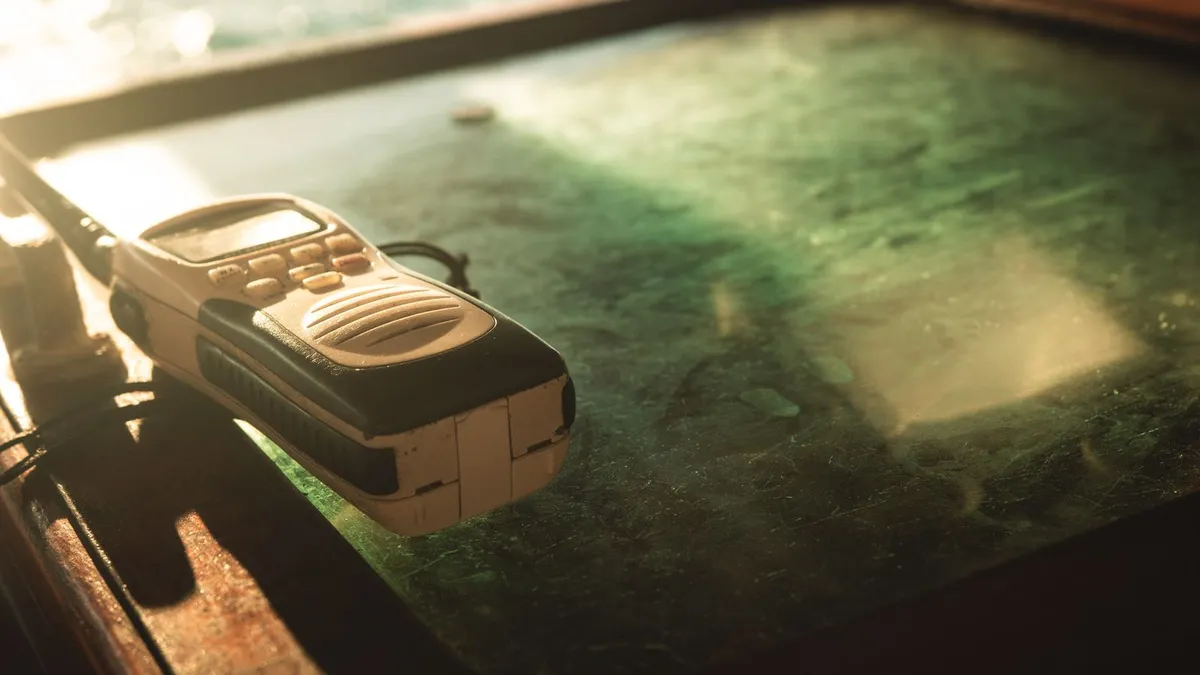
FRS and GMRS use the same 22 channels, so the radios talk to each other. The difference is what you are allowed to do on those channels. FRS is license-free, capped at 2 watts, and the antenna has to be permanently attached. GMRS needs an FCC license (no test, ten years, covers your family), allows 5 watt handhelds and 50 watt mobiles on most channels, lets you swap antennas, and lets you use repeaters. For a family that wants to find each other at the beach or keep in touch across a few blocks during an outage, FRS is enough. For a neighborhood group, a farm, or anyone who wants to reach past the next hill, GMRS is the one. The rules below come from 47 CFR Part 95, Subpart B (FRS) and Subpart E (GMRS).
The same channels, two sets of rules
Both services sit on 22 shared frequencies between 462.5500 and 467.7125 MHz. Section 95.563 says it directly: "All of the FRS channels are also allotted to the General Mobile Radio Service (GMRS) on a shared basis." Channel 1 on a Motorola FRS bubble pack is the same frequency as channel 1 on a 50 watt GMRS mobile. GMRS adds eight more frequencies on top, the 467 MHz repeater inputs, which FRS radios cannot use.
What changes between the services is power, antenna, licensing and the repeater question. Here is the whole thing in one table.
| Rule | FRS (Subpart B) | GMRS (Subpart E) |
|---|---|---|
| License | None | Required; no exam; 10 years; covers immediate family (95.1705) |
| Channels 1 to 7 | 2 W ERP max (95.567) | 5 W ERP max (95.1767) |
| Channels 8 to 14 | 0.5 W ERP max (95.567) | 0.5 W ERP, handhelds only (95.1767) |
| Channels 15 to 22 | 2 W ERP max (95.567) | 50 W output for mobile, base, repeater (95.1767) |
| Repeater channels | Not allowed | 8 inputs at 467 MHz, 50 W (95.1763) |
| Antenna | Must be non-removable, no more gain than a half-wave dipole (95.587) | Removable antennas allowed on handhelds, mobiles and base stations |
| Bandwidth | 12.5 kHz (95.573) | 20 kHz on most channels, 12.5 kHz on 8 to 14 (95.1773) |
| Minimum age | None | 18 to hold the license; any family member can operate |
Power: what 2 watts versus 50 watts buys you
Power helps at the edge of range, but the shape of the ground matters more. Two FRS radios on flat open ground will talk a mile or two. Two GMRS handhelds at 5 watts on the same ground will talk somewhat farther, not two and a half times farther. The real gap opens when you put the GMRS radio in a vehicle: 15 or 50 watts into an antenna on the roof is a different class of signal than a handheld on a belt. And the biggest jump is not power at all, it is a repeater, which only GMRS can use.
Channels 8 through 14 are the odd ones. Both services are limited to half a watt there and GMRS mobiles cannot transmit on them at all (95.1763). Every GMRS handheld drops to low power on those channels automatically. If your family is on 8 to 14, you are effectively on FRS no matter what radio you hold.
Licensing: who needs one and how it works
FRS: nobody. Open the box, pick a channel, talk. The radio itself is certified so that it cannot exceed the limits, which is why no license is needed.
GMRS: one adult in the household applies at the FCC. There is no exam. You register for an FCC Registration Number in CORES, then file in the Universal Licensing System for the General Mobile Radio Service. The license is good for ten years and you can renew in the 90 days before it expires. Under 95.1705(c), the licensee may let immediate family members operate under the license: spouse, children, grandchildren, stepchildren, parents, grandparents, stepparents, brothers, sisters, aunts, uncles, nieces, nephews and in-laws. Your kids do not need their own license. Your neighbor across the street does.
The thing most people get wrong: GMRS is not ham radio. A ham license does not cover GMRS and a GMRS license does not cover ham. If you are weighing those two paths, our ham radio for beginners guide covers what the Technician exam involves.
Antennas: fixed on FRS, your choice on GMRS
Section 95.587(b) requires the FRS antenna to be "a non-removable integral part" of the radio with no more gain than a half-wave dipole. That is why bubble-pack walkie talkies all have the same short rubber antenna. On GMRS, the handheld antenna can be removable, and mobiles and base stations run external antennas on the roof or a mast. Height is the single biggest range variable in UHF, and GMRS is the only one of the two services that lets you do anything about it.
One wrinkle from 95.1761: since late 2017, the FCC will not certify a new handheld under both FRS and GMRS. Older combo radios are grandfathered. A radio sold today is one or the other, and the box will say which.
Repeaters: the GMRS advantage
A repeater is a radio on a tower, a water tank or a ridge that hears your transmission on a 467 MHz input and rebroadcasts it on the matching 462 MHz output at up to 50 watts. Two handhelds that cannot hear each other across a county can both hear the repeater. GMRS allows repeaters (95.1763); FRS has no repeater channels and no provision for them. If you want to talk 20 or 30 miles on a handheld, a repeater is the only way, and it needs a GMRS license and a "repeater capable" radio with the eight paired channels built in.
The FCC's GMRS page adds one restriction worth knowing: repeaters cannot be linked over the internet to carry voice between regions. Local coverage only.
Interoperability: yes, they talk to each other
Section 95.531(c) says FRS units "may also be used to communicate with General Mobile Radio Service (GMRS) stations." Put the FRS radio and the GMRS radio on the same channel number with the same privacy code (or no code on both) and they hear each other. The FRS radio will be the weak link in range, because the GMRS user will hear it only as far as 2 watts into a fixed antenna will carry. A mixed group works fine as long as everyone understands the FRS radios are the ones that set the distance limit.
Privacy codes work the same on both: a CTCSS or DCS code mutes your speaker for signals without the code. Anyone without a code set still hears you.
Which to buy, by situation
A family
Kids at the campground, a house and a detached garage during an outage: FRS. No license, no setup, and the kids can carry them without anyone worrying about a call sign. The Midland T71VP3 pair below is the one to get. If the family is spread across a few miles and wants to reach each other after a storm, step up to GMRS handhelds and get the license.
A neighborhood or church group
GMRS. One person in each household gets a license (they are cheap and last ten years), everyone runs repeater-capable handhelds, and somebody with a hilltop or a tall tree finds the nearest open repeater on myGMRS.com. During an outage, a check-in net on the repeater at a set time is how a neighborhood knows who needs help. Mix in FRS radios for the folks who will not get a license; they can still talk to the group on simplex.
A farm or a large property
GMRS, and put a mobile in the truck and the tractor. Handheld to handheld across 200 acres of rolling ground with tree lines is unreliable at any power; truck to truck with roof antennas is not. Our best GMRS radio guide covers the 15 and 50 watt mobiles that fit this job.
Midland T71VP3

FRS Pick
Midland T71VP3
- 22 FRS channels plus 14 privacy-code presets
- 121 privacy codes
- Hi/Lo power settings
- Weather alert radio with scan
- Rechargeable packs, or 3 AA alkalines
For a family that wants license-free radios that just work.
Check price on AmazonSold by Midland Radio
This is the FRS pair to buy. It has the 22 FRS channels plus 14 preset privacy-code channels (Midland calls it 36), 121 privacy codes, hi/lo power, a weather alert radio with scan, and silent operation. It charges over micro-USB in the included desktop charger, and Midland's FAQ says it also runs on 3 AA alkalines when the packs are flat. Midland's own FAQ is honest about the rechargeable packs: about 5 hours on high power at a 90/5/5 duty cycle, and it recommends replacing the packs every 9 to 12 months. Keep a sleeve of AAs with these. The 38 mile figure on the box is a line-of-sight number; expect a mile or two around houses and trees. Sold on Amazon by Midland Radio.
Midland GXT1000VP4
GMRS Starter
Midland GXT1000VP4
- 50 channels (22 standard + 28 presets)
- 142 privacy codes
- JIS4 water resistant
- NOAA weather scan and alert
- SOS siren
For the first step past FRS without any programming.
Check price on AmazonSold by Midland Radio
The entry-level GMRS pair. 50 channels (the 22 standard plus 28 preset privacy code channels), 142 privacy codes, JIS4 water resistance, SOS siren, NOAA weather scan and alert, and rechargeable battery packs in the box with a desktop charger. Midland's FAQ for this radio says the 36 mile claim is "mountain top to mountain top" and that it "averages 1/2 to 2 miles in normal conditions," which is the most honest range statement any maker puts in writing. Midland does not publish the transmit power, and its page lists no repeater channels, so treat it as a simplex radio. For a family that wants more than FRS without any programming, it is the obvious step up. Sold on Amazon by Midland Radio.
Midland GXT67 Pro
GMRS Upgrade
Midland GXT67 Pro
- 5 W GMRS
- IP67 waterproof and dustproof
- 8 repeater channels with split tones
- Up to 4 day battery, 4 hour rapid charge
- Up to 99 channels
For the household that will get the license and use a repeater.
Check price on AmazonSold by Midland Radio
If you are going to get the license, this is the handheld that uses all of it. 5 watts, IP67 waterproof and dustproof, 8 repeater channels with split-tone support, NOAA weather alerts, a 4 day battery rating with a 4 hour rapid charge, and a snap-on vehicle charger in the box. It is sold as a single radio. The battery is factory sealed and not user replaceable, which is its real drawback. Pair one of these with a repeater and a family member can reach you from the far side of the county. Sold on Amazon by Midland Radio.
Questions people ask
Can I use a GMRS radio without a license if I stay on channels 8 to 14?
No. A radio certified under GMRS is a GMRS station, and 95.1705 requires a license to operate one. The low-power channels do not change what the radio is. If you want license-free, buy an FRS radio.
Will the FCC actually check?
Enforcement on simplex is rare. Repeater owners, on the other hand, check call signs and will block radios without one. The license is inexpensive relative to the radios, lasts ten years, and takes an evening to get. There is no good reason to skip it.
Is a GMRS radio with a removable antenna legal?
Yes. The non-removable antenna rule in 95.587 applies to FRS only. GMRS handhelds from Wouxun, BTECH and others ship with removable antennas and are certified that way.
Can an FRS radio hear a GMRS repeater?
It can hear the repeater's output, since the output is on one of the shared 462 MHz channels 15 to 22. It cannot transmit to the repeater, because the 467 MHz inputs are not FRS channels. So an FRS user can listen to a repeater net but cannot join it.
Where that leaves you
Buy FRS if everyone you need is within a mile and nobody wants paperwork. Buy GMRS and get the license if you want to reach across a neighborhood, use a repeater, or put a real antenna on a truck. Both will talk to each other on the shared channels, so you can start with FRS and add GMRS later without replacing anything. For the full set of radio and mesh options, see our off-grid comms guides.
Sources
- 47 CFR Part 95 Subpart B, Family Radio Service (eCFR)
- 47 CFR Part 95 Subpart E, General Mobile Radio Service (eCFR)
- FCC: General Mobile Radio Service (GMRS)
- Midland: Why do I need a GMRS license and how do I get it
- Midland T71VP3 product page
- Midland GXT1000VP4 product page
- Midland GXT67 Pro product page
Ready to buy?
See current models and availability on Amazon. Your clicks keep these guides free.
Shop FRS and GMRS Radios on Amazon →