How to Build a Solar Meshtastic Node: Boards, Panels, Batteries, Antennas and Roles
A relay on the roof that charges itself and keeps the family's handhelds talking when the grid is down.
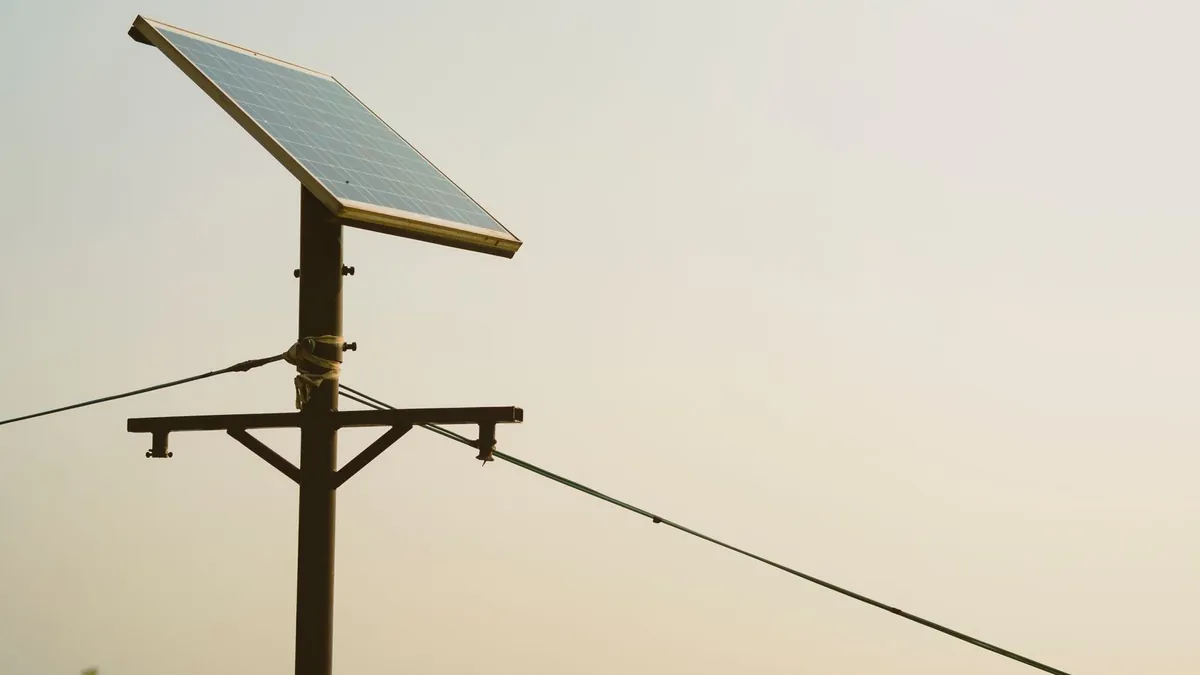
A solar Meshtastic node is an nRF52 board, a 5 or 6 watt panel, a lithium cell or two, a weatherproof box and an outdoor antenna, mounted as high as you can get it and set to a relay role. To skip the build, the Seeed SenseCAP P1-Pro and the Elecrow ThinkNode M6 are complete units pre-flashed with Meshtastic. To build, a RAK WisBlock starter kit on the RAK19007 base already has the solar and battery connectors, and Heltec's 5 W solar enclosure holds a V3, V4 or T114 with up to four 18650 cells (the Amazon bundle includes a V4). We run solar nodes on our own mesh; the specs below come from the makers and the Meshtastic docs, and we have not measured runtimes.
The parts, and why each one matters
Board: nRF52 first, ESP32 only with a real panel
The board decides your power budget. Nordic nRF52840 boards sleep in the microamp range while still listening: RAKwireless lists the RAK4631 at 2.0 µA in sleep, and Heltec lists the Mesh Node T114 at about 11 µA. Heltec's ESP32-based V4 is listed under 20 µA asleep, but an ESP32 relaying Meshtastic traffic does not spend its time asleep, and in our use an ESP32 node drains a pack much faster than an nRF52 node doing the same job. On a cloudy January week in the Piedmont that is the difference between a node that stays up and one that goes dark.
The nRF52 boards you can buy today: RAK4631 on a WisBlock base, Heltec T114, and the XIAO nRF52840 inside the SenseCAP P1. All three run Meshtastic and have MeshCore Repeater builds. The Heltec V4 is the ESP32 choice for its higher transmit power (see Heltec V3 vs V4); give it the biggest panel and battery bank you can.
Panel and charge controller
These boards charge the battery themselves, so no separate controller is needed if the panel fits the board's solar input:
- RAK19007 and RAK19003 base boards: JST ZHR-2 solar connector for a 5 V panel, 4.4 to 5.5 V input, and RAK warns that exceeding 5.5 V can permanently damage the board. Charge current is 350 mA.
- Heltec T114: solar input 5 to 6.5 V, with Heltec recommending a panel around 5 V.
- Heltec V4: solar input 4.7 to 6 V.
- Heltec solar enclosure: its own charge board takes the 5 W, 6 V lid panel and feeds the dev board 3.7 V through a 1.25-2P connector.
A 5 or 6 watt panel is the standard size; a 350 mA charger cannot use much more. Face it south and tilt it so pollen, leaves and snow slide off.
Battery
Two choices. A protected 3.7 V LiPo pouch with a JST PH 2.0 plug for RAK bases (both use a JST PHR-2 battery connector) or a 1.25 mm plug for Heltec boards. Or 18650 cells in a holder, which is what the Heltec enclosure, the SenseCAP P1 and the ThinkNode M6 use. Buy cells from a known brand and mind the charge temperature: Seeed lists the P1-Pro cells as charging only from 0 to 50 C. A frozen cell will not charge, which is when a bigger bank pays off after an ice storm. More cells means more days of standby, not more range.
Enclosure
Look for an IP rating, a clear face for the panel, a bulkhead for the antenna and a vent for condensation. Heltec's box is IP67; the SenseCAP P1 is IPX6; the ThinkNode M6 is IP65. A WisBlock base fits a small junction box. Put the antenna connector through the bottom or side with a drip loop, never the top.
Antenna and cable
The outdoor antenna is where range comes from. A fiberglass omni for 902 to 928 MHz at roughly 5 to 6 dBi is the common choice; they are weather sealed and usually come with an N-type connector. Higher gain flattens the pattern, good on a hilltop talking to the horizon and bad on a tall pole talking down to handhelds in a valley, so do not chase the highest number. Keep the coax short; the cleanest setup is the antenna on the box and a short N to U.FL pigtail straight to the board. Meshtastic's glossary notes SMA and RP-SMA are not interchangeable; the SenseCAP P1 uses RP-SMA, per the Meshtastic docs, while Heltec and RAK boards use U.FL with SMA pigtails.
Placement
Height beats everything. Meshtastic's role guide says to favor a tower on a hill over a tall building and to check line of sight with a viewshed tool first. For a house: the roof ridge, a chimney mount or a pole on the gable end, above the trees if you can; in NC the pines are the problem, not the hills. If the node is the highest thing around, ground the mast and use a coax arrestor.
Setting the role, per the Meshtastic docs
Meshtastic's device roles page and its blog post on choosing a role are specific about this: most solar nodes should not be ROUTER.
- ROUTER: rebroadcasts everything once and gets priority over other nodes. The blog says it is only suitable for stationary devices in extremely strategic locations, meaning a hilltop or tower serving a wide area. Too many routers near each other cause collisions, shorter range and one-way links, and raising the hop limit to compensate makes it worse.
- ROUTER_LATE: rebroadcasts once but only after every other node has had its turn. Meshtastic calls it ideal for covering dead spots and local clusters. A rooftop node in a neighborhood usually belongs here.
- CLIENT_BASE: a normal client that always relays for the nodes you mark as favorites. The docs suggest it for an attic or roof node that mostly serves your own family's handhelds.
- REPEATER: the old invisible relay role, marked deprecated in the docs as of firmware 2.7.11.
Also set a fixed position, turn off the screen, and leave the hop limit at the default. On MeshCore, flash the Repeater build and manage it over USB or the app's remote management; a Companion node never relays, so a solar node that is not a Repeater does nothing for the mesh. Our MeshCore vs Meshtastic guide explains that split.
Step by step
- Flash the board on the bench over USB (Meshtastic's web flasher and the MeshCore flasher both list this hardware). Name it, set the region to US, set the role and a fixed position, and confirm a handheld sees it before anything goes in a box.
- Plug the antenna pigtail into the U.FL connector first. Transmitting without an antenna can damage the radio.
- Connect the battery, then the panel. On RAK bases the panel plug is the smaller JST ZHR-2 and the battery is the JST PHR-2; do not swap them.
- Mount the board in the box, route the pigtail to the bulkhead, seal the gland, and leave a drip loop outside.
- Mount it high, panel south, antenna vertical and clear of metal, then check it from the far side of town.
RAKwireless WisBlock Meshtastic Starter Kit (RAK19007 + RAK4631)

Best Build Base
RAKwireless WisBlock Meshtastic Starter Kit US915
- RAK4631: nRF52840 + SX1262, 22 dBm
- 2.0 µA sleep current
- RAK19007 base: JST PHR-2 battery, JST ZHR-2 5 V solar input
- 350 mA charge current
- Pre-flashed with Meshtastic
The lowest-sleep-current platform for a builder who will supply the panel, cells and box.
Check price on AmazonSold by Rokland (third-party seller)
The full-size base with the nRF52840 and SX1262 core, a 2 dBi rubber LoRa antenna with an MHF-to-SMA cable, and the RAK19007's battery and solar connectors with a 350 mA charger. RAK's kit page says it comes pre-flashed with Meshtastic and that the base has no MPPT charging. RAK rates the core at 22 dBm and 2.0 µA sleep, the lowest here, and there are four sensor slots for later. You supply the panel, battery and box. Sold on Amazon by Rokland, a third-party seller, rather than by RAK directly.
RAKwireless WisBlock Mini Starter Kit (RAK19003 + RAK4631)
Small Box Build
RAKwireless WisBlock Mini Meshtastic Starter Kit US915
- RAK4631 core, nRF52840 + SX1262
- RAK19003 mini base, 30 by 35 mm
- JST PHR-2 battery, JST ZHR-2 solar, 5.5 V max
- Two sensor slots, USB-C
- Pre-flashed with Meshtastic
Same core as the full kit in a base that fits a slim junction box.
Check price on AmazonSold by Rokland (third-party seller)
Same core on the 30 by 35 mm RAK19003 mini base, which keeps the battery and solar connectors with the same 5.5 V limit and 350 mA charging but gives up two sensor slots. Pick it when the box is small. Also sold on Amazon by Rokland.
Heltec solar repeater with V4 and 5 W enclosure
Heltec Owners
Heltec Meshtastic Solar Repeater with V4
- IP67 box, 178 by 178 by 35 mm
- 5 W panel, 6 V
- Holds 1 to 4 18650 cells in parallel (not included)
- 3.7 V output on a 1.25 mm lead
- Bundle includes a V4 board without display
A Heltec solar box with a V4 board already in the bundle, for people who want to add cells and mount it.
Check price on AmazonSold by Heltec Automation
Heltec's waterproof solar enclosure with a WiFi LoRa 32 V4 board (no display) in the bundle. Heltec's page lists the box as IP67, 178 by 178 by 35 mm, with a 5 W panel at 6 V, a holder for 1 to 4 18650 cells wired in parallel (not included), a 3.7 V output to the board over a 1.25-2P lead, and USB-C backup charging at 5 V 1 A. The bracket fits the V3, V4 and T114, and Heltec sells the enclosure on its own too. The V4 is an ESP32 board, so it draws more than the nRF52 options above: fill the holder with cells and pick a sunny mount. In return you get the 28±1 dBm high-power radio. Batteries are the part you still have to buy.
Seeed SenseCAP Solar Node P1-Pro
No-Build Pick
Seeed SenseCAP Solar Node P1-Pro
- XIAO nRF52840 Plus, Wio-SX1262 at 22 dBm
- 5 W panel, four 3,350 mAh 18650 cells
- L76K GPS
- IPX6, 191 by 201 by 42 mm
- 2 dBi rod antenna on RP-SMA
Hang it, set the role from your phone, and it runs itself.
Check price on AmazonSold by Seeed Studio Official
The complete, no-build option: XIAO nRF52840 Plus with a Wio-SX1262 module rated at 22 dBm, 5 W panel, four 3,350 mAh 18650 cells included, L76K GPS, IPX6 housing at 191 by 201 by 42 mm and a 2 dBi rod antenna on RP-SMA. It ships with Meshtastic installed; set the role and position from your phone and hang it. MeshCore offers a Repeater build. The weak spot is the stock 2 dBi antenna; a fiberglass omni fits through an RP-SMA adapter. Sold by Seeed Studio's official store.
Elecrow ThinkNode M6
Sensor Ports
Elecrow ThinkNode M6
- nRF52840 + SX1262
- 6 W integrated panel
- Two 18650 cells
- IP65, -20 to 60 C
- L76K GPS, waterproof I2C and UART ports
The pre-built node with the bigger panel and room to add a sensor later.
Check price on AmazonSold by Elecrow
The other pre-built unit: nRF52840, SX1262, 6 W panel, two 18650 cells, L76K GPS, IP65 enclosure rated for -20 to 60 C, and waterproof I2C and UART ports for sensors. Meshtastic has a dedicated firmware target for it and MeshCore offers a Repeater build. The M6 has the larger panel and sensor ports; the P1-Pro has four cells to the M6's two, our preference for a cloudy winter. Sold by Elecrow.
What we left out
We skipped the "solar node" kits built around an ESP32 Heltec V3 with a small panel and a pouch battery; they work in summer and go dark in the first cloudy week of winter. We skipped unbranded 10 dBi antennas, whose narrow pattern misses handhelds below them. Heltec's separate enclosure and its T114 bundle are thin on Amazon stock, so we list the V4 bundle; the bracket and enclosure are the same.
Questions people ask
Which Meshtastic role should a solar node use?
ROUTER_LATE for a rooftop node in a neighborhood, CLIENT_BASE for a node that mainly serves your own handhelds, and ROUTER only for a hilltop or tower node covering a wide area.
How big a solar panel does a Meshtastic node need?
The pre-built units use 5 or 6 W panels and the RAK bases charge at 350 mA, so 5 W is the practical size. Spend extra on cells and a south-facing tilted mount, not a bigger panel.
Will it survive a hurricane?
The boxes are rated for rain, not for a 90 mph gust with the antenna acting as a lever. Mount the mast to the structure, keep it short, and bring the node down before a named storm; a node in the garage still relays for the street once the wind passes.
The one-line build
A RAK WisBlock starter kit or a Heltec board in Heltec's solar box, a fiberglass omni on a short pigtail, two good 18650s, set to ROUTER_LATE with a fixed position, on the roof ridge facing south. That one node makes every handheld in the off-grid comms kit reach farther; our device picks cover the other end.
Sources
Ready to buy?
See current models and availability on Amazon. Your clicks keep these guides free.
Shop Meshtastic Solar Nodes on Amazon →