Best MeshCore Device in 2026: Companions, Repeaters and Room Servers
The boards on MeshCore's own flasher list, sorted by the job you need done.
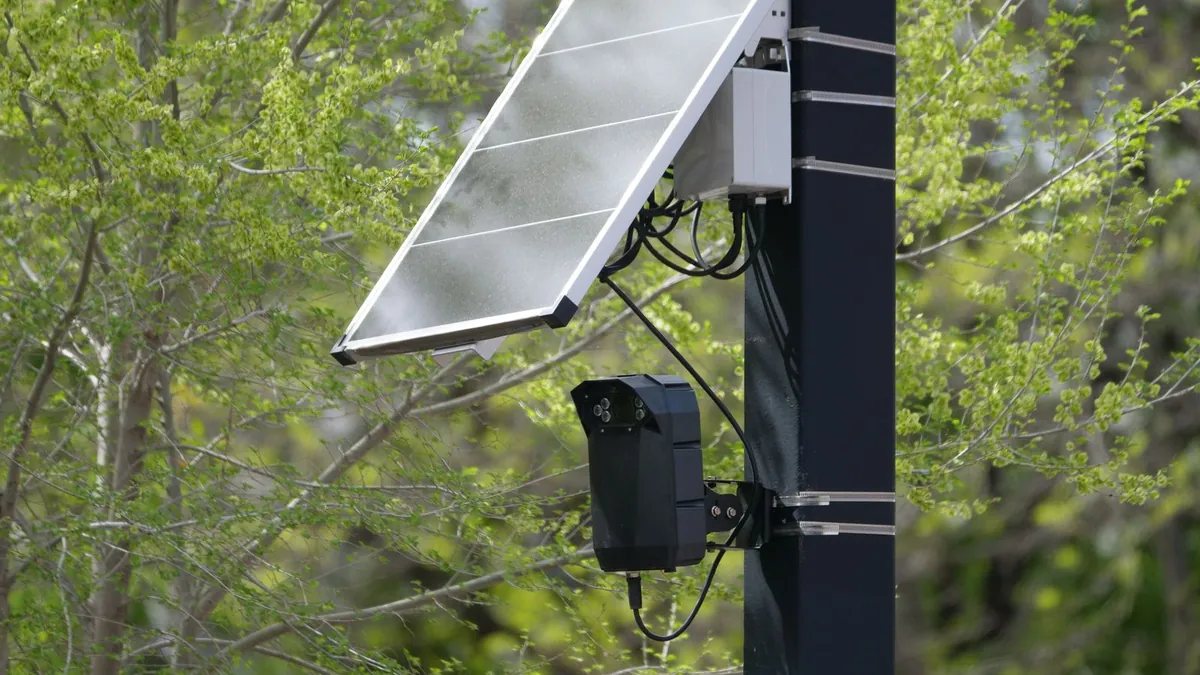
For a MeshCore companion radio, the one you pair to your phone, buy the Seeed Wio Tracker L1 Pro: it is an nRF52840 board with a case, a battery and a GPS, and the MeshCore flasher has companion, repeater and room server images for it. For the pocket, the SenseCAP T1000-E. For a solar repeater on a hilltop, the finished answer is the Seeed SenseCAP Solar Node P1-Pro, a sealed nRF52840 box with its own panel and four 18650 cells; the build-it answer is the RAK WisBlock kit on the RAK4631, which sleeps at 2 µA and has a solar input on its base board. For a room server, which can sit on USB power indoors, the cheap Heltec V3 is enough, and the V4 adds output power if the server also has to be heard across town. If you want MeshCore with no phone at all, the LILYGO T-Deck Plus runs the standalone firmware written by MeshCore's creator.
MeshCore is a LoRa mesh firmware that splits radios into fixed roles. Companions talk to the app on your phone and never relay. Repeaters relay, and only along paths that messages have learned. Room servers store posts so that a node that was switched off can catch up later (MeshCore FAQ). All the boards below are listed in the MeshCore web flasher, which is the project's own list of supported hardware, and every one of them was in stock in its 915 MHz US version when we checked. If you have not decided between the two meshes yet, read MeshCore vs Meshtastic first.
Which boards MeshCore supports
The flasher's device catalog, as of this writing, offers firmware for these families. We are listing the names as the flasher shows them.
- Heltec: V2, V3, V4, V4 R8, V4 with the touch expansion kit, Mesh Node T114, Mesh Node T096, Mesh Node T1, Wireless Tracker (v1 and v2), Wireless Paper, Wireless Stick Lite V3, Vision Master E213 and E290, MeshPocket, MeshSolar and MeshTower.
- LILYGO: T-Deck (and T-Deck Plus), T-Deck Max, T-Deck Pro, T-Beam (SX1262), T-Beam 1.2 (SX1276), T-Beam 1W, T-Beam Supreme, T-Echo, T-Echo Lite, T-Echo Card, T3-S3, LoRa32 V2.1, T-LoRa Pager, T-Display Pro, T-Watch S3 Plus and T-Watch Ultra.
- RAK: WisBlock and WisMesh boards on the RAK4631 core, WisBlock 3112, WisMesh 1W Booster, WisMesh Tag.
- Seeed: SenseCAP T1000-E, SenseCAP Solar Node P1, SenseCAP MeshTracker X1, Wio Tracker L1 Pro, Wio Tracker L1 E-Ink, Wio Tracker L2 Pro, XIAO C3, XIAO S3 with Wio-SX1262, XIAO nRF52 with Wio-SX1262.
- Others: Elecrow ThinkNode M1 through M7 and M9, UnitEng Station G2, Nano G2 Ultra and Voyage Station G3, Muzi Works R1 Neo, GAT-IoT GAT562, Ikoka Stick and Nano, Keepteen LT1, the ProMicro nRF52 "faketec", and a Raspberry Pi Pico with a Waveshare SX1262 hat.
Not every board gets every role. The T-Deck Pro, T-Deck Max, T-Display Pro and the T-Watch models are offered only the standalone Ripple GUI firmware, not companion or repeater images. The FAQ summarizes it the same way: MeshCore is available on 433, 868 and 915 MHz LoRa devices, and for use without a phone it names the T-Deck, T-Deck Plus, T-Pager, T-Watch and T-Display Pro.
Picking by role
Companion
A companion radio is the one in your pocket or bag, connected to the MeshCore app over Bluetooth (or to the web client over USB). Since companions never relay, battery life and a decent antenna are what matter. An nRF52840 board wins here; the FAQ singles out the nRF boards (RAK, T114, Seeed XIAO) for over-the-air firmware updates from the phone.
Repeater
The repeater is the node that does the work in a MeshCore network. It sits high, forwards packets along learned paths, floods adverts every 12 hours by default, and can be administered from the app over the radio. The FAQ's own advice for a second device, if other MeshCore users are nearby, is to flash it as a repeater and "place the repeater high above ground." For a solar node, pick an nRF52840 board with a solar connector; the README lists low power draw for battery and solar nodes as a design goal (MeshCore README). Set the frequency for the US over USB before you deploy it, and change the default admin password, which the FAQ says is "password".
Room server
A room server is a small bulletin board. Clients log in with a guest password (default "hello") and receive the last 32 unseen posts. The FAQ recommends running the repeater and the room server on separate devices, and it discourages turning repeat on in a room server because that build lacks the repeater's full admin features. A room server can live indoors on USB power, which makes an ESP32 board a fine choice for it.
Standalone
The T-Deck family runs a firmware with its own screen and keyboard so that nobody needs a phone. The FAQ says it is free to flash and use, with an optional paid key for deeper map zoom and remote server administration from the T-Deck.
Seeed Wio Tracker L1 Pro

Best Companion
Seeed Wio Tracker L1 Pro
- nRF52840 with SX1262 LoRa
- L76K GNSS receiver
- 1.3 inch OLED
- 2000 mAh battery, per the listing
- Solar, USB-C or battery power
For the radio you pair to your phone and carry every day.
Check price on AmazonSold by Seeed Studio Official
Our companion pick. It is an nRF52840 with an SX1262 radio, a 1.3 inch OLED, an L76K GNSS receiver, a 2000 mAh battery and a printed enclosure, per the listing, with solar input as a third power source (Meshtastic hardware page for the L1). The MeshCore flasher lists the Wio Tracker L1 Pro with companion (Bluetooth and USB), repeater, room server and even KISS modem builds, plus a bootloader update. It arrives with Meshtastic installed, so your first job is to flash MeshCore; Seeed's listing is honest about that. In our use, a cased nRF52 node with a real antenna connector is the right shape for a companion: it lasts for days and you can swap in a better antenna. The printed case is the weak point if you are rough on gear.
SenseCAP Card Tracker T1000-E
Best Pocket Companion
SenseCAP Card Tracker T1000-E
- nRF52840 with LR1110 LoRa
- MediaTek AG3335 GNSS
- 700 mAh battery
- IP65 rated
- Four pogo pins for charging and DFU, per the listing
For a sealed card-sized companion that rides in a pocket.
Check price on AmazonSold by Seeed Studio Official
The pocket companion. Seeed's page lists an nRF52840, an LR1110 radio, a MediaTek AG3335 GNSS chip, a 700 mAh battery and IP65 sealing in a card-sized shell (Seeed T1000-E). The MeshCore flasher offers companion, repeater and room server builds and its own bootloader for it, and the FAQ has a wipe-and-recover procedure for the T1000-E if a flash goes wrong. Its limits are the internal antenna and the lack of a screen; use it as the node you carry, not the node you mount. Sold by Seeed's storefront. A MakerHawk listing for the same device was unavailable when we checked.
Seeed SenseCAP Solar Node P1-Pro
Best Finished Solar Repeater
Seeed SenseCAP Solar Node P1-Pro
- nRF52840 with SX1262
- Integrated 5 W solar panel
- Four 3350 mAh 18650 cells, 13,400 mAh total
- L76K GPS module
- Weatherproof enclosure, per the listing
For the hilltop repeater you want to hang and forget.
Check price on AmazonSold by Seeed Studio Official
The finished solar repeater, and the board that meshcore.co.uk itself shows as its repeater example. Meshtastic's hardware page lists an nRF52840 with an SX1262, an integrated 5 W panel, four 18650 slots that the Pro fills with 3350 mAh cells (13,400 mAh total), an L76K GPS module and a 2 dBi antenna on an RP-SMA port, with higher-gain antennas optional (Meshtastic: SenseCAP Solar Node). The MeshCore flasher lists the SenseCAP Solar Node P1 with companion, repeater and room server builds. It ships with Meshtastic installed, per the listing, so you flash the repeater image, set the US frequency over USB, change the password and hang it from a pole. That is the whole job. What it gives up is flexibility: the battery bank and panel are fixed, and the stock antenna is modest, so budget for a better one if the site is marginal. Sold by Seeed's storefront.
RAK WisBlock Meshtastic Starter Kit
Best DIY Solar Repeater
RAK WisBlock Meshtastic Starter Kit
- RAK4631 core: nRF52840 and SX1262
- 22 dBm LoRa output
- 2.0 µA sleep current
- RAK19007 base with solar input
- US915, antenna included, per the listing
For building your own repeater with the battery, panel and box you choose.
Check price on AmazonSold by Rokland (RAK reseller)
The build-your-own solar repeater board. The RAK4631 core is an nRF52840 with an SX1262, 22 dBm output and 2.0 µA sleep current per RAK's datasheet (RAK4631 datasheet), and the RAK19007 base in this kit has a battery connector and a solar input through a single-cell charger IC (RAK kit page). RAK's page notes the base has no MPPT charging, so give the panel some margin for a cloudy week in January. The flasher lists "RAK WisBlock / WisMesh (RAK 4631)" with repeater and room server images and an updated bootloader. The kit comes flashed with Meshtastic and includes the LoRa antenna, per the listing; you bring the battery, panel and enclosure. Rokland, RAK's US reseller, is the Amazon seller. Our solar node build covers the enclosure and panel; the hardware side is the same for MeshCore.
Heltec Mesh Node T114
Repeater With a Screen
Heltec Mesh Node T114
- nRF52840 with SX1262, 21 dBm
- 1.14 inch color TFT
- 23 µA low-power mode
- Solar connector onboard
- 800 mAh battery, case and GPS, per the listing
For a low-power node you can read without a phone.
Check price on AmazonSold by Leapiot Devices (third-party)
The repeater or companion for people who want a screen and a built-in battery without building anything. Heltec rates the nRF52840 and SX1262 board at 21 dBm with a solar connector and 23 µA in low-power mode (Heltec T114). The listing we checked bundles an 800 mAh battery, a clear case and a GPS module, per the listing. The flasher has companion, repeater, room server and KISS builds for the T114 and a bootloader update. As a repeater it needs a larger battery than the bundled cell and a bigger antenna than the short flex. The listing is a third-party seller with a generic brand tag, so check the contents when it lands.
Heltec LoRa 32 V3
Best Room Server Board
Heltec LoRa 32 V3
- ESP32-S3 with SX1262
- 21 dBm LoRa output
- 0.96 inch OLED
- 8 MB flash
- IPEX antenna connector, per the listing
For an indoor room server on USB power.
Check price on AmazonSold by Leapiot Devices (third-party)
The room server board. It is an ESP32-S3 with an SX1262, a 0.96 inch OLED, 8 MB flash and 21 dBm output, per Heltec (Heltec V3). The flasher lists Heltec v3 with companion (Bluetooth and USB), repeater, room server and KISS builds, and the FAQ's Wi-Fi companion example uses it. An ESP32 drains a battery fast, which is why we park it indoors on a USB wall adapter with a window-mounted antenna and let it hold the room. Add your own antenna before power-up and a case if you like. The in-stock listing is a third-party seller; Heltec's own storefront sells the V4 below.
Heltec WiFi LoRa 32 V4
Powered High-Output Node
Heltec WiFi LoRa 32 V4
- ESP32-S3R2, 16 MB flash
- SX1262, 28 dBm high-power version
- 0.96 inch OLED
- Solar and GNSS connectors
- Under 20 µA low-power draw
For a plugged-in repeater or room server that needs to be heard far away.
Check price on AmazonSold by Heltec Automation
The powered node with reach. Heltec specs the V4 with an ESP32-S3R2, 16 MB flash, an SX1262 at 28 dBm on the high-power version, a solar connector and a GNSS header (Heltec V4). The flasher lists Heltec v4 (and the V4 R8) with companion, repeater and room server images. We would not put an ESP32 on a solar hilltop when the RAK and T114 exist, but as a USB-powered repeater or room server on a second-floor window, the extra output helps the far side of a county hear you. Sold by Heltec Automation.
LILYGO T-Deck Plus
Best No-Phone Device
LILYGO T-Deck Plus
- ESP32-S3FN16R8
- 2.8 inch 320 by 240 IPS touchscreen
- SX1262, 22 dBm
- L76K GPS, per the listing
- 2000 mAh battery
For messaging on the device itself with MeshCore's standalone firmware.
Check price on AmazonSold by Lily GO
The no-phone option. It is an ESP32-S3 with a 2.8 inch 320 by 240 touchscreen, a backlit keyboard, a trackball, an SX1262 radio, a GPS module and a 2000 mAh battery (Meshtastic T-Deck page). The MeshCore flasher lists the T-Deck with the Ripple GUI standalone firmware (settings on internal flash or on an SD card) plus companion, repeater and room server builds. In our use the standalone firmware is the thing that makes MeshCore workable for a family member who will not install an app. Battery life is short with the backlight on, and the external antenna must be fitted before you power it. We have a full T-Deck Plus review. Sold by Lily GO.
Boards by role
| Board | Chip | Flasher roles | Solar input | Battery in box | Best as |
|---|---|---|---|---|---|
| Wio Tracker L1 Pro | nRF52840 | Companion, repeater, room server | Yes | Yes | Companion |
| SenseCAP T1000-E | nRF52840 | Companion, repeater, room server | No | Yes | Pocket companion |
| SenseCAP Solar Node P1-Pro | nRF52840 | Companion, repeater, room server | Built in, 5 W | Yes, four 18650 | Finished solar repeater |
| RAK WisBlock kit (RAK4631) | nRF52840 | Companion, repeater, room server | Yes | No | DIY solar repeater |
| Heltec T114 | nRF52840 | Companion, repeater, room server | Yes | Yes, per the listing | Repeater with a screen |
| Heltec V3 | ESP32-S3 | Companion, repeater, room server | No | No | Room server on USB |
| Heltec V4 | ESP32-S3 | Companion, repeater, room server | Yes | No | Powered high-output node |
| T-Deck Plus | ESP32-S3 | Standalone GUI, companion, repeater, room server | No | Yes | No-phone messenger |
What we left off, and who should wait
We left off the Station G2 and the 1 W boosted boards; they are real repeater hardware but belong in a guide for people who already run a network. We left off the Elecrow ThinkNode M1, an nRF52840 companion with an e-paper screen that is on the flasher and in stock, only to keep this list at eight; it is a fair alternative to the L1 Pro. And we skipped every 868 MHz listing, since the US band is 915 MHz.
Wait on MeshCore if nobody near you runs it. A pair of companions with no repeater is a two-radio text link, which is fine for a farm or a hunting lease but is not a mesh. If you are starting from zero in a rural county, our Meshtastic device guide is the better first purchase, and every board on this page runs that firmware too.
Questions we get about MeshCore gear
Can a repeater and a room server share one board?
The FAQ says a room server can be told to repeat, but recommends against it, and advises separate devices for the best experience. Buy two cheap boards rather than one doing both jobs.
Does a repeater need GPS?
No. The FAQ says location is optional for a repeater, though setting it lets the repeater appear on the MeshCore map. You can type coordinates in over USB.
Which board has the longest battery life as a companion?
Any of the nRF52840 boards here (L1 Pro, T1000-E, T114, RAK4631) will outlast the ESP32 boards by a wide margin. The Meshtastic hardware page says the same about the chip families, and the firmware does not change the physics.
Can I update a repeater without climbing up to it?
Settings, yes: repeaters and room servers can be managed from the app over the radio. Firmware, on nRF boards, can go over Bluetooth if you are within range, and the flasher recommends installing its updated bootloader first so that works reliably. Plan the mount so you can reach it anyway.
Do I need a license?
No. MeshCore's FAQ lists the 915 MHz range for the USA, which is license-free ISM spectrum. Voice radios are a different matter; see our GMRS radio guide.
The short list
Carry a Wio Tracker L1 Pro, hang a SenseCAP P1-Pro on the hill, and run a room server on a Heltec V3 by the window. The rest of our mesh and radio coverage lives in the off-grid comms section.
Sources
Ready to buy?
See current models and availability on Amazon. Your clicks keep these guides free.
Shop MeshCore Boards on Amazon →